
Experiences
Yellowstone National Park: geysers, bison and where to stay
Steam rises from the ground, Old Faithful erupts on cue and a herd of bison wanders across the road. How to experience Yellowstone.
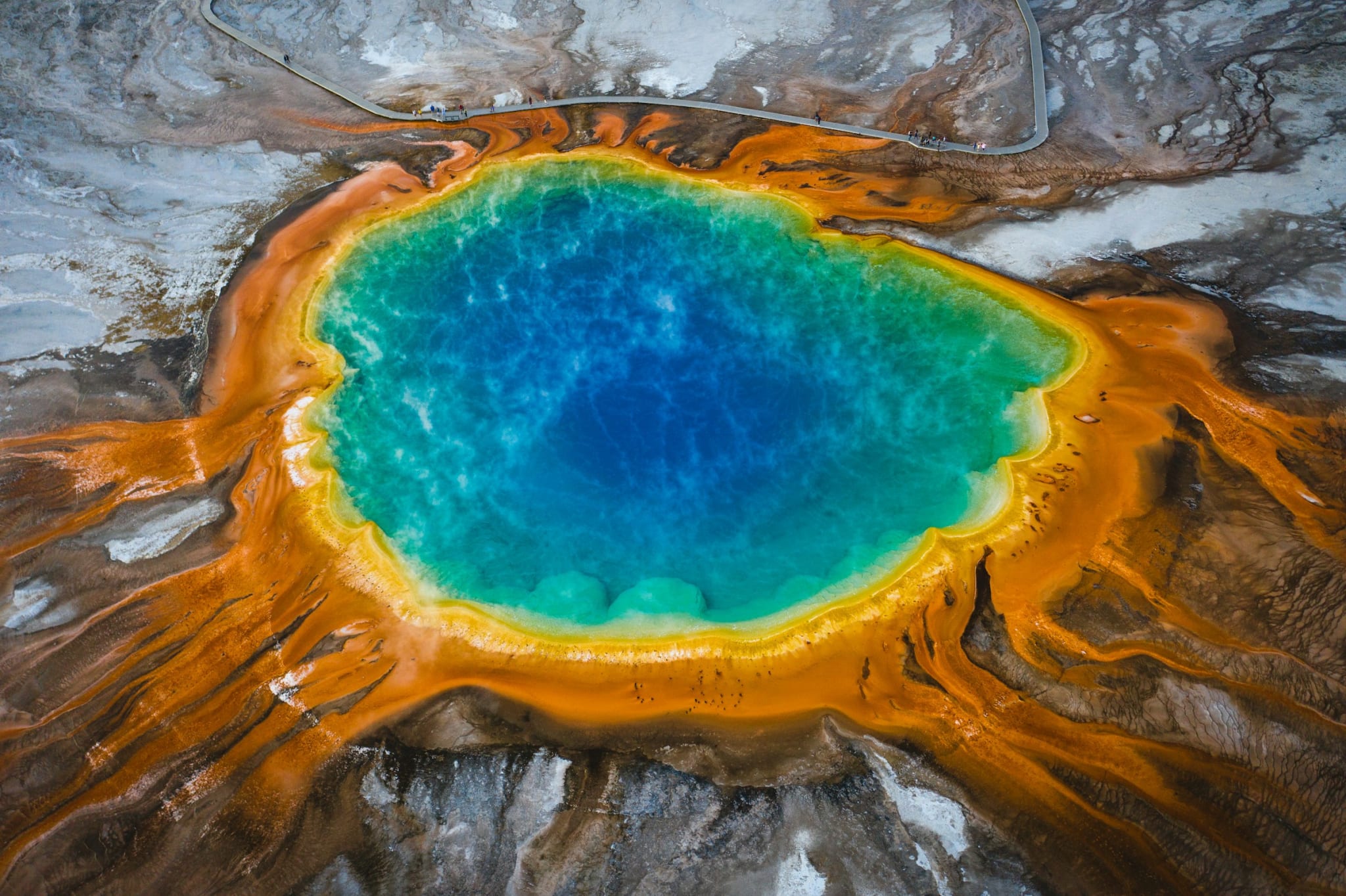
There is a smell of sulphur, and the ground beneath the boardwalk is warm. All around you, pools bubble and hiss in colours you did not know nature could make: turquoise, orange, yellow. Then a murmur goes through the crowd, and Old Faithful sends water and steam shooting into the sky.
Yellowstone became the world's first national park in 1872. It lies mostly in Wyoming, with edges reaching into Montana and Idaho. The park is huge and you will spend a lot of time driving, but in return you get geysers, waterfalls, a vast mountain lake and some of the best wildlife watching in the US.
The links to the hotels and experiences are partner links. If you book through them, Picolo may earn a small commission at no extra cost to you.
How to do it
Fly into Bozeman, Jackson or Salt Lake City and hire a car. There is no public transport around the park.
The park roads form a large figure of eight. Split the park into areas and spend a day on each.
Most roads close to normal cars in winter. Old Faithful is then reached by snowcoach or on a guided snowmobile tour.
Stay on the boardwalks in thermal areas, and keep a good distance from bison and bears.
The geysers and hot springs
Old Faithful lives up to its name: it erupts at regular intervals, and rangers post the next predicted time. Around it lies the Upper Geyser Basin, with hundreds of geysers and pools you can walk between on boardwalks.
Grand Prismatic Spring is the most photographed pool in the park. From the boardwalk you see the steam and colours up close, but for the overview shot, take the trail towards Fairy Falls and climb to the overlook above.

Yellowstone Lake
The great mountain lake at the heart of the park. Photo: Seth Cottle / Unsplash
The waterfalls and the wildlife
In the north-east, Yellowstone has a grand canyon of its own: the Grand Canyon of the Yellowstone, with yellow cliffs and the Lower Falls. The view from Artist Point is one of the finest in the park.
For wildlife, drive to Hayden Valley and Lamar Valley early in the morning or late in the evening. Bison are almost guaranteed. With binoculars and some luck you may also see elk, wolves and bears. A guided tour with a naturalist greatly improves your chances.
Book experiences: See tours and activities in Yellowstone
Where to stay for Yellowstone
Staying inside the park saves long drives morning and evening. Around it, West Yellowstone, Gardiner and Jackson have more hotels and restaurants. Wondering why so many people head for Montana? Read about Yellowstone Dutton Ranch.

Old Faithful Inn
The log lobby is a sight in its own right. Photo: Hotels.com (Expedia Group)
Old Faithful Inn: sleep by the world's most famous geyser
Old Faithful Inn is a short walk from Old Faithful, and its log lobby with the huge stone fireplace is worth a visit even if you are not staying. In the evening, once the coaches have gone, you have the geyser basin almost to yourself.
Book your stay: See rooms at Old Faithful Inn
Explorer Cabins at Yellowstone: a cabin by the west entrance
In West Yellowstone, close to the west entrance, you stay in your own cabin with a short drive to the geysers. The Grizzly and Wolf Discovery Center is nearby.
Book your stay: See rooms at Explorer Cabins at Yellowstone

Sage Lodge
Views over Paradise Valley in Montana. Photo: Hotels.com (Expedia Group)
Sage Lodge: quiet luxury in Paradise Valley
Sage Lodge sits by the Yellowstone River in Montana, north of the park's north entrance. Rooms have fireplaces, and you get mountain views and calm after days of queuing at the geysers.
Book your stay: See rooms at Sage Lodge
Hotel Terra Jackson Hole: combine it with Grand Teton
In Teton Village outside Jackson, Grand Teton National Park is right next door and Yellowstone a couple of hours north. A good choice if you want to see both parks.
Book your stay: See rooms at Hotel Terra Jackson Hole
When is the best time to visit Yellowstone?
June and September are good months: the roads are open, the animals are active and there are fewer people than in July and August. High summer is busy, with crowds at the biggest geysers. In winter the park is snowbound and almost empty, and the experience is completely different, with snowcoaches and steam rising in the cold.
When should you book?
Lodges inside the park: as early as possible, often a year ahead for summer.
West Yellowstone, Gardiner and Jackson: a few months before summer.
Guided wildlife safaris and winter tours: a few weeks ahead.
Frequently asked questions about Yellowstone
Where should I stay when visiting Yellowstone?
Stay inside the park, for example at Old Faithful Inn, to be close to the geysers. West Yellowstone by the west entrance is practical and has plenty of hotels. Sage Lodge in Montana and Hotel Terra near Jackson suit those who want to explore the surroundings too.
How often does Old Faithful erupt?
Old Faithful erupts at regular intervals, often around one to two hours apart. Rangers post the next predicted eruption time at the visitor centre.
How many days do you need in Yellowstone?
Three days is a minimum to cover the geysers, the Grand Canyon of the Yellowstone and the wildlife in Lamar or Hayden Valley. Four to five days gives you more breathing space.
Is Yellowstone open in winter?
The park is open, but most roads close to normal cars. You can drive through the northern part, and reach Old Faithful by snowcoach or on a guided snowmobile tour.
Are bison and bears dangerous in Yellowstone?
The animals are wild and can be dangerous. Keep a good distance, never approach them for photos, and follow ranger advice. Bear spray is recommended on hikes.