Diving
Diving in the Maldives, atoll by atoll and month by month
Mantas in one atoll, whale sharks in another, and a monsoon that decides which side of each reef is worth the boat ride. How to plan Maldives diving so the island and the season match.
The dhoni, the wooden boat every Maldives dive centre seems to use, slows at the mouth of a channel where the lagoon pours out into the open ocean. The guide points down. You descend along the reef wall, hook onto a rock as the current picks up, and wait.
A dark shape glides in from the blue, wings rising and falling, and settles over a coral head to be cleaned by small fish. A manta ray, close enough to see the marks on its belly.
Diving in the Maldives is about big animals and moving water. The country is a chain of 26 coral atolls in the Indian Ocean, and the best dives are in the channels where tides push water in and out of the atolls.
That brings plankton, which brings mantas and whale sharks. It also brings current, which is why a little experience goes a long way here. For the wider picture, see our ranking of the best places to scuba dive.
In short
Mantas: Baa Atoll, around Hanifaru Bay, from roughly May to November. Hanifaru itself is snorkelling only.
Whale sharks: the South Ari Marine Protected Area, all year, with most sightings from August to November.
Beginners: choose an island with a sheltered house reef and an on-site dive centre.
Experienced: channel dives with current, or a liveaboard that covers several atolls in a week.
The catch: diving from a resort costs more than almost anywhere else in this guide, and transfers add up.
How the monsoon decides where to dive
The Maldives has two monsoon seasons, and they flip the diving from one side of the atolls to the other. From about December to April, the north-east monsoon brings drier weather, and visibility tends to be best on the eastern side of the atolls, while mantas feed on the western side.
From about May to November, the south-west monsoon brings more wind and rain, and the plankton, along with the mantas, moves to the eastern side.
The practical upshot: ask your resort's dive centre which sites it uses in the month you are travelling. A resort on the wrong side of its atoll for the season can still dive, but the boat rides get longer.
Manta rays in Baa Atoll
Baa Atoll, north-west of Malé, is a UNESCO biosphere reserve. Its best-known site is Hanifaru Bay, a small, funnel-shaped bay where plankton collects in the wet season and manta rays gather to feed, sometimes in large numbers.
Scuba diving in the bay is not allowed. You visit on a snorkel, with a limited number of boats at a time, and the season runs from roughly May to November. Outside the bay, Baa's cleaning stations can be dived.
Whale sharks in South Ari
The South Ari Marine Protected Area, on the southern rim of Ari Atoll, is one of the most reliable places in the world to see whale sharks, mostly juveniles. They are there all year, and Visit Maldives puts the best months at August to November.
Encounters happen on a snorkel or on a dive, and the Maldives code asks you to keep at least 3 metres from the head and 4 metres from the tail. Boats can crowd around a single shark on busy days, so go with a centre that keeps groups small.
Resort, guesthouse or liveaboard
Most visitors dive from their resort. That is easy and comfortable, but it limits you to the reefs within reach of one island. A liveaboard, a dive boat you sleep on for a week, covers several atolls and the remoter channels, and suits experienced divers who care more about dives than villas. Whichever you choose, check the dive centre's group size and which training agency it works with.
For where to stay, start with our guide to the best hotels in the Maldives, and read Maldives atolls: where to stay before you choose an island. Seaplanes fly only in daylight, so our guide to seaplane or speedboat is worth reading if you land late.
Before you book
Pick the atoll for the animal: Baa for mantas in the wet season, Ari for whale sharks all year.
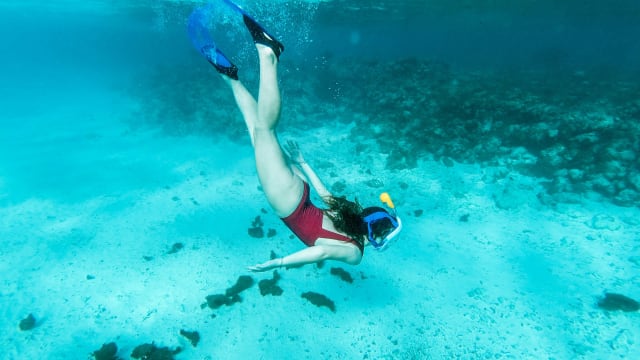
Ask about the house reef: some islands have coral a few strokes from the beach, others need a boat for every dive.
Budget for diving: resort dive centres price dives and courses separately, and the cost adds up over a week.
Keep a dry day: your flight home leaves from Malé, and you should not fly soon after diving. Our diving hub explains the guidance.
Read the rest: our guide to the Maldives covers the islands beyond the water.
Maldives resorts for divers
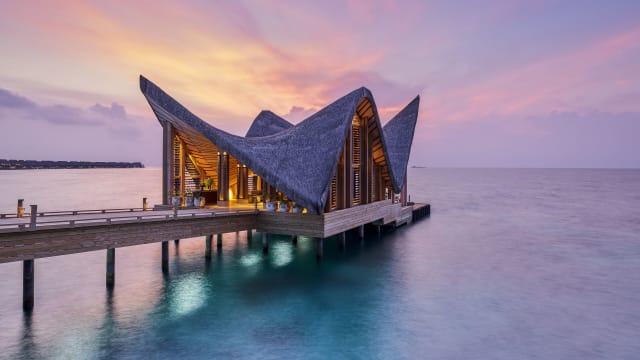
JOALI Maldives, Raa Atoll
Art all over the island, and a seaplane ride north to the neighbouring atoll of Baa.
RaaSeaplaneConrad Maldives Rangali Island
Two islands joined by a footbridge in Ari Atoll, the atoll of the whale shark protected area.
AriSeaplaneBanyan Tree Vabbinfaru
A small round island ringed by coral you can reach straight from the beach, by speedboat from Malé.
North MaléHouse reef


Our pick for Maldives diving
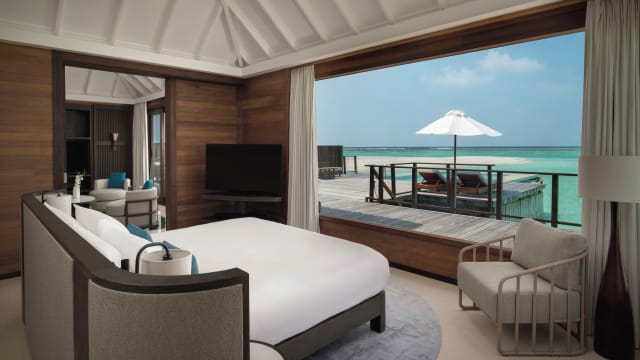
Soneva Fushi in Baa Atoll
For a diver, the reason to choose Soneva Fushi is its address. It sits in Baa Atoll, a UNESCO biosphere reserve, and in the wet season the mantas of Hanifaru Bay are a boat ride away. The villas are hidden in thick greenery, each with a path to the sand, and the pace is barefoot. It is among the most expensive places to stay in the country, and it is wasted on a short trip, so plan at least a week and travel between May and November if mantas are the goal.


Frequently asked questions
Is the Maldives good for diving?
Yes, especially for big animals. Manta rays and whale sharks are seen in several atolls, and the channel dives with current are among the best-known in the Indian Ocean.
When is the best time to dive in the Maldives?
December to April usually gives the calmest seas and best visibility on the eastern side of the atolls. May to November brings more wind, but it is the season for mantas in Baa Atoll.
Can you swim with whale sharks in the Maldives?
Yes. The South Ari Marine Protected Area has whale sharks all year, with most sightings from August to November. Keep at least 3 metres from the head and 4 metres from the tail.
Can you scuba dive in Hanifaru Bay?
No. Scuba diving is banned in Hanifaru Bay, and visitors can only snorkel there, with limited boats at a time. Other manta sites in Baa Atoll can be dived.
Is the Maldives good for beginner divers?
It can be, if you choose an island with a sheltered house reef and its own dive centre. Many channel sites have strong current, so beginners should start inside the lagoons.
Sources
Manta rays, whale sharks, Hanifaru Bay and the whale shark code: Visit Maldives, the official tourism site. South Ari Marine Protected Area: Maldives government designation of 2009. Monsoon patterns: Maldives dive operators and season guides. Resort details from Picolo's guide to the best hotels in the Maldives. Rules at Hanifaru and in South Ari are tightened from time to time, so check with your resort before you travel. Last checked: 12 November 2026.