Surfing in Sri Lanka
Surf Sri Lanka on the south and east coasts in season
One island, two monsoons and two surf seasons. Sri Lanka's south coast is a winter escape for learners, and the east coast takes over when the rain moves south.
Weligama Bay at seven in the morning looks like a classroom. Rows of soft-top boards in bright colours lie on the sand, and along the shore instructors in matching rash vests push their students into small, rolling waves. Fishing boats sit at anchor further out, and a tuk-tuk with a board strapped to the roof rattles along the coast road towards the reef breaks to the east.
To surf Sri Lanka well, you need to understand its two monsoons. From roughly November to April, the north-east monsoon keeps the south and west coasts dry, with offshore mornings and steady swell.
From about May to October, the south-west monsoon brings rain and messy seas to the south, and the surf moves to the east coast around Arugam Bay. Pick the right coast for the month and the water is warm, the waves are friendly and the trip is easy. Pick the wrong one and you will be watching the rain.
In short
November to April: the south coast east of Galle, through Ahangama, Midigama, Weligama and Mirissa. December to March is the most reliable.
Roughly May to September: the east coast, with Arugam Bay as the centre.
Beginners: Weligama Bay, the island's classic place to learn.
Improvers and experienced surfers: the reef and point breaks between Mirissa and Ahangama, and the right-hand points of Arugam Bay.
Water: about 27 to 29 °C in the south coast season. No wetsuit needed.

The south coast, November to April
This is the Sri Lanka most surfers know. The coast road from Galle runs past a string of small towns, each with its own break. Resplendent Ceylon, which runs hotels and surf programmes on this coast, describes Weligama Bay as sheltered, with gentle, forgiving waves that suit beginners and anyone building confidence. Dozens of schools line the beach, so finding a lesson is never the hard part.
East and west of Weligama, the coastline through Mirissa, Midigama and Ahangama has a run of reef and point breaks for intermediate and experienced surfers. Many are a tuk-tuk ride apart, so you can follow the conditions without a car. The trade-off is crowding: in January and February, the best-known peaks are busy, and the water is shared with surf camps, holidaymakers and local surfers.
October and April are shoulder months. Waves are often smaller and the line-ups thinner, which suits learners, although the weather is less settled.

The east coast, spring to autumn
When the south-west monsoon arrives, the east coast becomes the sheltered side. Arugam Bay is the hub, a laid-back village with a main point at the southern end of the beach and a series of right-hand points along the coast.
Sources disagree slightly on the season, with some starting it in April and others in May, and it usually runs until September or early October. The east is a long drive from Colombo, so plan to stay for at least a week rather than a couple of nights.
Who Sri Lanka suits
Sri Lanka is one of the best places in the world to learn in warm water, and a good step up for improvers who want reef waves without the intensity of the Bukit in Bali.
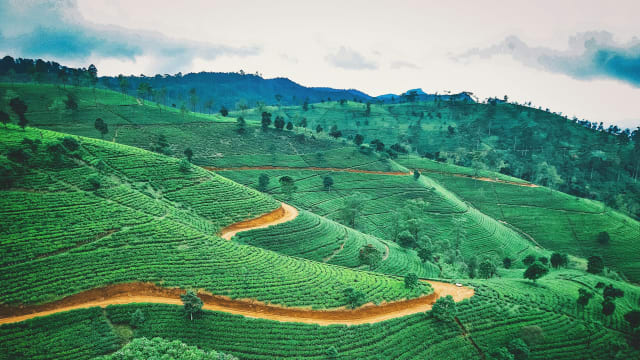
It is less suited to experienced surfers chasing big, powerful waves, and to anyone who dislikes crowds in peak season. It also suits mixed groups: whale-watching boats leave from Mirissa in season, Galle's old fort is close by, and the tea country is a train ride inland.

Practical tips
Reef safety: many south coast breaks are over rock or coral. Booties help, and so does asking a school which tide works.
Sun and heat: the sun is strong close to the equator. Surf early and late, and rest in the middle of the day.
Getting around: tuk-tuks with board racks are the local surf taxi on the south coast.
Dress: cover up away from the beach, especially near temples.
Surf camp or hotel
Sri Lanka has plenty of surf camps, particularly around Weligama and Ahangama, often with yoga included. They are good value and sociable. Picolo does not sell surf camps, and for couples or families we think a hotel plus lessons works better. Choose the hotel by coast and season, then book a school or a guide locally. Some hotels on the south coast arrange surf sessions themselves.
Hotels for surfing in Sri Lanka
Cape Weligama
Clifftop villas above Weligama Bay. Tropicsurf runs surf sessions and a south coast surf safari for guests, booked 48 hours ahead.
WeligamaSurf programmeSri Sharavi Beach Villas & Spa
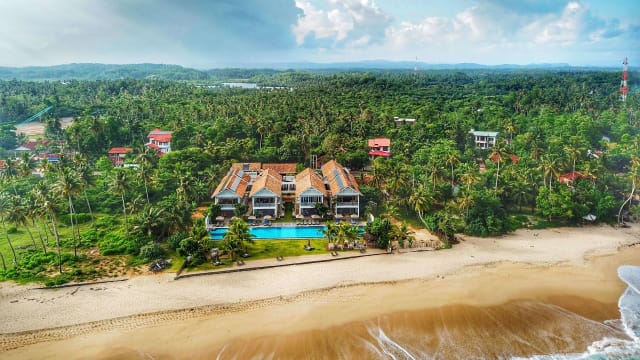
Fourteen rooms on the sand outside Mirissa, with beachside yoga. The hotel puts Weligama's surf about 16 minutes away.
MirissaBeachfront

Our pick in Sri Lanka
Cape Weligama for a first surf trip in warm water
Cape Weligama sits on a headland above the bay where most people in Sri Lanka learn to surf. It works with Tropicsurf, a surf coaching company, which runs sessions for guests, a South Coast Surfari between Midigama and Mirissa for those who can already ride, and lessons in the pool for children. Sessions need to be booked 48 hours ahead. The villas are large and the pools many, which matters when half the family would rather swim. The caveat is that the hotel is above the sea, not on the sand, so every surf starts with a short transfer.


More on Sri Lanka
For a wider choice of places to stay, see our best hotels in Sri Lanka. Our Sri Lanka travel guide covers the island beyond the beaches, from Sigiriya to the tea country.
Frequently asked questions
When is surf season in Sri Lanka?
On the south coast from November to April, most reliably from December to March. On the east coast around Arugam Bay, from about April or May to September.
Is Sri Lanka good for beginner surfers?
Yes. Weligama Bay on the south coast has gentle, forgiving waves and many schools, and the water is warm enough to surf without a wetsuit.
Where is the best surf in Sri Lanka?
Arugam Bay on the east coast has the best-known point breaks in its summer season. In winter, the reefs and points between Mirissa and Ahangama on the south coast are the main draw.
How warm is the sea in Sri Lanka for surfing?
Around 27 to 29 °C during the south coast season. Most surfers wear board shorts or a swimsuit and a rash vest against the sun.
Can you surf in Sri Lanka in July?
Yes, but on the east coast. Arugam Bay is in season, while the south coast is rainy and rough in the south-west monsoon.
Sources
Resplendent Ceylon's seasonal guide to the south coast (season, Weligama Bay, the reefs and points from Mirissa to Ahangama, water temperature), and surf guides including The Surf Atlas and Lush Palm on the south and east coast seasons and Arugam Bay. Hotel details from Resplendent Ceylon (Cape Weligama and its Tropicsurf programme) and Sri Sharavi Beach Villas & Spa's own website. Monsoon timing varies from year to year, so check a forecast before you book. Last checked: 12 November 2026.