
Champagne
Champagne for New Year's Eve
Few nights pop more corks than 31 December, and few labels say more in fewer words than a champagne bottle. The French terms on it decide how the wine tastes. Here is what you need to know to pick the right bottle.
13 November 20265 min read

Picolo Editorial
In short: champagne for New Year's Eve
For midnight, choose brut or extra brut, which are dry and fresh. Blanc de blancs, made only from chardonnay, is the lightest and most elegant; blanc de noirs is fuller. Serve at eight to ten degrees and open it quietly, without a pop. To taste champagne in the cellars it comes from, Domaine Les Crayères in Reims is our first choice.
Last checked: November 2026.
What the label tells you
Sweetness
The most important word is the one that tells you how sweet the wine is. Brut nature has almost no added sugar, under three grams per litre. Extra brut has up to six grams, brut up to twelve. Demi-sec is clearly sweet and suits pudding better than midnight.
Grapes
Champagne is made mainly from three grapes: chardonnay, pinot noir and pinot meunier. Blanc de blancs, white from whites, is pure chardonnay. Blanc de noirs, white from blacks, comes from the dark grapes. A standard brut blends all three.
Vintage
Most champagne blends several years so a house can keep its style. A year on the label means the wine comes from a single harvest the house judged good enough. It must age at least three years before release and tastes more mature, with more bread and nuts.
Who made it
Small letters at the bottom of the label say who is behind it. NM means a négociant house that buys grapes, such as Moët & Chandon or Taittinger. RM means a grower making wine from their own vines. Grower champagne is often good value, and many growers welcome visitors.
How to serve it
Chill to eight to ten degrees: about three hours in the fridge or twenty minutes in a bucket of ice and water. Hold the cork with your thumb, turn the bottle rather than the cork, and let the pressure out with a sigh rather than a bang. An ordinary white wine glass shows more flavour than a narrow flute.
From the glass to the cellar
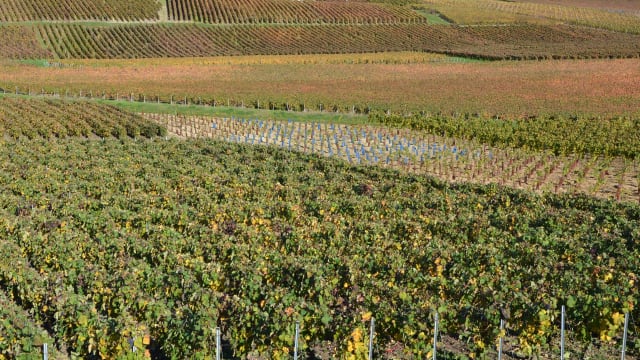
Champagne comes from the region around Reims and Épernay, about 150 kilometres east of Paris and about four hours from London St Pancras, changing stations in Paris. Beneath Reims run chalk cellars dug by the Romans, and many houses offer tours and tastings, several of them open between Christmas and New Year. To see in the new year at a hotel, see our New Year's Eve breaks.
See also Taittinger in Reims, Moët & Chandon in Épernay and Reims hotels.

Picolo picks the hotel for you
Picolo is the hotel guest's best friend. We take on the role of guide and do the work before you book: we look at the hotels in the area, where they stand, what guests say and what is actually there. Then we choose the one hotel that suits this particular trip best. For a champagne trip to Reims the choice fell on Domaine Les Crayères, because you can walk from the château to the cellars of Pommery, Taittinger and Veuve Clicquot.
Our first choice in Reims
Domaine Les Crayères
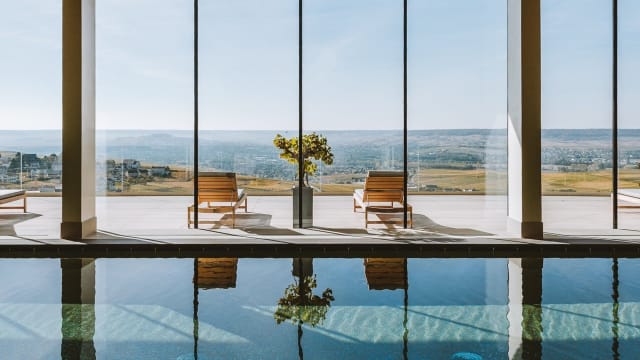
Domaine Les Crayères is an early 20th-century château set in seven hectares of parkland. It stands across the road from Pommery, a few minutes from the cellars of Taittinger and Veuve Clicquot. Its restaurant, Le Parc, holds Michelin stars, and the wine list is one of the longest in Champagne. The rooms in the château have marble fireplaces and tall windows onto the park. You can walk from the cellar tour to dinner without getting into a car.


Frequently asked questions about champagne for New Year's Eve
What champagne is best for New Year's Eve?
Brut or extra brut is best for midnight, because both are dry and fresh. Blanc de blancs, made only from chardonnay, is light and elegant, while blanc de noirs from the dark grapes is fuller. Keep demi-sec for pudding, since its sweetness overwhelms anything savoury.
What is the difference between brut and extra brut?
The difference is added sugar. Brut can have up to twelve grams per litre and tastes dry. Extra brut has up to six grams and tastes drier and leaner, while brut nature has under three. Most people find all three dry, but extra brut and brut nature suit food best.
What temperature should champagne be served at?
Serve champagne at eight to ten degrees Celsius. Colder mutes the flavour, and warmer makes the bubbles coarse. Allow about three hours in the fridge or twenty minutes in a bucket of ice and water. Mature vintage champagne can be served a degree or two warmer.
Can you visit champagne houses between Christmas and New Year?
Yes, many houses in Reims and Épernay stay open between Christmas and New Year, with shorter hours. Some close on 25 December and 1 January. Book your tour on the house's own website before you travel, as places go quickly over the holidays.
Sources
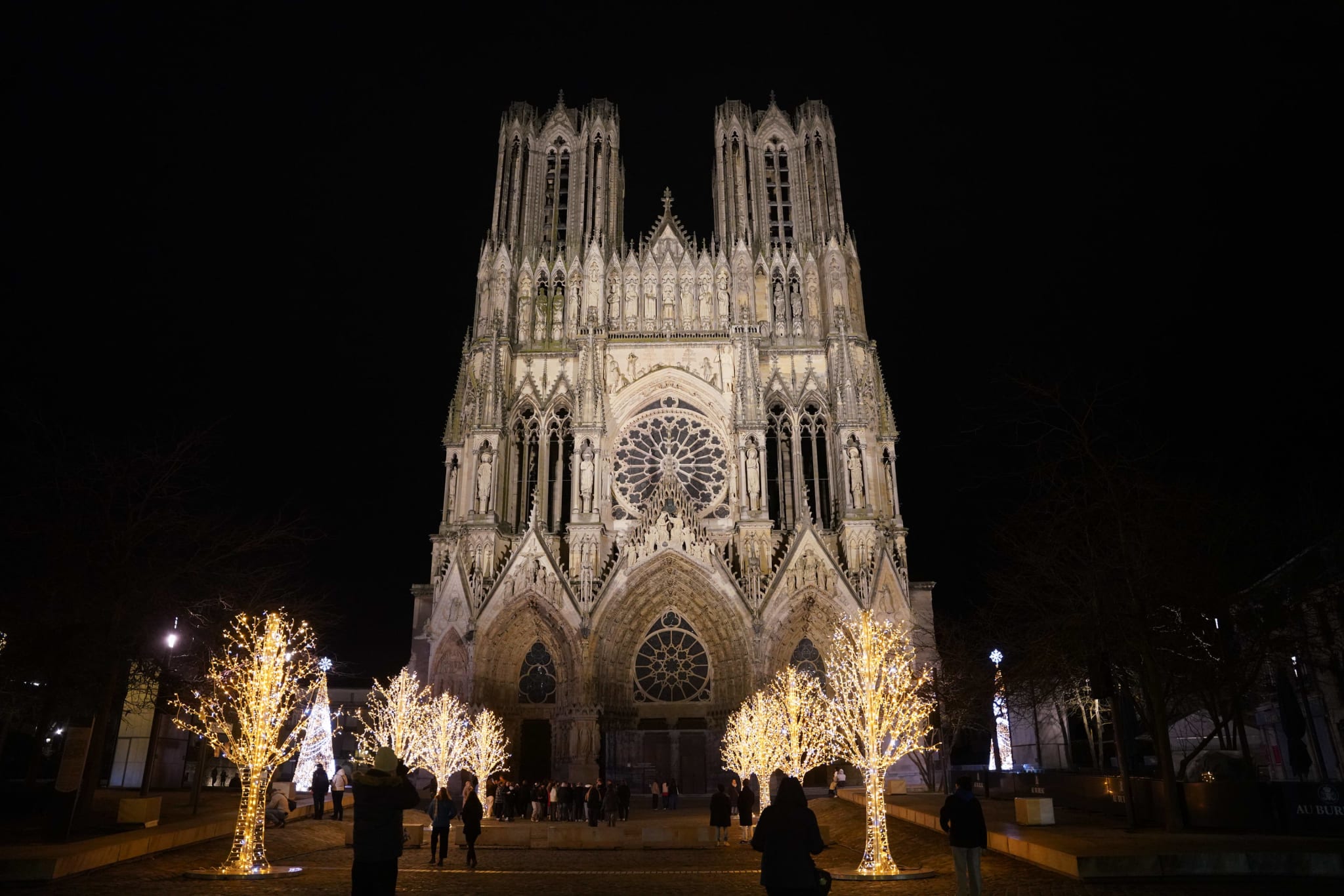
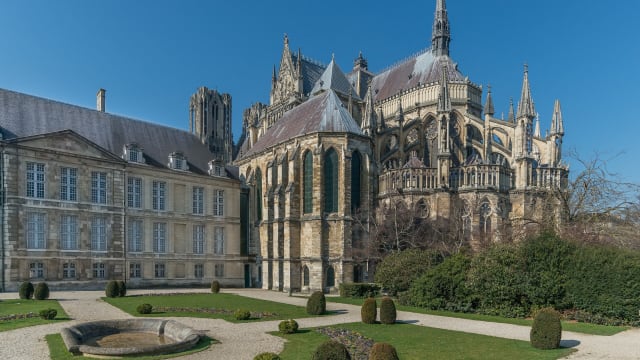
The sweetness and ageing rules follow the Comité Champagne, the trade body for champagne. Details on Domaine Les Crayères come from the hotel's press kit. Photographs of the hotel and park are press photos from Domaine Les Crayères. The photograph of the cathedral is by Gérald Garitan, via Wikimedia Commons. Last checked November 2026.
Happy New Year from Reims
Picolo Editorial