
Long-haul
Ryokan and onsen in Japan: how to stay at a traditional inn
You take off your shoes at the door, slip into a yukata and sink into hot spring water while it snows outside. How a ryokan works, how to bathe in an onsen, and the places we would choose.
You take off your shoes at the door and walk across tatami mats to your room. Tea and a small sweet wait on the low table. You change into a yukata, a light cotton kimono, and head down to the bath. Outside it is snowing, but the water in the stone pool is hot, and steam rises into the sky.
A night at a ryokan is one of the best ways to experience Japan. Here is how it works, how to bathe in an onsen, and where to stay.
The links to the hotels and experiences are partner links. If you book through them, Picolo may earn a small commission at no extra cost to you.
How a night at a ryokan works
Afternoon check-in: you are shown to your room, often with tea and a welcome snack.
Yukata: you wear a yukata throughout the ryokan, including at dinner and in the bath. Left side over right.
Kaiseki dinner: many small courses of local produce, served in your room or a private dining room.
Futon: while you eat, the staff lay out mattresses on the tatami floor.
Breakfast: often Japanese, with fish, rice, miso soup and pickles.
Prices are usually per person and include dinner and breakfast. It is part of the experience, so eat at the ryokan at least one night.
How to bathe in an onsen
Onsen are baths fed by natural hot springs. There are shared baths separated by gender, and many ryokan also have private baths you can reserve or baths in the room.
Wash first: sit on the stool by the showers and wash your whole body before getting in.
No swimwear: in shared baths you bathe naked.
Keep the towel out: the small towel goes on your head or by the edge, never in the water.
Tattoos: some places do not allow visible tattoos. Ask in advance or choose a private bath.
The ryokan we would book
There are ryokan all over Japan, from mountain towns to central Tokyo. These show the range.

Kinosaki Onsen
Nishimuraya Honkan sits in the heart of the spa town of Kinosaki.
Kinosaki Onsen: Nishimuraya Honkan
Kinosaki is a small spa town with willow-lined canals and public baths. In the evening guests walk from bath to bath in yukata and wooden sandals, and the clatter fills the streets.
Nishimuraya Honkan is a historic ryokan with rooms facing the garden. The town is a couple of hours by train from Kyoto and Osaka.
Book your ryokan: See rooms at Nishimuraya Honkan

Shuzenji
Asaba sits by a pond in the spa town of Shuzenji on the Izu Peninsula.
Izu: Asaba
Shuzenji is an old spa town on the Izu Peninsula, with a temple, a bamboo path and a river through the centre. Asaba is a historic ryokan by a pond, and in the evening its pavilion is lit up over the water.
Breakfast is included, and the silence is a big part of the experience.
Book your ryokan: See rooms at Asaba
Izu: Arai Ryokan
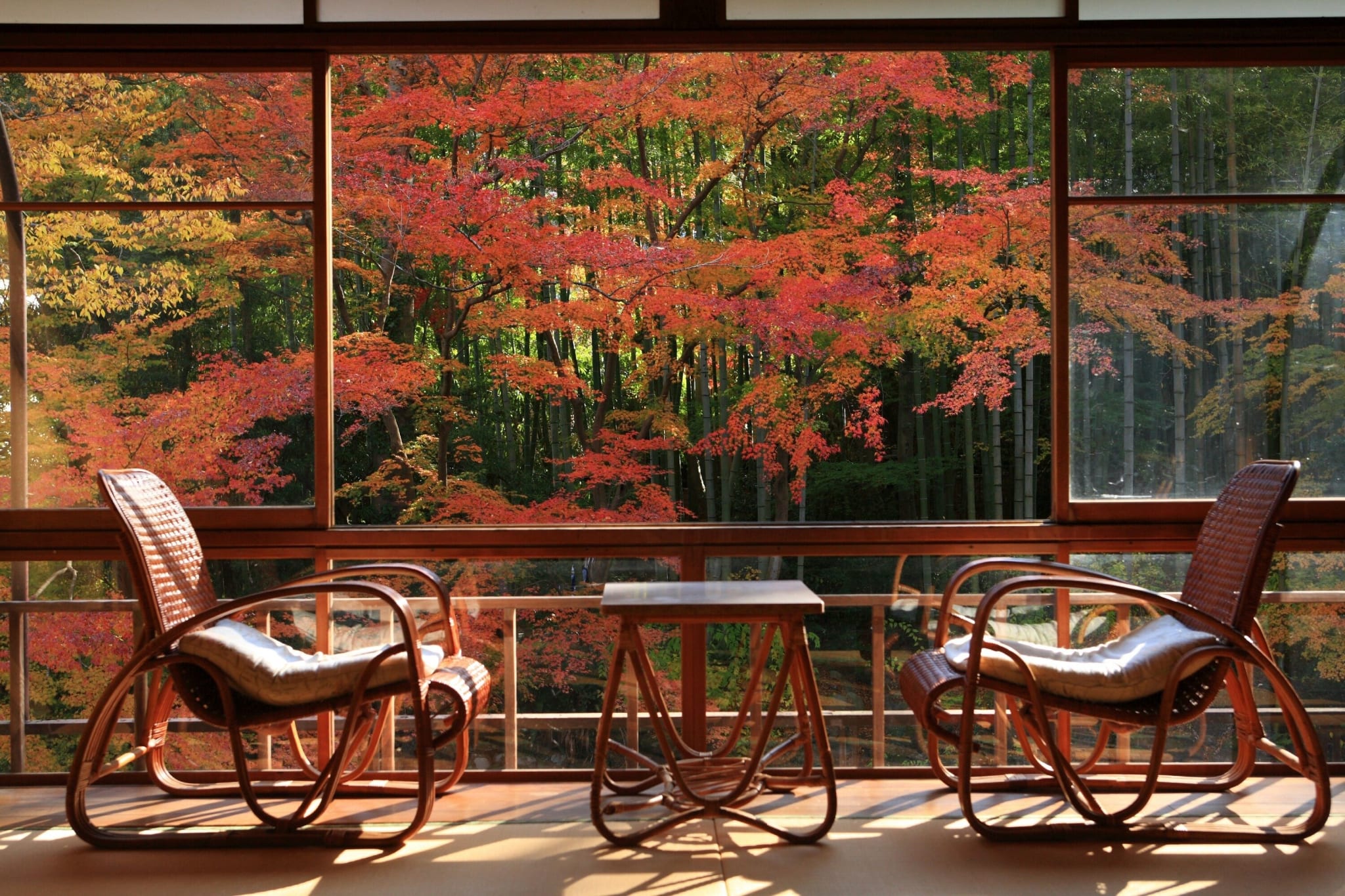
Also in Shuzenji, Arai Ryokan has wooden buildings around a garden and rooms looking out on maple trees. In autumn the garden turns red and gold, and the bath is built of wood.
Book your ryokan: See rooms at Arai Ryokan
Hakone: Hakone Gora Karaku
Hakone is the easiest onsen escape from Tokyo. Hakone Gora Karaku is a modern hotel with onsen baths and breakfast included, right by Gora station. Read more in our guide to Mount Fuji and Hakone.
Book your ryokan: See rooms at Hakone Gora Karaku
Tokyo: Hoshinoya Tokyo
If you do not have time to leave the city, Hoshinoya Tokyo is a ryokan in a tower in the financial district, with tatami throughout and an onsen on the roof.
Book your ryokan: See rooms at Hoshinoya Tokyo
When is the best time to stay at a ryokan?
Ryokan work all year, but onsen are best when it is cold outside, from December to February. Autumn with red maples is the most beautiful and popular time.
When should you book?
Well-known ryokan: book two to six months ahead, they have few rooms.
Weekends and holidays: pricier and fuller, choose weekdays if you can.
Dietary needs: mention allergies and preferences when you book, as dinner is planned in advance.
Ryokan and onsen FAQ
What is a ryokan?
A ryokan is a traditional Japanese inn with tatami floors, futons and often an onsen. The price usually includes dinner and breakfast, and guests wear yukata.
How do you bathe in an onsen?
Wash your whole body at the showers before getting in. In shared baths you bathe naked, and the small towel should not go in the water. Keep quiet and be considerate.
Can you use an onsen with tattoos?
Some onsen do not allow visible tattoos, but more places are relaxing the rule. Ask in advance, cover small tattoos with a plaster or choose a ryokan with a private bath.
How many nights should you stay at a ryokan?
One or two nights is typical. One night gives you the whole experience with bath, dinner and breakfast, while two nights gives more time to unwind.
Where should I stay at a ryokan in Japan?
Kinosaki Onsen and Shuzenji on Izu are classic spa towns with ryokan such as Nishimuraya Honkan and Asaba. From Tokyo, Hakone is the easiest, and Hoshinoya Tokyo offers a ryokan experience in the city.