
Long-haul
Things to do in Kyoto: temples, geishas and the bamboo grove
Thousands of orange torii gates forming a tunnel up the mountain, and a geisha disappearing round a corner in Gion. The best things to do in Kyoto, and the neighbourhoods to stay in.
It is seven in the morning and the path up Mount Inari is almost empty. The orange gates stand so close that they form a tunnel, and the light falls in stripes between them. Higher up you hear only birds and your own footsteps. In three hours it will be packed, but right now you have Kyoto to yourself.
Kyoto was Japan’s capital for more than a thousand years and has well over a thousand temples and shrines. Here are the experiences not to miss, and where to stay to reach them before the crowds.
The links to the hotels and experiences are partner links. If you book through them, Picolo may earn a small commission at no extra cost to you.
The best things to do in Kyoto
Fushimi Inari: thousands of torii gates forming a tunnel up the mountain. Go early in the morning or late in the day.
Kiyomizu-dera: the temple with the great wooden stage over the hillside, and the stone lanes of Sannenzaka and Ninenzaka below.
Gion: the geisha district with wooden houses and teahouses. In the evening you may see geiko and maiko on their way to work, but be respectful and do not stop them for photos.
Kinkaku-ji: the Golden Pavilion, covered in gold leaf and reflected in its pond.
Arashiyama: the bamboo grove, Togetsukyo Bridge and the monkey park on the hill.
Nishiki Market: a narrow, covered street of food stalls, perfect for lunch.
Nijo Castle: the shogun’s palace with its squeaking “nightingale floors”.
Make a day trip to Nara, with the great Buddha hall of Todai-ji and deer roaming freely in the park. The train takes under an hour.
Book the experience: See tours and things to do in Kyoto
Where to stay in Kyoto
Kyoto is spread out, and where you stay decides how early you can reach the popular sights. Higashiyama and Gion are best for atmosphere, the centre by the Kamo River is practical, and Arashiyama is the quietest in the evening.

Higashiyama
The Hotel Seiryu sits close to Kiyomizu-dera.
Higashiyama: The Hotel Seiryu Kyoto Kiyomizu
The hotel occupies a former school building in Higashiyama, a few minutes from Kiyomizu-dera and the stone lanes. You can head out before breakfast and have the streets almost to yourself.
Gion and the Yasaka Pagoda are within walking distance, and the hotel has several restaurants and bars.
Book your stay: See rooms at The Hotel Seiryu

Nijo
Hotel The Mitsui sits right by Nijo Castle.
Central: Hotel The Mitsui Kyoto
Hotel The Mitsui sits right by Nijo Castle, on the site of a former residence of the Mitsui family. The old gate still stands at the entrance, and the garden is laid out in traditional style.
The hotel has a spa and several restaurants, and the centre, Nishiki Market and the subway are close by.
Book your stay: See rooms at Hotel The Mitsui Kyoto
Arashiyama: Suiran, a Luxury Collection Hotel
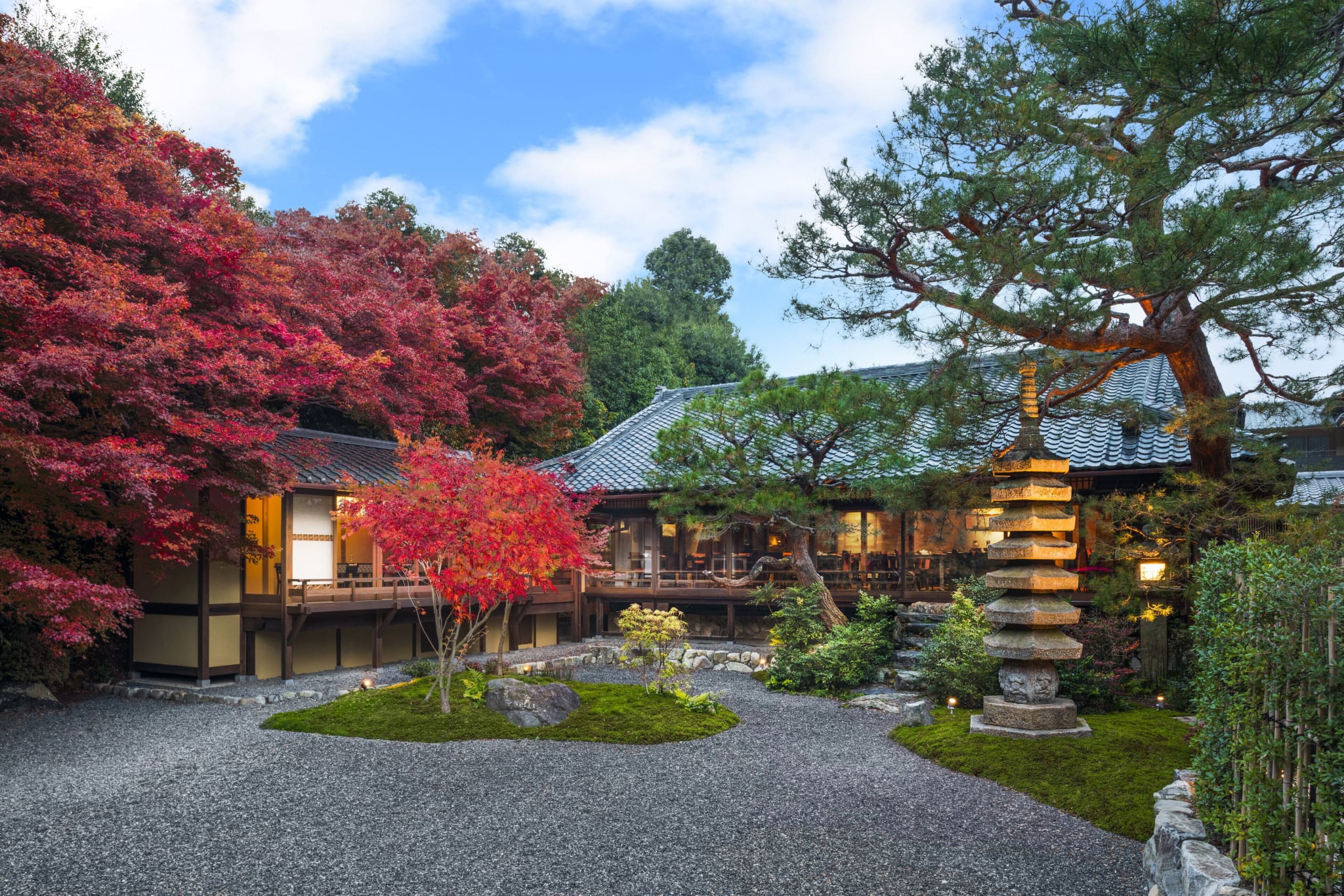
Suiran sits on the river in Arashiyama, close to Togetsukyo Bridge. In the evening, once the day visitors have gone, the area turns quiet, and you can walk the bamboo grove before the first coaches arrive in the morning.
The hotel is built around an old house with a garden, and in autumn the surrounding hills turn red and gold.
Book your stay: See rooms at Suiran
Kamo River: The Ritz-Carlton, Kyoto
By the Kamo River you stay centrally between Gion and Pontocho, the narrow restaurant lane along the river. The hotel has a spa and an indoor pool.
Book your stay: See rooms at The Ritz-Carlton, Kyoto
When is the best time to visit Kyoto?
Spring with the cherry blossom from late March and autumn with red maples in November are the most beautiful and busiest times. Summer is hot and humid, while winter is cold, quiet and cheaper. Read more in our guide to cherry blossom in Japan.
How to avoid the crowds
Start early: Fushimi Inari and Arashiyama are almost empty before 8am.
Stay central: walk or use buses and the subway rather than taxis.
Keep climbing: most people turn back halfway up Mount Inari, and the top is far quieter.
Kyoto FAQ
How many days should you spend in Kyoto?
Three to four days gives time for the main temples, Gion, Arashiyama and a day trip to Nara. With two days, focus on Fushimi Inari, Higashiyama and Arashiyama.
What are the must-sees in Kyoto?
Fushimi Inari, Kiyomizu-dera, Gion, Kinkaku-ji and the Arashiyama bamboo grove are the best known sights. Nishiki Market and Nijo Castle are also worth a visit.
Can you see geishas in Kyoto?
Yes, in Gion and Pontocho you may see geiko and maiko heading to teahouses in the evening. Keep your distance, do not stop them and respect signs banning photos in private lanes.
How do you get from Tokyo to Kyoto?
The shinkansen takes about two hours and fifteen minutes from Tokyo to Kyoto. Trains run frequently, and it is the easiest option.
Where should I stay in Kyoto?
Stay in Higashiyama for atmosphere, for example at The Hotel Seiryu near Kiyomizu-dera, or centrally by Nijo Castle at Hotel The Mitsui. Suiran in Arashiyama suits those who want peace and quiet.