
Long-haul
Mount Fuji and Hakone: the views, the lakes and the hot springs
The clouds lift, and there it is: the snow-capped summit reflected in Lake Kawaguchi. How to see Mount Fuji and Hakone in a couple of days from Tokyo, and where to stay with a view or your own onsen.
You stand by Lake Kawaguchi at six in the morning and wait. The clouds sit heavy over the hills opposite. Then they lift, almost on cue, and there it is: the symmetrical, snow-capped summit reflected in the still water. That is why you got up.
Mount Fuji is Japan’s highest mountain and one of its great symbols. Together with Hakone, with hot springs, volcanic valleys and lakes, it is the most popular trip out of Tokyo. Here is how to do it and where to stay.
The links to the hotels and experiences are partner links. If you book through them, Picolo may earn a small commission at no extra cost to you.
How to see Mount Fuji at its best
The mountain is often hidden by cloud, especially in summer. Your chances are best early in the morning and in the cold months from November to February, when the air is clear.
Lake Kawaguchi: the best known view, with Fuji reflected in the water. The base for the Fuji Five Lakes.
Chureito Pagoda: the red pagoda at Fujiyoshida with Fuji behind, famous from countless photos, especially in cherry blossom season.
Hakone: on clear days you see Fuji across Lake Ashi.
Climbing Fuji: the official climbing season is in summer, roughly July to early September. Many climb overnight to see sunrise from the summit.
From Tokyo, the bus or train to Kawaguchiko takes about two hours.
Book the experience: See tours to Mount Fuji and Kawaguchiko

Lake Kawaguchi
From the terraces at Hoshinoya Fuji you look straight at the mountain.
Lake Kawaguchi: Hoshinoya Fuji
Hoshinoya Fuji is a kind of luxury glamping resort in the woods above the lake. The rooms are modern concrete cubes with big windows and a terrace facing Fuji, and the forest has fire pits and outdoor decks.
In the evening the staff light the fires, and you can cook outdoors looking at the mountain.
Book your stay: See rooms at Hoshinoya Fuji

Lake Kawaguchi
Kasuitei Ohya is a ryokan on the shore of Lake Kawaguchi.
Lake Kawaguchi: Kasuitei Ohya
Kasuitei Ohya is a lakeside ryokan with traditional rooms, hot spring baths and a kaiseki dinner. Guests single out the helpful staff.
It is a good choice if you want to combine Fuji views with a classic ryokan experience.
Book your stay: See rooms at Kasuitei Ohya
Lake Kawaguchi: Fuji View Hotel
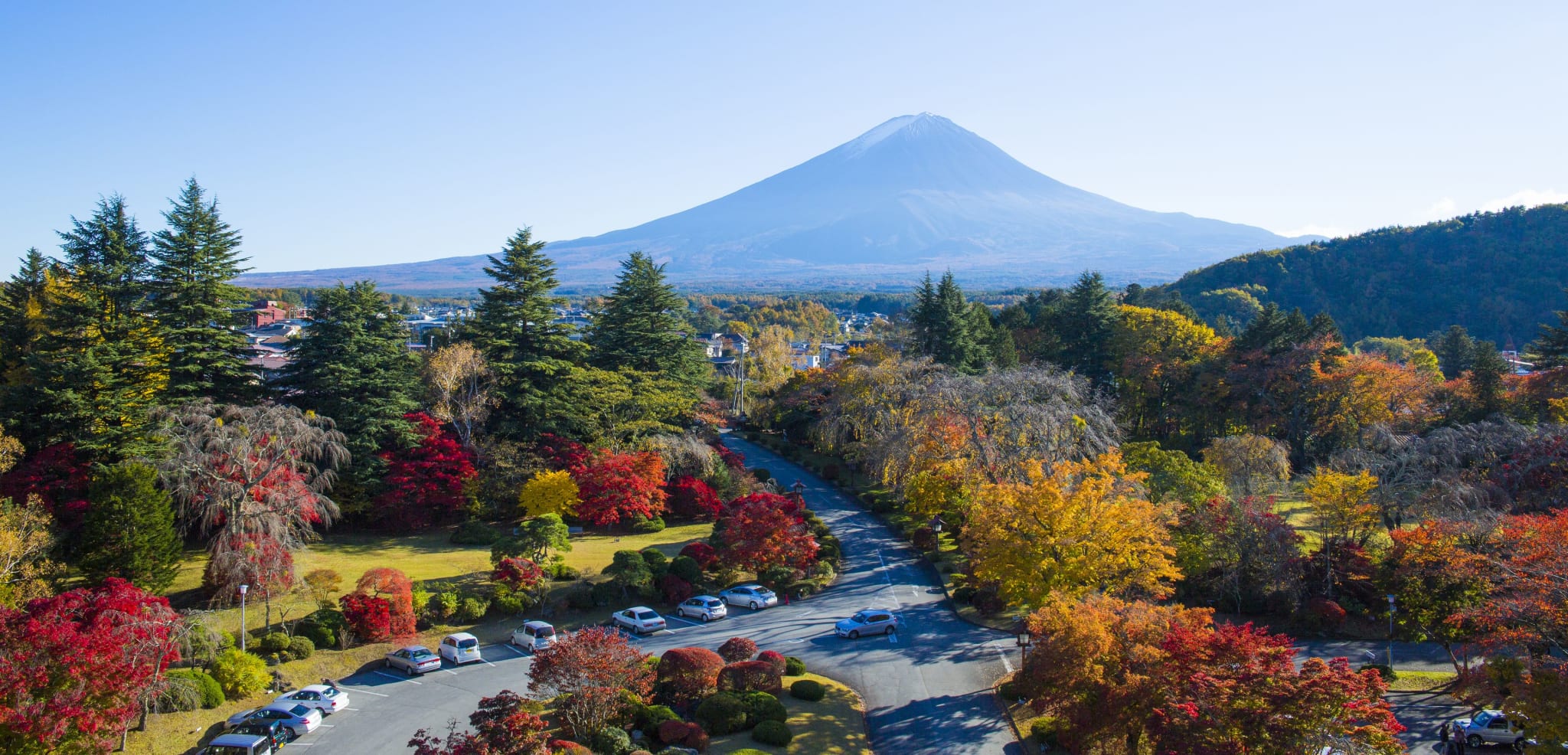
Fuji View Hotel sits by the lake and is a classic choice for Fuji views at a lower price. The garden runs down to the water, and in autumn the trees around it turn red and gold.
Book your stay: See rooms at Fuji View Hotel
Hakone: hot springs and a volcanic valley
Hakone is about an hour and a half from Tokyo by train and is known for onsen, art and the classic loop.
Hakone Tozan Railway: a little mountain train zigzagging up the hillside from Hakone-Yumoto.
Owakudani: the volcanic valley with sulphur steam, where eggs are boiled black in the hot springs.
Lake Ashi: a boat across the lake and the red torii of Hakone Shrine standing in the water.
Hakone Open-Air Museum: a sculpture park set in the mountain landscape.
Book the experience: See tours and things to do in Hakone

Gora
Hakone Gora Karaku sits by Gora station.
Gora: Hakone Gora Karaku
Gora sits in the middle of the Hakone loop, where the mountain railway meets the cable car up towards Owakudani. Hakone Gora Karaku has onsen baths, breakfast included and an illuminated garden at night.
It is a practical and stylish base for doing the loop at your own pace.
Book your stay: See rooms at Hakone Gora Karaku

Hakone-Yumoto
The rooms at Hatsuhana have their own hot spring baths.
Hakone-Yumoto: Hatsuhana
Hatsuhana sits in the forest near Hakone-Yumoto, and the rooms have their own baths fed by hot spring water on the balcony. You sit in the warm water and hear the river below.
It is a place to unwind after a day on the loop, and the station for trains back to Tokyo is close.
Book your stay: See rooms at Hatsuhana
When is the best time to see Mount Fuji?
From November to February the air is clearest, and the mountain is often visible all day, with snow on the summit. Spring brings cherry blossom by the lakes and autumn red maples. Summer is often hazy and cloudy, but it is climbing season.
When should you book?
Hotels with Fuji views: the best rooms go early, book three to six months ahead.
Autumn and cherry blossom: peak season, book even earlier.
Climbing: check the rules and any trail reservation requirements before you go.
Mount Fuji and Hakone FAQ
Where is the best place to see Mount Fuji?
Lake Kawaguchi and the Chureito Pagoda at Fujiyoshida give the most famous views. From Hakone you can see Fuji across Lake Ashi on clear days.
When is Mount Fuji most visible?
From November to February the air is clearest, and early morning gives the best chance. In summer the mountain is often hidden by cloud.
Can you climb Mount Fuji?
Yes, during the official summer climbing season, roughly July to early September. Many climb overnight to see sunrise from the summit. Check the current rules before you go.
Should I choose Fuji or Hakone?
For a close-up view of Fuji, choose Lake Kawaguchi. For onsen, a boat trip and a volcanic valley, choose Hakone. With two nights you can do both.
Where should I stay near Mount Fuji and in Hakone?
At Lake Kawaguchi, Hoshinoya Fuji and Kasuitei Ohya are good choices. In Hakone, Hakone Gora Karaku is a practical base, while Hatsuhana has private hot spring baths.