
In short
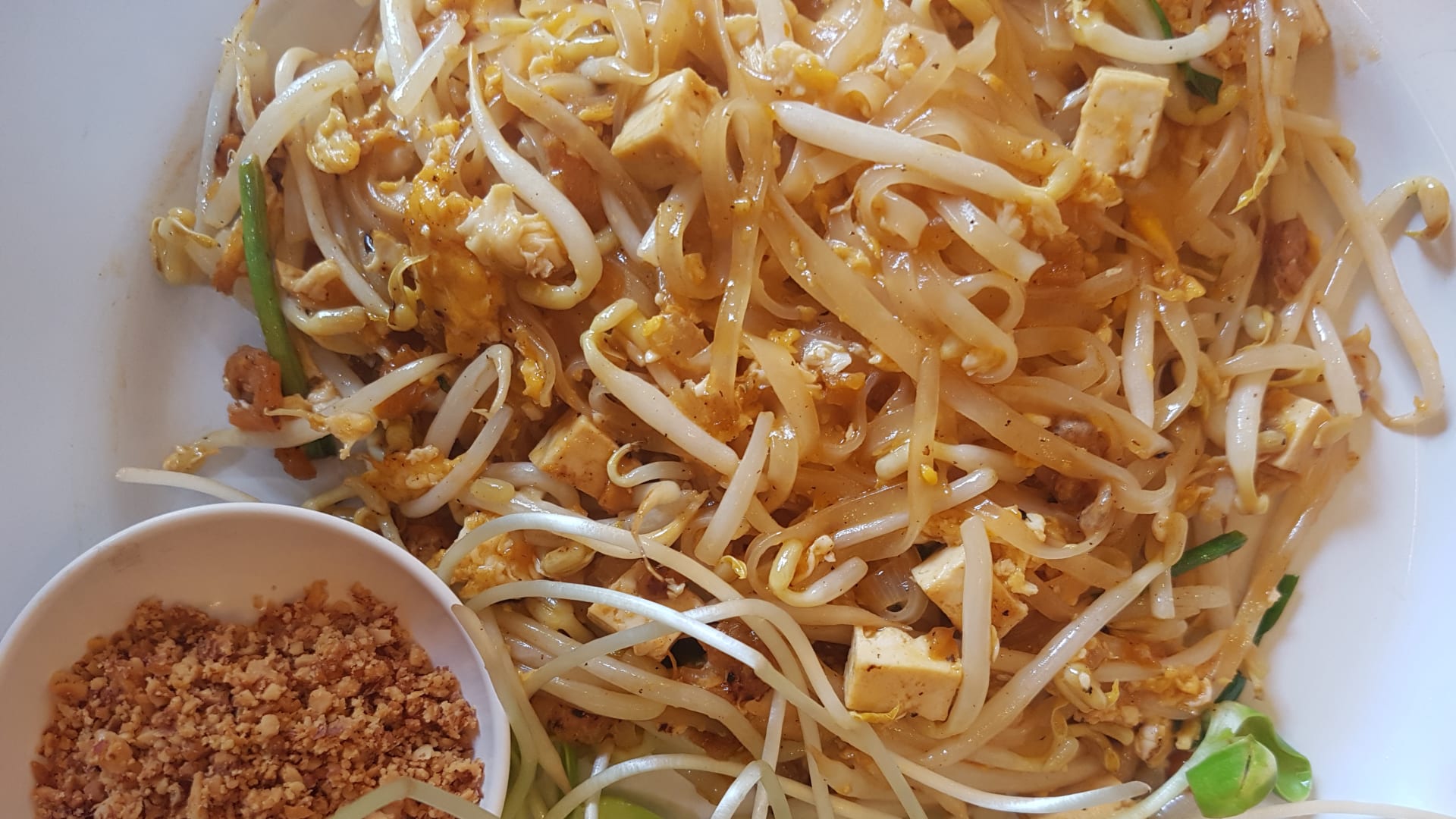
Pad thai is stir-fried rice noodles with egg, tofu, bean sprouts and prawns or chicken, seasoned with tamarind, fish sauce and palm sugar. The Thai government promoted it as a national dish from the late 1930s. It is mild, and you season it yourself at the table.
Where does pad thai come from?
Stir-fried noodles arrived in Thailand with Chinese immigrants. Under prime minister Plaek Phibunsongkhram, a distinctly Thai version was pushed as part of a nationalist campaign. The government handed out recipes and noodle carts and encouraged people to eat noodles rather than rice alone.
The name simply means stir-fried in the Thai style. Historians disagree on how much of the recipe was new, but the name and the dish stuck.

What it tastes like
Tamarind brings sourness, palm sugar sweetness and fish sauce salt. Dried shrimp and pickled radish add small salty bites, while bean sprouts and spring onion keep it fresh. The dish itself is not hot.
On the side you usually get lime, peanuts, chilli flakes and sugar. Thais mix in what they like, and many add more sugar than you might expect.
Versions you will meet
With prawns
Pad thai goong is the standard at street stalls. Smarter places use river prawns, which are large and rich, with roe in the head.
Wrapped in egg
Some cooks wrap the noodles in a thin omelette net. It tastes the same but looks smarter on the table.
Meat-free
Ask for tofu and vegetables. Fish sauce and dried shrimp go in by default, so say if you want them left out.
Where to find a good one
Pad thai is best cooked in small batches over high heat. Pick a stall that cooks each portion to order, not one with a big pan of noodles ready to go. The evening markets in Bangkok have plenty.
One honest caveat: many Thais eat pad thai far less often than visitors do. To eat like a local, try a few other Thai dishes on the same trip.
Frequently asked questions about pad thai
Is pad thai spicy?
No, pad thai is cooked without chilli in the dish itself. Chilli flakes are served on the side, so you decide how hot it gets. That makes it a safe choice for your first days in Thailand.
What is the difference between pad thai and pad see ew?
Pad see ew uses wide rice noodles and dark soy sauce, and tastes saltier and smokier from the wok. Pad thai uses thinner noodles and gets its tang from tamarind.
Is pad thai gluten free?
The rice noodles are gluten free, but soy sauce and other sauces can contain wheat. If you have coeliac disease, ask, and take care at stalls where one wok is used for everything.
How do you pronounce pad thai?
Roughly "pat tie", with a short a. The p and t are unvoiced, so it does not sound like the English word pad.


Photo credits
Pad thai: photo Iudexvivorum, Wikimedia Commons, CC0. Cropped.
Street kitchen in Rayong: photo PattayaPatrol, Wikimedia Commons, CC BY-SA 4.0. Cropped.