Travel guide · Europe
Granada travel guide: the Alhambra, the Albaicín and free tapas
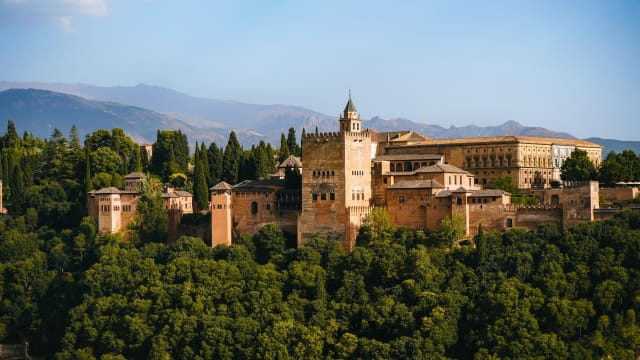
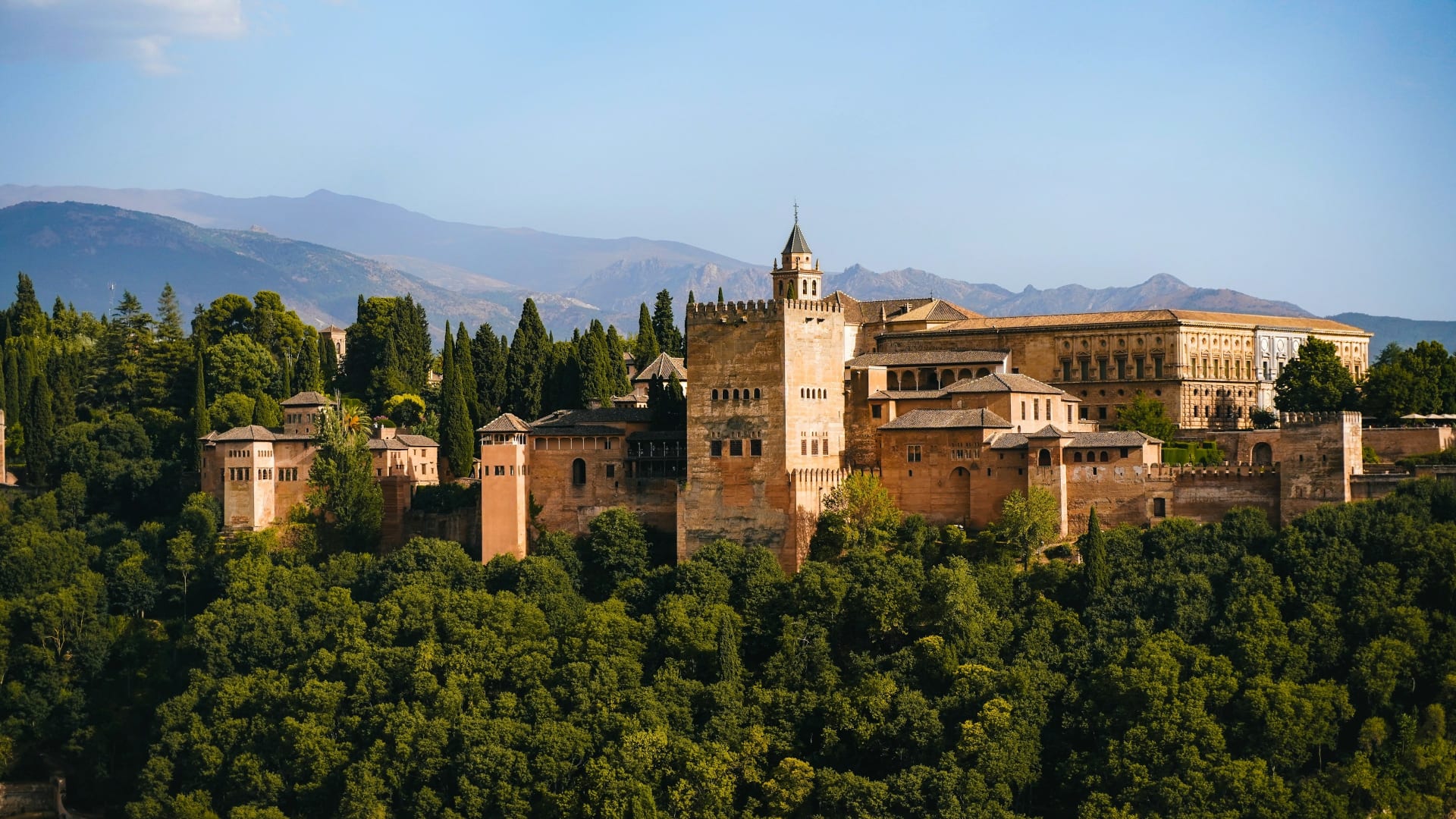
Order a drink and a small plate of food arrives with it. Look up and the Alhambra glows red on its hill, with the Sierra Nevada behind it.
Granada, the city under the Alhambra
Sunset at the Mirador de San Nicolás. The little square in the Albaicín is packed, someone is playing guitar, and across the valley the walls of the Alhambra turn from ochre to red. Behind them rise the peaks of the Sierra Nevada, white with snow in winter and spring.
Granada was the last Moorish kingdom in Spain and fell to Ferdinand and Isabella in 1492. The city lies at the foot of the mountains, about 700 metres above sea level, so winter nights are cold and summer evenings cooler than in Seville. For the rest of the country, see our Spain travel guide.
The Alhambra: book first, plan the rest after
The Alhambra is the palace and fortress of the Nasrid sultans, and a visit has three parts: the Nasrid Palaces, the Alcazaba fortress and the Generalife gardens. Your ticket gives you a fixed time to enter the Nasrid Palaces, and if you are late you will not get in.
Book on the official Alhambra website as soon as your dates are set. Tickets for spring and summer often sell out weeks ahead. Allow at least three hours, and wear comfortable shoes for the climb up from the town.
Neighbourhoods to know
The Albaicín
The old Moorish quarter on the hill opposite the Alhambra, with white houses, steep cobbled lanes and carmens, old houses with walled gardens.
Sacromonte
Further up the hill, with cave houses dug into the slope and flamenco performed in some of them.
Realejo
The old Jewish quarter below the Alhambra, with street art and plenty of tapas bars.
The centre
The cathedral, the Royal Chapel with the tombs of Ferdinand and Isabella, and the shopping streets around Plaza Nueva.

Two days in Granada
Day 1: the Alhambra and the Generalife in the morning. Walk down to the Carrera del Darro along the river, and end the day at the Mirador de San Nicolás.
Day 2: the Royal Chapel and the cathedral, the tea shops on Calle Calderería, then up to Sacromonte. Flamenco in the evening.
Free tapas
In most traditional bars in Granada, a tapa comes free with every drink, and each new round usually brings something different. The tapas are small, so two or three rounds make a light supper. For a full meal, order raciones, larger plates to share.
Where to stay
The Albaicín has the views and the atmosphere, but the lanes are steep and taxis cannot reach every door. The centre around Plaza Nueva is the most practical base, and Realejo is good for food. The Parador de Granada stands inside the Alhambra walls, in a former convent.
Good to know
Most travellers fly to Málaga. The bus from Málaga airport to Granada takes around two hours.
The high-speed train from Madrid takes around three and a half hours, and from Seville around two and a half.
The Sierra Nevada ski resort is about an hour away, so you can ski and see the Alhambra in the same trip.
Frequently asked questions about Granada
How many days do you need in Granada?
Two days is enough for the Alhambra, the Albaicín and Sacromonte. Add a third if you want to ski or hike in the Sierra Nevada.
How far ahead should you book Alhambra tickets?
As soon as you know your dates. For spring, summer and holidays, several weeks ahead is wise, as the official tickets often sell out.
Where is the best view of the Alhambra?
The Mirador de San Nicolás in the Albaicín, ideally at sunset. It gets crowded, so arrive half an hour early.
Can you visit Granada as a day trip from Málaga?
Yes, but it is a long day with around two hours each way, and your Alhambra slot has to fit. One night in Granada makes it much more relaxed.
Are the tapas really free in Granada?
Yes, in most traditional bars a small tapa comes with each drink. Newer and more touristy places do not always follow the custom.
More travel inspiration in Granada
Best time to visit Mallorca: weather month by month
The best time to visit Mallorca is late May, June or September, when the sea is warm and the island is calmer than in high summer. Here is what each season offers.
Best time to visit Alicante: weather month by month
In January you can have lunch under the palms of the Explanada in 17 degrees and sunshine. Alicante is the driest place on the mainland in our comparison of Spanish holiday spots, with 37.5 rain days a year. Here are the official AEMET averages month by month.
Best time to visit Malaga: weather month by month
On a February afternoon you can sit in the sun on the Muelle Uno harbour promenade, but once the sun goes down the temperature drops towards 8 degrees. Málaga has mild winters and hot, dry summers. Here are the official AEMET averages month by month, and when the city works best for the beach, a city break and walking.
Spain weather: temperature month by month
In January you can have lunch outdoors in Málaga, but you will want a jacket once the sun goes down. Spain has more than one climate: Seville bakes in summer, Alicante and Málaga are the warmest places on the mainland in winter, and the Canary Islands are warmest of all from November to March. Here are the official AEMET averages, place by place and month by month.
Best time to visit Fuerteventura: weather month by month
Fuerteventura is dry and sunny all year, with long beaches and a steady wind that draws surfers and kitesurfers. December is the wettest month and August the warmest. Here is the year month by month, with the official averages from the Spanish weather agency.
Best time to visit Gran Canaria: weather month by month
Gran Canaria is often called the island of eternal spring, and the figures back it up: average highs stay between 21 and 28°C all year. December is the wettest month and August the warmest. Here is the year month by month, with the official averages from the Spanish weather agency.