
Mallorca
Best time to visit Mallorca: weather month by month
The best time to visit Mallorca is late May, June or September, when the sea is warm and the island is calmer than in high summer. Here is what each season offers.
30 October 20267 min read

Picolo Editorial
Mallorca has a long season. The largest of the Balearic Islands has plenty of sun from spring to autumn, the sea stays warm well into October, and winter days in Palma are often mild. The real question is what kind of trip you want.
Beaches, hiking in the Serra de Tramuntana, cycling or a long weekend in Palma each suit a different part of the year. This guide covers the seasons, the months to aim for and what to book early.
In short: when is the best time to visit Mallorca?
For most travellers, late May, June and September are the best months. The sea is warm enough for swimming and the days are long and sunny, without the peak heat and crowds of July and August. For hiking and cycling, choose March to May or October.
Best for beaches: June and September, with a warm sea and more space.
Best for hiking: March to May and October, when the Tramuntana is green.
Best for cycling: February to May, when road cyclists from across Europe come to train.
Best for Palma: October to May, with mild weather and a calmer old town.
Busiest and hottest: July and August, with the highest prices.
The figures in the table are AEMET standard climate values for 1981 to 2010 from Palma airport. The mountains in the north west are cooler and wetter than this.
Mallorca weather by month
What to expect, month by month
January and February are the coolest months, with daytime highs of around 15°C and lows of 4°C at Palma airport. Many resort hotels are closed, but Palma, Sóller and the mountain villages stay open. From late January the almond trees blossom across the interior.
March and April bring longer days, with highs of 17.5°C in March and 19.8°C in April. The countryside is at its greenest and the season for hiking and cycling begins, but the sea is still cold. Easter is busy, with processions in Palma and the villages.
May is one of the best months on the island. The average high is 23.7°C, the beaches are quiet and there are 283 hours of sunshine on average. If you are comparing destinations, see our guide to where is hot in May.
June feels like summer without the full crowds. Daytime highs reach 28.1°C, the evenings are long, and Nit de Sant Joan on 23 June is celebrated with bonfires and gatherings on the beaches.
July and August are hot, with highs of 31.2°C and 31.3°C and nights of around 18 to 19°C. The sea is at its warmest, and beaches, roads and restaurants are busy. Flights and hotels cost the most.
September is the favourite of many regular visitors. The sea is as warm as in August, the heat eases and schools across most of Europe have gone back. The first autumn showers can arrive towards the end of the month, and September averages 4.3 rain days.
October is still warm, with highs of 23.9°C, and the sea is pleasant for swimming. It is also the month with the most rain, 62 mm on average, often in short but heavy storms. It is a good month for hiking and for Palma.
November and December are quiet. Rain is more frequent, with 6.1 rain days in November and 6.4 in December, many resort hotels close for the winter and Palma puts up Christmas lights and markets in December.
High season and low season
High season runs from June to September, peaking in July and August. Charter flights, beach clubs and resort hotels are in full swing, so book accommodation and rental cars well in advance.
Shoulder season, in April, May and October, gives the best balance for most travellers. The weather is warm, the island is open, and hotels and flights usually cost less than in summer.
Low season, from November to March, suits travellers who want Palma, the mountains and the villages more to themselves. Check that your hotel is open before planning a stay in the coastal resorts.
The best time for each type of trip
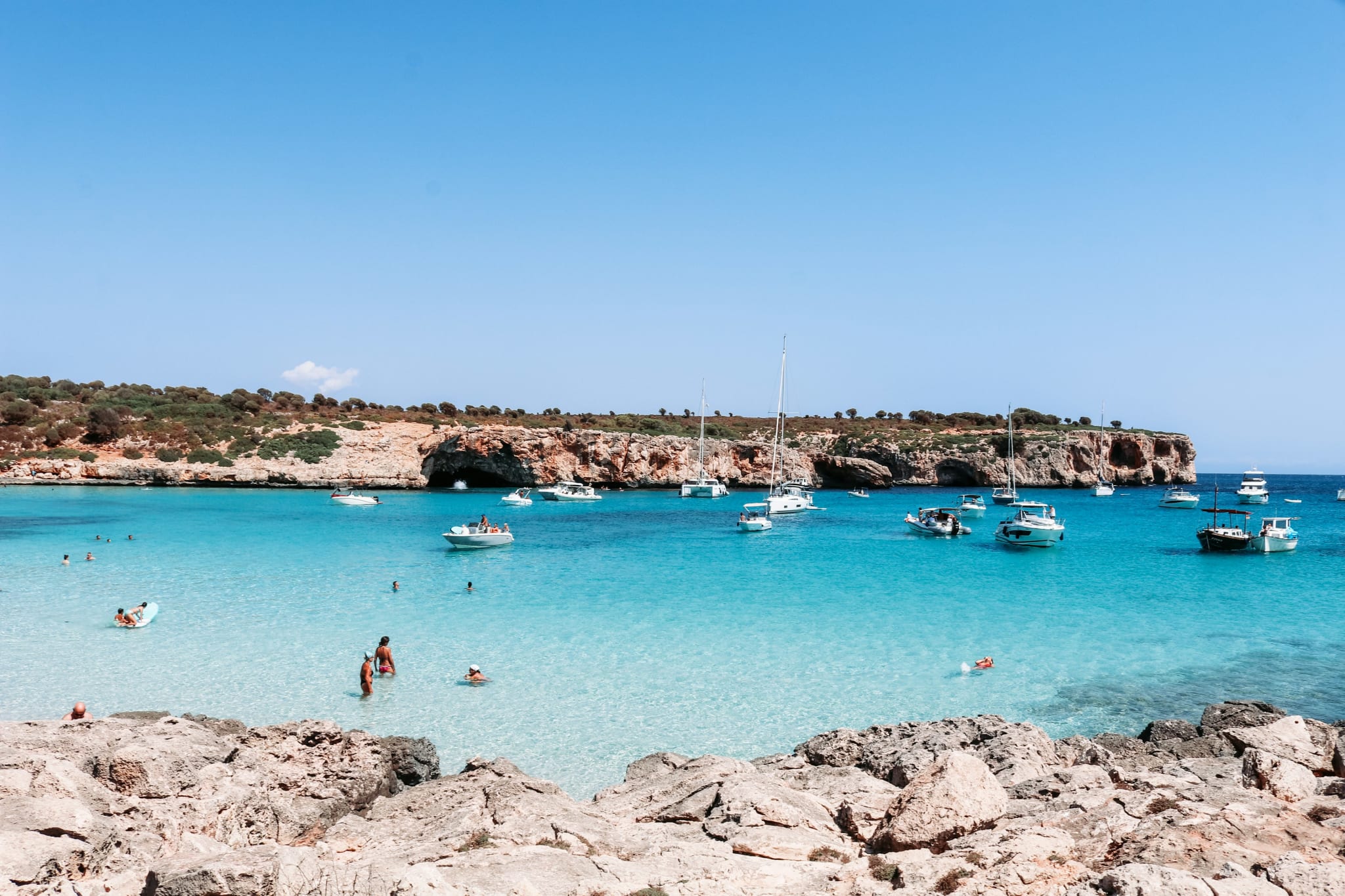
Beach holiday: June and September give warm water and space on the sand. In July or August, arrive at popular coves such as Caló des Moro early in the morning. See our guide to the best beaches in Mallorca.
Hiking: The GR221, the long-distance path through the Serra de Tramuntana, is best walked in spring and autumn. In summer the heat makes long stages hard work, and in winter there can be snow on the highest peaks.
Cycling: From February to May the roads to Sa Calobra, Formentor and Lluc fill with cyclists, with less traffic than in summer.
Families: June and early September are good choices. The sea is warm and the shallow beaches in the bays of Alcúdia and Pollença suit small children, without the peak crowds.
How the weather differs across the island
The Serra de Tramuntana in the north west gets the most rain and the coolest temperatures, and the mountain villages can feel noticeably fresher than the coast. The north coast around Pollença and Alcúdia is more exposed to wind from the north, especially outside summer.
The south and east are drier and warmer, and around Santanyí, Colònia de Sant Jordi and Es Trenc the beach season lasts longer than in the north. Palma, sheltered in its bay, has mild winters and is the easiest base from November to March.
Festivals and holidays worth planning around
Sant Antoni (16 and 17 January): Bonfires, music and processions in villages such as Sa Pobla and Artà.
Sant Sebastià (around 20 January): Palma celebrates its patron saint with concerts and bonfires in the squares of the old town.
Es Firó in Sóller (May): The town re-enacts a historic battle between its residents and pirates.
What to pack and book ahead
In summer, book hotels and rental cars early and bring a hat and plenty of sun cream, as car parks at the popular beaches fill early. In spring and autumn, pack a light jacket for the evenings and the mountains. In winter, bring warm layers and a rain jacket.

Where to stay
Three hotels from our beach guide, each in a different part of the island.
Fontsanta: hot springs in the south
Fontsanta is built around hot springs near Colònia de Sant Jordi and is adults only, with a large spa fed by thermal water. Es Trenc is a few minutes away by car.

Son Brull: a rural base near Pollença
Son Brull is an old stone monastery outside Pollença, surrounded by vineyards and mountains, with a spa and a pool in the garden. A good base for spring hiking or cycling in the north.

Jumeirah Mallorca: above Port de Sóller
Jumeirah sits high on the cliffs above Port de Sóller, with an infinity pool over the bay, a spa and several restaurants. The slope to the harbour is steep, so plan on a taxi or car to reach the beach.
Good to know
Autumn rain: October and November can bring short, heavy storms, so keep a flexible day in your plans.
School holidays: Prices and crowds rise around Easter, the summer holidays and the autumn half term in northern Europe.
Winter closures: Many resort hotels close from November to March, while Palma and Sóller stay open.
Frequently asked questions
What is the best month to visit Mallorca?
For most travellers, June or September. The sea is warm, the days are long and the island is less crowded than in July and August. AEMET gives 28.1°C in June and 27.9°C in September at Palma airport, and both months have fewer than five rain days.
Is the sea warm enough to swim in Mallorca in October?
Usually, yes. The sea is still warm after the summer, and daytime highs are 23.9°C in October, according to AEMET. The weather is less settled than in summer, with 6.1 rain days on average. Pack a light jacket for the evenings, when it drops to around 13°C.
When is the rainy season in Mallorca?
There is no rainy season as such, but most rain falls from September to December. October has the most, 62 mm, and December the most rain days, 6.4. July has only 0.5 rain days and 5 mm, according to AEMET, so June to August is the safest bet.
Is Mallorca worth visiting in winter?
Yes, for Palma, hiking and cycling. Days are mild, at 15.2°C in January, but the sea is too cold for most swimmers and many beach hotels are closed. Nights drop to around 4°C, and Palma airport averages 5.1 days of frost in January.
How warm is Mallorca in May?
Around 24°C by day and 11°C at night. AEMET gives an average high of 23.7°C and a low of 11.3°C at Palma airport in May, with 3.8 rain days and 283 hours of sunshine. Pack a light jacket for the evenings and the mountains.
Sources
Temperatures, rain days, rainfall and sunshine are AEMET standard climate values for 1981 to 2010 from Palma airport. Hotel details come from Hotels.com and Picolo's own hotel reviews. The comparison and the picks are Picolo's own. For the forecast, see AEMET. Last checked 13 November 2026.
Enjoy Mallorca
Picolo Editorial