
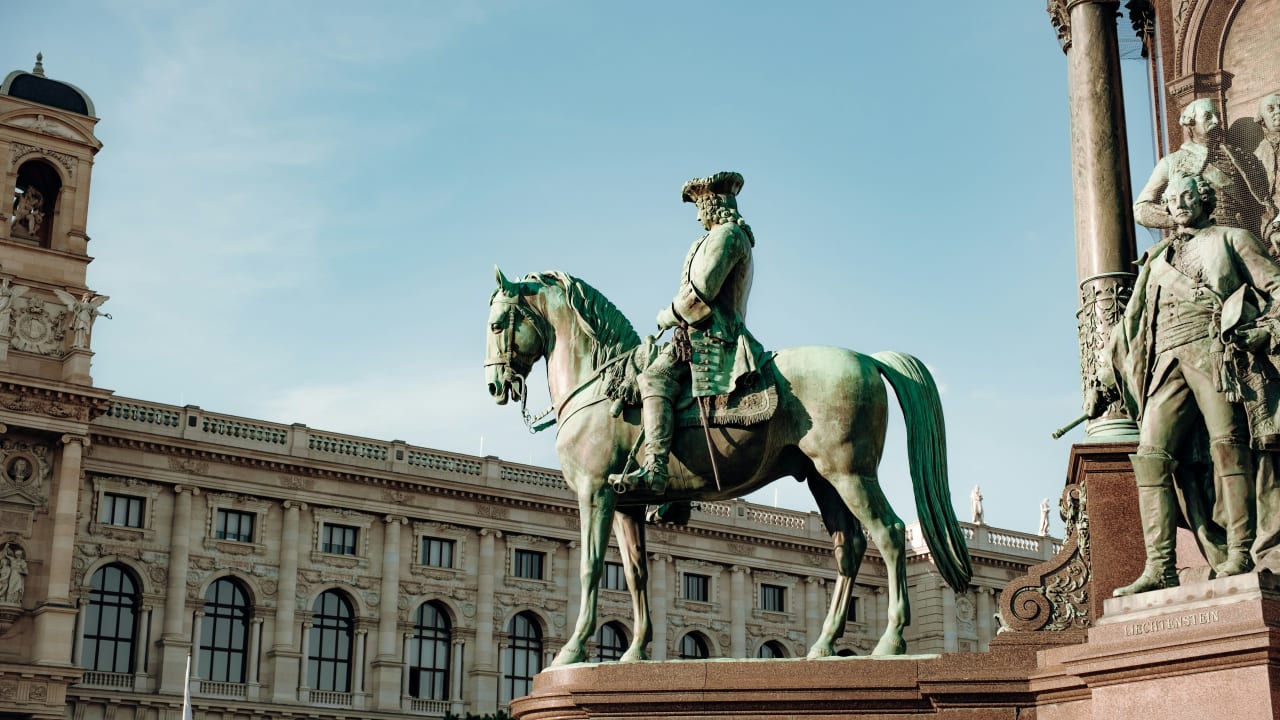
Ringstrasse
The Opera, the Rathaus and the Karlskirche along the boulevard that replaced the city walls.
Travel guide · Vienna
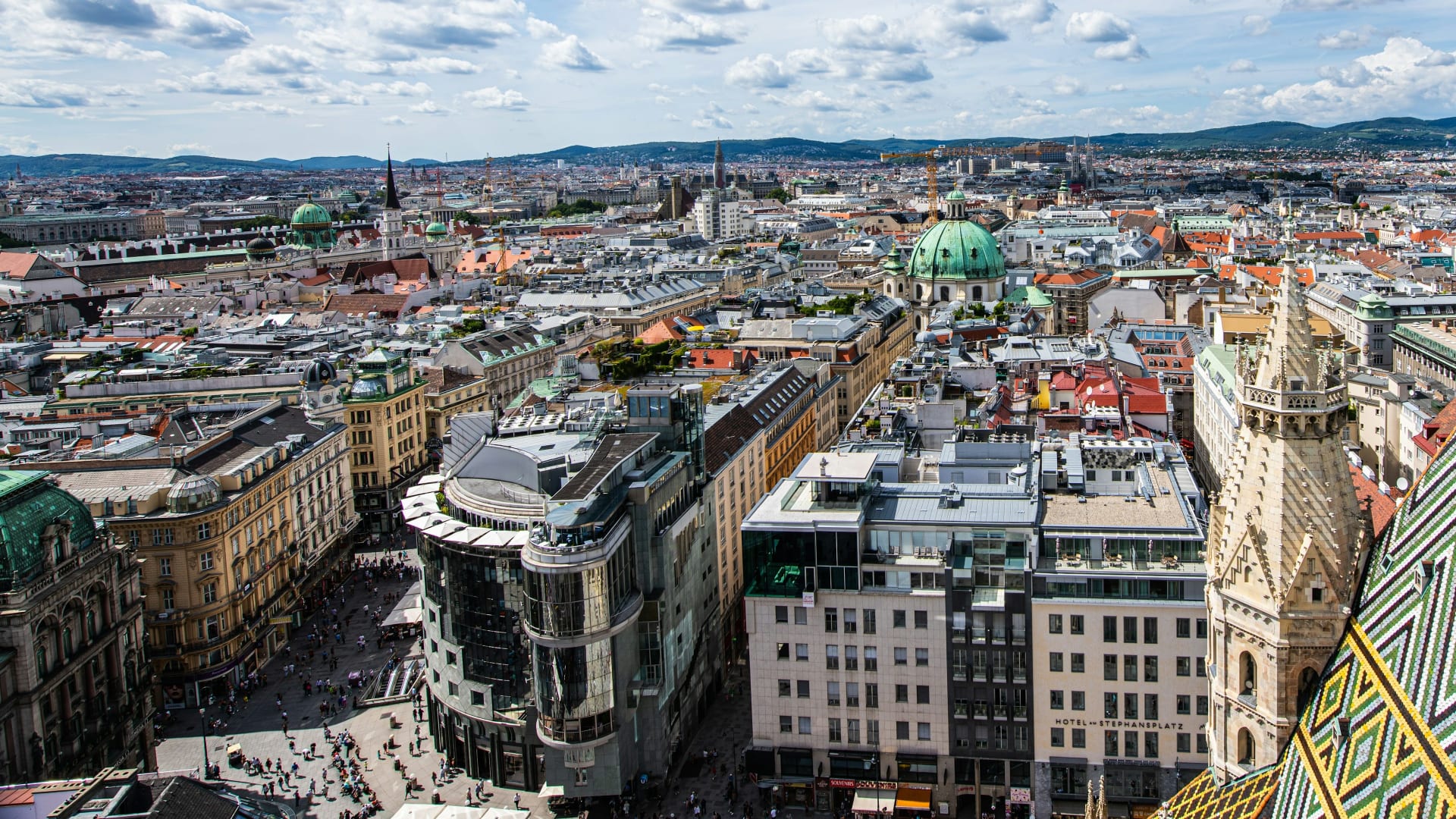
The roof of St Stephen's Cathedral is laid in zigzags of glazed tiles, and you see it best from Stephansplatz. Around it lies the old core of Vienna, where you walk to the Graben, the Hofburg and the coffee houses.
Innere Stadt means «inner city» and is Vienna's 1st district, the first of the city's districts. It sits inside the Ringstrasse and covers barely three square kilometres. The whole historic centre is a UNESCO World Heritage Site, inscribed in 2001. Everything is so close together that you simply walk.
For the rest of the city, see our Vienna travel guide. This page is about the core itself, and what you can safely skip.
The south tower is about 136 metres high, with 343 steps up to the bell chamber. The north tower has a lift, and it is where the great Pummerin bell hangs. Walk around the square first, so you see the patterned roof before you go inside.

In the middle of the pedestrian Graben stands the Plague Column, put up after the plague of 1679 and consecrated on 29 October 1693. Emperor Leopold I had vowed to build a column if the epidemic ended. Kärntner Strasse became a pedestrian street in 1974 and runs from Stephansplatz to the Opera. Both streets are busy, so take a side lane when you want quiet.

The Hofburg was the Habsburgs' winter residence until 1918 and is now the workplace of the Austrian president. The Spanish Riding School sits in the same complex and shows Lipizzaner horses. The morning exercise is the public part of the horses' daily training, set to classical music, and it follows no fixed programme.

The pastry shop Demel on the Kohlmarkt was founded in 1786 and still keeps the emblem «K. u. K. Hofzuckerbäcker» at the shop. Viennese coffee house culture is on Austria's national list of intangible cultural heritage. Café Central in Palais Ferstel has announced a major renovation from March 2026 and a reopening in winter 2026. Check its opening status before you go.

Day 1: St Stephen's early, before the tour groups, then the Graben and cake at Demel.
Day 2: the morning exercise at the riding school, the Hofburg and standing room at the Opera in the evening.
Day 3: walk out through the Ring to Neubau and the Ringstrasse.
Innere Stadt suits a first visit when you want to walk to everything. If you want something cheaper and more local, Neubau is an option.

Red velvet, dark paintings and waiters in white jackets greet you at Hotel Sacher Wien, on Philharmonikerstrasse directly behind the Opera. The house makes no attempt to look modern, and that is the point. It suits a weekend of opera and old Vienna, but not a quiet lobby or light Nordic interiors.

From the rooftop terrace at Rosewood Vienna on Petersplatz, the Peterskirche stands right beside you. The hotel occupies a former bank, with large, bright rooms and modern bathrooms. The price is high and the patina of the Sacher is missing, so if you want an old house, choose that instead.

The pool at Park Hyatt Vienna lies down in an old bank vault, with gilded walls where the money once sat. The hotel stands on Am Hof, a couple of minutes from both the Graben and the Hofburg, and the rooms have tall ceilings and muted colours. The square goes quiet in the evening, so it suits you less if you want cafés and bars outside the door.
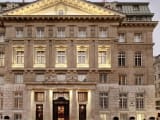
More suggestions are among the hotels in Vienna.
The U-Bahn stops at Stephansplatz, on lines U1 and U3, and at Herrengasse on U3. From the airport, trains run to Wien Mitte, and from there you take the U3. The core itself you walk.
Expect hotels and coffee to cost more here than in Neubau.
Stephansplatz and the Graben are packed from late morning. Go early or after dinner.
The Graben is not entirely car-free. A drivable street crosses the pedestrian zone at the Peterskirche.
Area guides
Three districts, each with its own rhythm.
The Opera, the Rathaus and the Karlskirche along the boulevard that replaced the city walls.
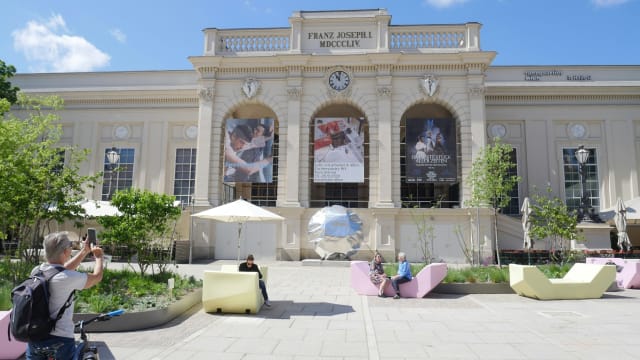
The MuseumsQuartier, Biedermeier lanes in Spittelberg and shops along Neubaugasse.
Innere Stadt is Vienna's first district, the 1st Bezirk, inside the Ringstrasse. St Stephen's, the Hofburg, the Opera and most of the classic coffee houses are here, and you can walk between them in minutes.
The Goldenes U, or «Golden U», is the shopping route that runs from the Kohlmarkt via the Graben to Kärntner Strasse. It holds some of Vienna's first pedestrian streets, with the best-known shops and confectioners.
Standing tickets are sold at a separate box office from 80 minutes before each performance, and the number is limited. They cost far less than a seat, so arrive in good time and expect a queue.
Often yes, for the morning exercise. Tickets are collected at the cash desk at Michaelerplatz 1, and the session is quiet, with no filming. Check the date and time on the riding school's own website before you plan around it.
Yes, if you want to walk to the sights and skip the trams. You pay for the location. Neubau gives you more local life and often lower prices.