Travel tips
First time in Morocco: what to know before you go
Your first evening in the Marrakech medina is a lot to take in. A few simple habits make the second one far better.
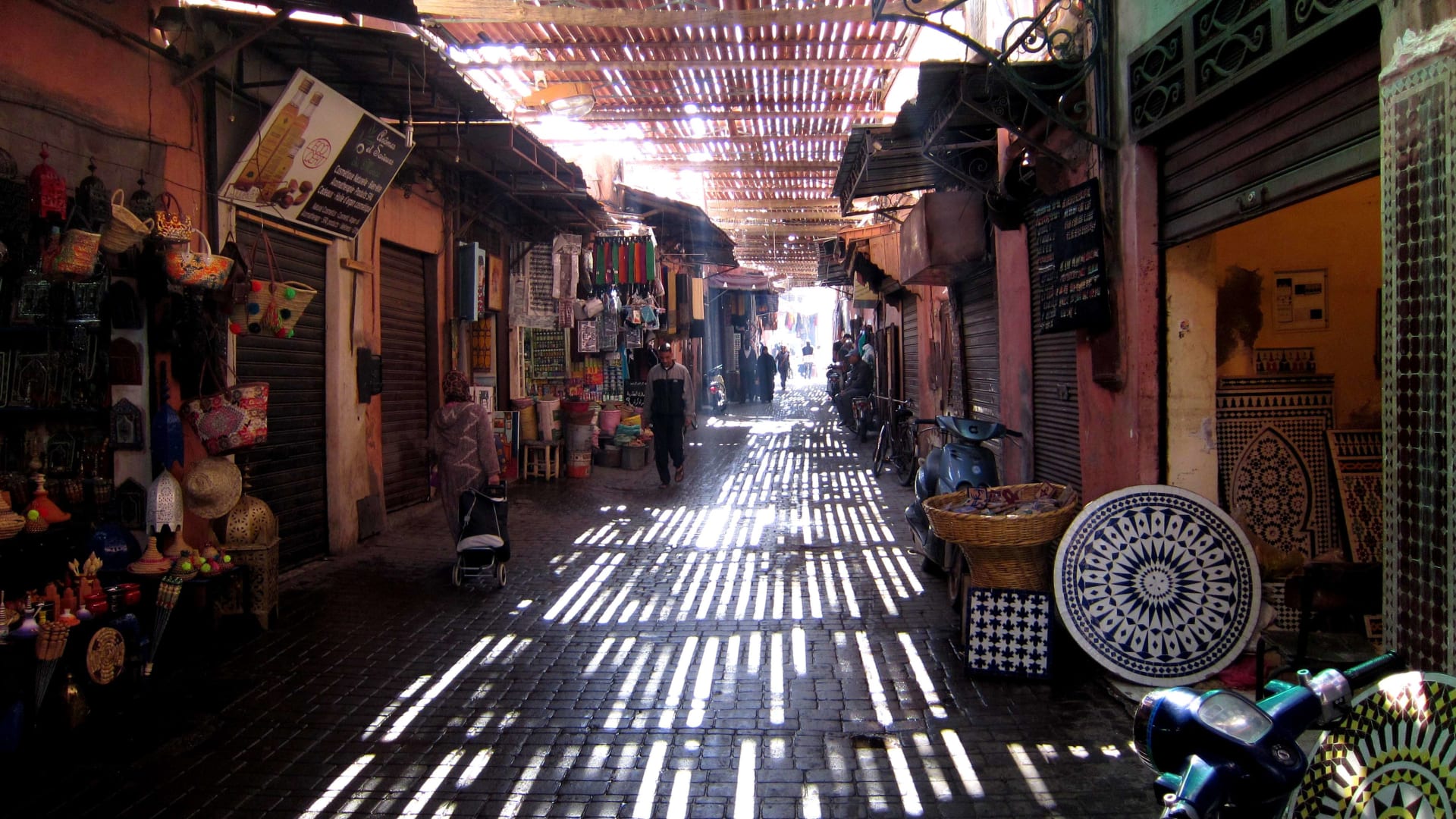
You hear the scooter a second after you see it. You flatten yourself against a wall of rugs, someone calls out in French, and the blue dot on your map is drifting through solid buildings. A quarter of an hour later you are on a roof terrace with a glass of mint tea, and the noise below has turned into a view.
That is Morocco for many first timers: overwhelming, then wonderful. The gap between the two is smaller than you think, and most of it comes down to things you can know before you land.
The short answer
Morocco works well for a first trip if you want somewhere very different without a long flight. Start in Marrakech, or pair it with Essaouira or Agadir, stay in a riad in or near the medina, carry local cash and cover your shoulders and knees in the old towns.
At a glance
- Start in
- Marrakech
- Best time
- Spring and autumn
- Currency
- Dirham, carry cash
- Dress
- Shoulders and knees covered in the medina
- First trip
- 4 to 7 days
Last checked:
Which city should you choose?
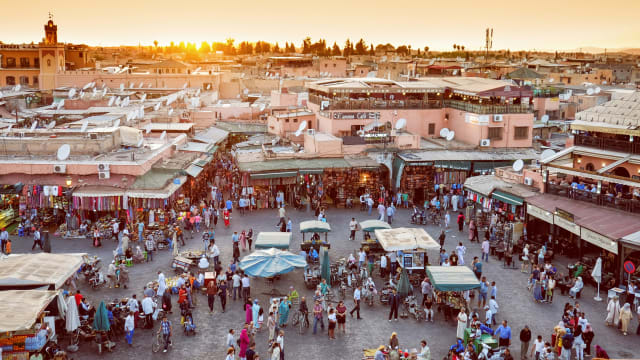
Marrakech is where most people begin. It has the souks (covered market lanes), palaces, gardens and Jemaa el-Fna, the square that sells orange juice in the morning and fills with grill smoke and music after dark. It is also the most intense place to arrive.
Essaouira sits on the Atlantic, around three hours from Marrakech by road. Its medina is smaller, the sea breeze keeps it cooler and the selling is gentler. Plenty of travellers use it to slow down after Marrakech.
Agadir is the beach resort, with a long sandy bay and modern hotels. It is the easiest choice with children, though it has little of the old Morocco you may be picturing. Fez is older, denser and more of a maze than Marrakech, and makes a better second trip.

Where to stay: riad or hotel
A riad is a traditional Moroccan house built around an inner courtyard, often with a fountain and a roof terrace. From the lane you see only a door in a long wall. Inside, it is quiet. Many have become small guesthouses with a handful of rooms, and they are the best way to stay inside the medina.
The catch: cars rarely reach the door, and the narrowest lanes are hard to find on your first night. Ask the riad to arrange an airport transfer or to meet you where the taxi stops. If you want a pool, space and calm, stay in Hivernage or the Palmeraie, the palm grove outside town, and take a taxi in.

La Mamounia
The hotel sits just inside the old city walls, with large gardens between you and the traffic. It is the best known address in Marrakech, and Jemaa el-Fna is about fifteen minutes away on foot.
Right for a first trip that is also a big occasion. If budget matters more, a riad gives you more Morocco for the money.

Riad Marraplace
The riad is inside the medina, about ten minutes' walk from Jemaa el-Fna and the Koutoubia Mosque. Rooms open onto an inner courtyard with arches and galleries, breakfast with local dishes is included, and there is a terrace for the evenings.
It can arrange an airport transfer for a fee, which pays off on your first night: no hunting for the door down narrow lanes with your suitcase in tow. A good fit if you want to sleep inside the medina with a quiet place to come back to.
Money, haggling and tipping
The currency is the dirham. Cards work in hotels and some restaurants, but in the souks, in taxis and in small cafés you need cash. Use a cash machine on arrival and keep small notes and coins handy.
In the souks the first price is an opening line. Decide what you would pay before you ask, start well below it and stay friendly throughout. Walking away often brings a better offer. If you are not buying, lingering over the goods sends the wrong signal: a polite no thank you and keeping your pace does the job.
Tipping is expected: a little for whoever carries your bags, rounding up at restaurants and something for a guide. If someone shows you the way without being asked, they will usually want paying, and it is easier to decline at the start than at the end.

What to wear and how to behave
Morocco is a Muslim country, and its cities are more modern than many visitors expect. Even so, covering shoulders and knees in the medina makes things easier for you and for the people you meet. On Agadir's beach and by the hotel pool, normal swimwear is fine.
Most mosques are closed to non-Muslims. The well-known exception is the Hassan II Mosque in Casablanca, which runs guided tours. Ask before photographing people, and expect some to say no or to ask for a few dirhams.
During Ramadan, the month of fasting, many cafés close during the day and the cities come alive after sunset. It can be a rewarding time to visit, but eat and drink discreetly in the street. Ramadan moves forward by a few weeks each year, so check the dates before you book.
Is Morocco safe?
Most visitors find Morocco a safe place to travel. What you will meet most often are persistent sellers and unofficial guides who offer to show you the way or tell you the lane ahead is closed. It rarely is. Smile, keep walking and ask in a shop or at your riad instead.
Agree the fare before getting into a taxi, or ask the driver to use the meter. Drink bottled water and go easy on salads and ice for the first few days. Check the FCDO travel advice and current entry requirements before you go.
Getting there and getting around
Marrakech and Agadir have direct flights from several UK airports, and both are popular for winter sun packages. The flight is a little under four hours from London.
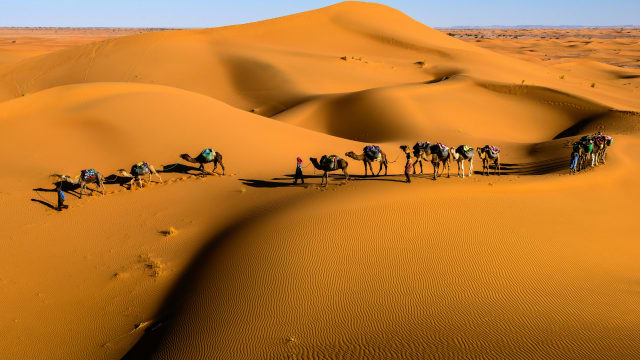
Trains and buses link the main cities. The railway between Marrakech, Casablanca and Tangier is the simplest option, with high-speed trains running north from Casablanca. For Essaouira, take the bus or a private driver. The desert at Merzouga is a long way from Marrakech, and most trips there take two or three days.
Read more: Desert camps near Merzouga

Two routes for a first trip
Four days: two nights in the Marrakech medina, a day trip into the Atlas Mountains and a final night by a pool outside town before you fly home.
Seven days: three nights in Marrakech, three in Essaouira and one back in Marrakech near the airport. With children, swap Essaouira for Agadir.
When to go
Spring and autumn are the most comfortable seasons in Marrakech. Summer is very hot inland, while the coast stays milder. Winter days are often sunny and the evenings cool, so pack a jumper.
Read more: Best time to visit Morocco
Top image: Photo: Martin Furtschegger, CC BY 3.0 via Wikimedia Commons.
First time in Morocco: common questions
Do I need a visa for Morocco?
British and many European passport holders can visit as tourists without a visa for short stays. Rules can change, so check the FCDO or Moroccan authorities before you book.
Can you drink alcohol in Morocco?
Many hotels and some licensed restaurants serve alcohol, though rarely inside the medina. Drinking in the street is not the norm.
What language is spoken in Morocco?
Arabic and Amazigh, also called Berber, are the official languages. French is common in business and on signs, and English is widely understood in hotels and tourist areas.
Is Marrakech too much for a first visit?
The medina is intense on day one. Stay somewhere you can retreat to, and plan a quiet day or a few nights in Essaouira.
How many days do you need in Morocco?
Four days covers Marrakech and a day trip. A week gives you two cities at an easy pace.