
Morocco
Best time to visit Morocco: weather, seasons and crowds month by month
Spring and autumn suit most trips to Morocco, but the right month depends on whether you want medinas, the Sahara, the High Atlas or the Atlantic coast.
Morocco packs several climates into one country. The north has a Mediterranean feel with wet winters, the Atlantic coast stays mild most of the year, the imperial cities inland swing from cool winters to scorching summers, and the Sahara runs to extremes in both directions.
Here is which months suit city breaks in Marrakech, nights in the Sahara at Merzouga, trekking in the mountains and beach days in Agadir or Essaouira.
In short: when should you go to Morocco?
Spring, from March to May, and autumn, from September to November, are the best times to visit Morocco for a mix of cities, desert and mountains. Days are warm without the summer heat, and desert nights are cool rather than freezing. Winter suits the south coast around Agadir, while summer is best spent on the Atlantic coast or in the High Atlas.
Best for a first trip: April, May and October, when Marrakech, Fes and the desert are all comfortable.
Best for the Sahara: October to November and March to April, with warm days and cool nights in the dunes.
Best for trekking: May to June and September to October in the High Atlas, when the passes are clear of snow.
Best for beaches: June to September on the Atlantic coast, or November to March in Agadir for winter sun.
Best for fewer crowds: January and early February, outside the Christmas and Easter peaks.
Morocco season by season
Spring (March to May) is the classic season. Marrakech climbs from the low twenties into the high twenties by May, and the countryside is green after the winter rain. Easter brings a spike in European visitors, so book riads early for those weeks.
Summer (June to August) is hot inland. Marrakech and Fes regularly pass 35 degrees and can reach above 40, and the Sahara is close to unbearable in the middle of the day. The Atlantic coast is the place to be: Essaouira stays in the low to mid twenties thanks to steady trade winds, and Agadir is warm without the heat of the interior. The coast is busy with domestic holidaymakers in July and August.
Autumn (September to November) mirrors spring. The heat eases through September, October is close to ideal across most of the country, and November brings the first rain in the north and cooler evenings.
Winter (December to February) gives sunny, mild days in Marrakech, often around 18 to 20 degrees, but nights can drop to a few degrees above freezing. In the desert, nights can fall below zero. The High Atlas gets snow, and the north around Tangier and Chefchaouen sees most of its rain. Agadir is one of the warmest winter spots within easy reach of northern Europe.
Month by month
January and February: Cool, clear and quiet. Good for Marrakech and the south coast, cold at night in the desert. The almond trees around Tafraoute blossom in February.
March and April: Warm days and green landscapes. Ideal for a round trip, busy around Easter.
May: Warm and settled across most of the country. The rose festival in the Dades Valley usually takes place this month.
June: The interior heats up, while the coast and the mountains are pleasant. The Gnaoua music festival in Essaouira is often held in June.
July and August: Hot in the cities and the desert, busy on the coast. Head for Essaouira, the Atlantic beaches or the High Atlas.
September: Still hot at the start, cooling towards the end. Good for trekking and the coast.
October: Arguably the best single month. Comfortable in the cities, warm days in the Sahara and few rainy days.
November: Mild in the south, with the first autumn rain in the north.
December: Sunny and mild by day, cold by night. Christmas and New Year are among the busiest weeks of the year in Marrakech.
Regions that follow their own calendar
The Sahara: Merzouga and the dunes of Erg Chebbi are at their best from October to April. Summer days are extreme, and winter nights can be bitterly cold, so pack properly for a night in a desert camp.
The High Atlas: Summer is the main trekking season, with cooler air than in Marrakech below. From December to March the peaks are under snow, and Mount Toubkal then calls for winter gear and a guide.
The Atlantic coast: Essaouira is breezy all year and especially windy in summer, which suits kite and windsurfers. Agadir is calmer and warmer, and works as a winter sun destination.
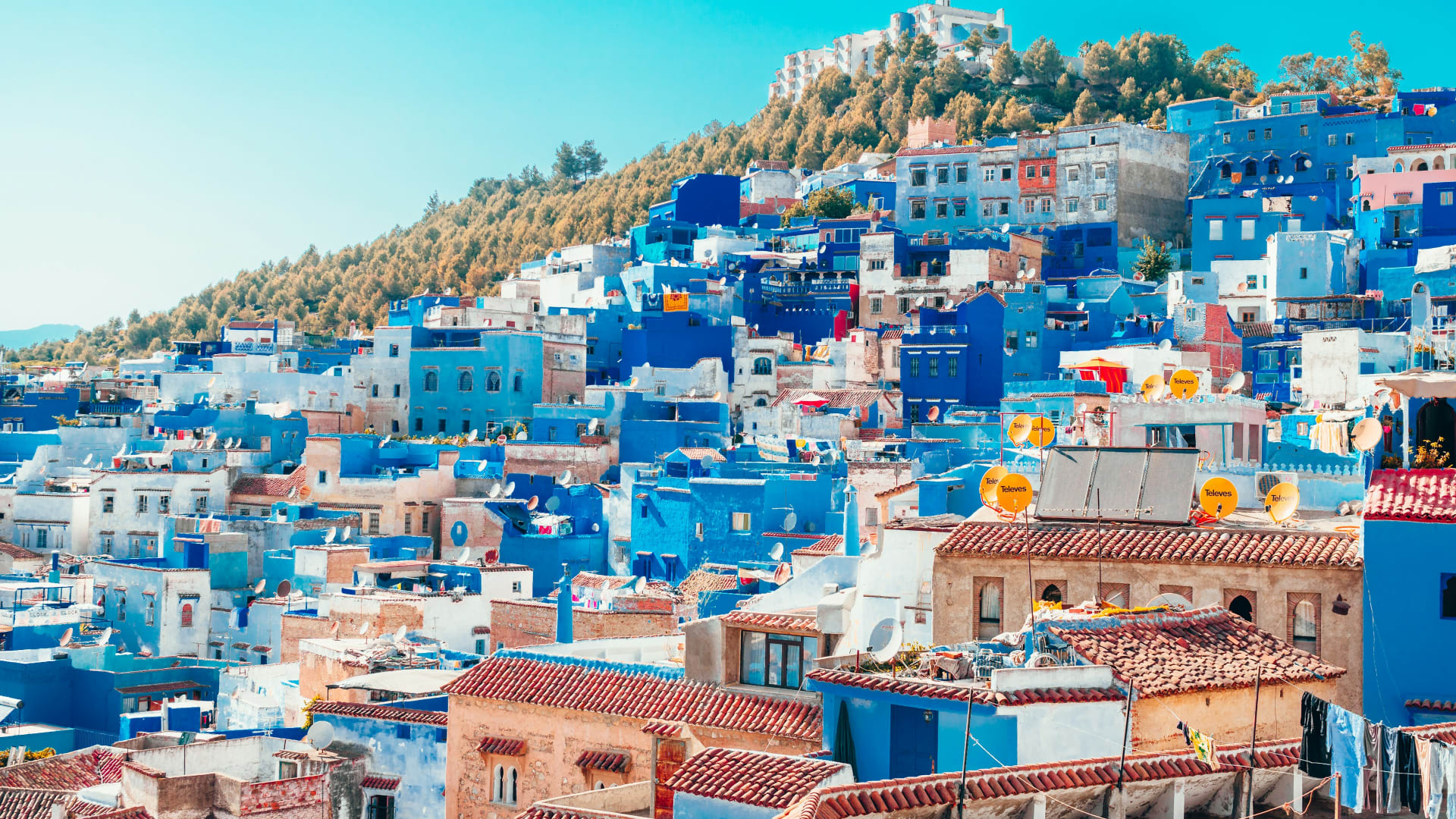
The north: Tangier, Chefchaouen and the Rif Mountains get more rain than the rest of the country between November and March. Spring and early autumn are the safest months for the blue town.
Ramadan, holidays and festivals
Ramadan moves around 11 days earlier each year, following the Islamic lunar calendar. In 2027 it falls roughly from early February to early March. Travelling then is entirely possible, though many local cafes close during the day and the evenings come alive after sunset.
Eid al-Fitr at the end of Ramadan and Eid al-Adha around two months later are family holidays, when transport fills up and some shops close for a few days. Other dates worth knowing are the Fes Festival of World Sacred Music, usually in late spring, and the Marrakech International Film Festival, usually held in late autumn. Dates change from year to year.

Where to stay
A few places from our Morocco guides that work in any season.
Royal Mansour Marrakech: gardens, spa and Moroccan cooking
One of the best-known hotels in the world, built as a small medina of private riads with their own courtyards and roof terraces. The indoor pool sits under a glass roof with the garden outside.


Riad Kniza: a classic riad in the medina
A riad in the medina with a courtyard, arches and breakfast included, within walking distance of Jemaa el-Fnaa.

Luxury Camp Chebbi: tents in the dunes
Luxury Camp Chebbi sits among the dunes of Erg Chebbi, with a shared area where dinner is served under the open sky. The tents have beds and bathrooms.
Book your stay: Check availability and prices at Luxury Camp Chebbi
Good to know
Layers in winter: Evenings in Marrakech and nights in the desert are cold from December to February.
Cover up: Light clothing over shoulders and knees works against the sun and in the medinas.
Book early for peaks: Easter, the autumn school holidays, Christmas and New Year fill small riads and the best-known desert camps first.
Atlantic water: The sea stays cool even in summer, so the beaches are better for walks, surfing and sun than long swims.
Plan around Ramadan: Check the dates before you book, especially if you want a lively food scene during the day.
Frequently asked questions
What is the best month to visit Morocco?
October and April are hard to beat. Both give warm days in the cities, comfortable conditions in the Sahara and little rain.
Is Morocco too hot in summer?
Inland, yes, for many travellers. Marrakech, Fes and the desert often pass 35 to 40 degrees in July and August. The Atlantic coast and the High Atlas are far more comfortable in summer.
Is Morocco warm in winter?
Days are often mild and sunny in Marrakech and warm in Agadir, but nights are cold, especially in the desert and the mountains. The north gets most of its rain in winter.
Can you visit Morocco during Ramadan?
Yes. Hotels and many restaurants for visitors stay open, but daily life slows down, some places close during the day and opening hours change. Evenings after sunset are sociable and festive.
When is the best time for the Sahara desert?
From October to April, with spring and autumn as the sweet spots. Avoid the height of summer, and pack warm clothes for winter nights.