Sailing holidays
Sailing Croatia from Split and Dubrovnik, the islands and the rules
Islands close enough to see the next one from the last, a quay in every town and a wind that arrives after lunch and leaves before dinner. Why Croatia is where most people learn to love a charter, and what the base will ask for.
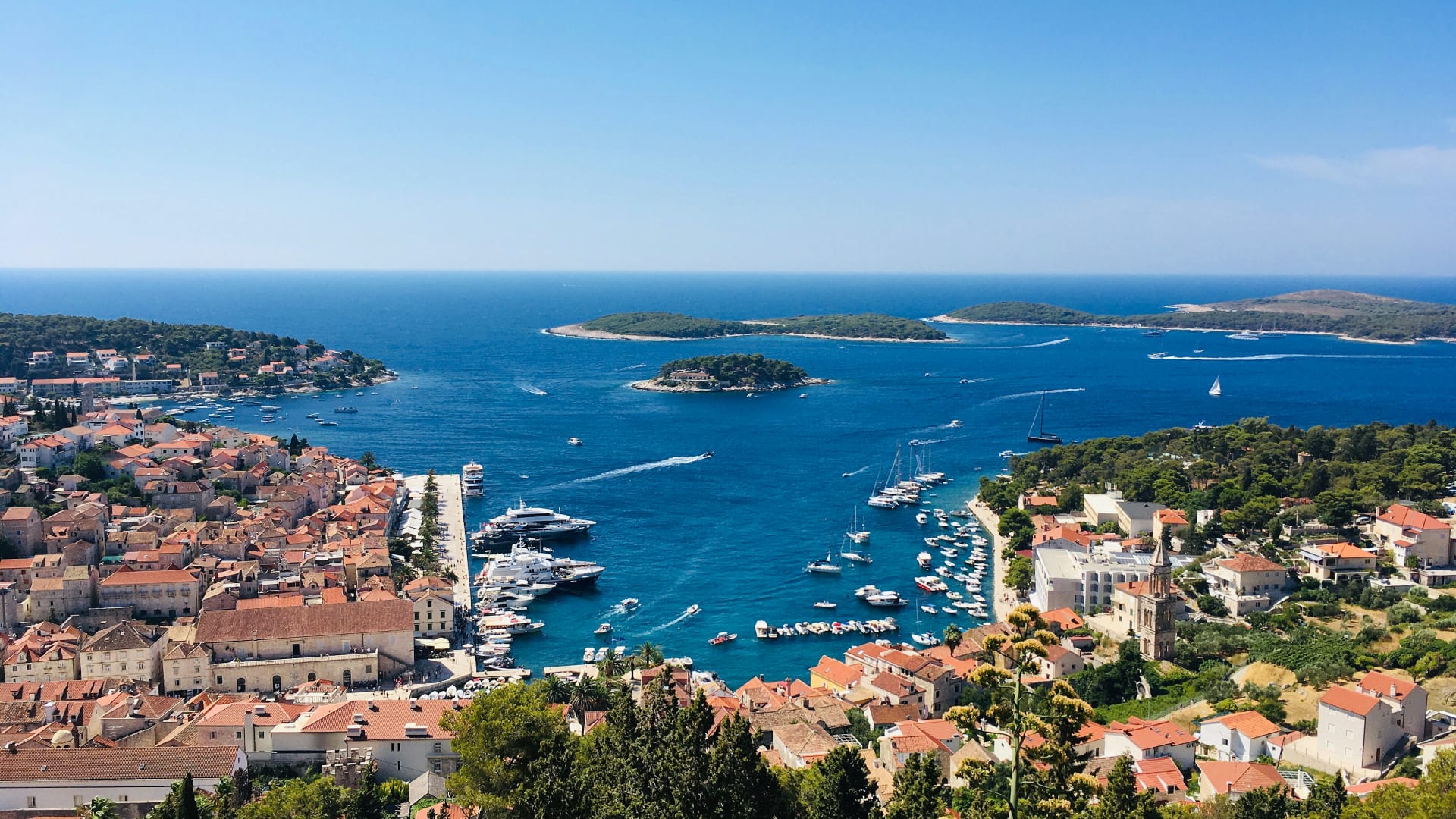
Seven in the evening on the quay in Hvar Town, and the harbour master is still waving boats into gaps that do not look wide enough. Stern lines go ashore, a bow anchor goes down, and within ten minutes the crew is on the quay with a glass of something cold, two metres from the cockpit.
Behind them the town climbs towards the fortress. Tomorrow it will be Vis, or a bay on the Pakleni islands, or nothing more ambitious than the cove on the other side of the island. Nobody is in a hurry, and that is sailing in Croatia.
Picolo does not charter boats. What follows is the part the charter brochures skip: which base to choose, which islands repay a night, what the weather does in summer, what the skipper must show at the office, and where to sleep in Split or Dubrovnik before you step aboard.
In short: sailing in Croatia
Two bases: Split, with Trogir and Kaštela beside the airport, for the central Dalmatian islands; Dubrovnik, at Komolac up the river from the old town, for the south.
The islands from Split: Brač, Šolta, Hvar, Vis and Korčula. Short legs, sheltered water, a town quay or buoy field almost everywhere.
The islands from Dubrovnik: the Elaphiti islands, Mljet's national park and Korčula. Quieter, with longer legs.
Season: April to October, peak July and August. May, June and September are the months to aim for.
Paperwork: Croatia publishes a list of accepted foreign certificates. ICC valid for coastal waters is on it, and a radio certificate is required if the boat has VHF.
Split or Dubrovnik
Split is the bigger charter base, and for good reason. The islands start a few miles offshore, and a week from here can take in Brač and its beaches, Hvar Town with its quay and nightlife, the quieter island of Vis, and a long last day back along the coast.
The marinas are spread between the city port, Trogir and Kaštela, and the last two are a ten-minute drive from Split airport. That makes a Saturday arrival straightforward.
Dubrovnik's charter base is in the river marina at Komolac, north of the old town, not on the city quay. From here the islands are fewer and the legs longer: the Elaphiti islands first, then Mljet with its salt lakes and national park, then Korčula. It is a calmer, less crowded week, and the reward is sailing back towards Dubrovnik's walls from the sea.
The choice is partly about flights. Split and Dubrovnik both have direct summer services from the UK and Scandinavia, and a one-way charter between the two bases is sometimes possible if you ask.
Weather and wind
Summer sailing here runs on the maestral, a north-westerly sea breeze that builds late in the morning, blows at a pleasant force 4 to 5 through the afternoon and fades towards evening. It is why mornings are for motoring or swimming and afternoons are for sailing. Two other winds have reputations.
The bura is a cold, gusty north-easterly that comes down off the mountains; the jugo is a warm south-easterly that brings swell and rain. Both belong mostly to the cooler months, but both can appear in summer, and the Croatian meteorological service publishes a daily marine forecast for small craft that every charter base will show you. Check it every morning.
What the skipper must show
Croatia is unusually clear about this. The Ministry of the Sea, Transport and Infrastructure publishes a table of foreign certificates accepted for skippering boats and yachts under the Croatian flag, including boats chartered without crew. An International Certificate of Competence issued under UN resolution 40 is accepted for bareboat charter if it is marked as valid for coastal waters.
The RYA's ICC is listed, as are national certificates from a long list of EU and EEA countries. In every case the table adds the same condition: if the boat has a VHF or GMDSS radio, the skipper must also hold a radio operator's certificate, domestic or foreign. Charter companies may ask for more than the legal minimum, such as a logbook or a second qualified person, so send your documents in advance.
If you do not have a certificate, book a skippered boat. Many of the best weeks on this coast are sailed that way, and the skipper will know which quay in Hvar still has a space at seven.
When to go
April and October are quiet and cheap, with a real risk of weather days. May, June and September are the sweet spot: warm water, settled weather and room on the quays. July and August are the busiest weeks of the year on a coast that is already popular, and the harbour at Hvar is a lesson in patience. Book early for any Saturday in those two months.
Where to stay before and after
Charters start on Saturday afternoon and end Friday evening, so most people spend a night in Split or Dubrovnik at each end. These are hotels we would choose.

Hotels in Split, Trogir and Dubrovnik
Marmont Heritage Hotel, Split
A stone house in the old town, a few streets from the Riva and the ferry port.
SplitOld townBrown Beach House, Trogir
A converted tobacco factory on the water in Trogir, minutes from the airport and the marinas.
TrogirNear airportHotel Excelsior, Dubrovnik
On the shore at Ploče, with the old town walls across the water.
DubrovnikSea viewVilla Dubrovnik
A small cliffside hotel at Ploče, with its own sea access and a view back to the old town.
DubrovnikCliffside


Our pick before a Split charter
Brown Beach House in Trogir
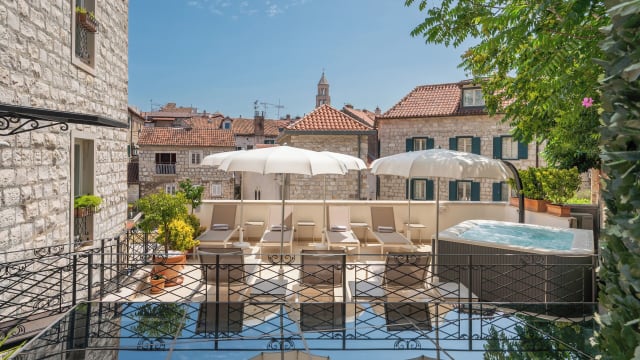
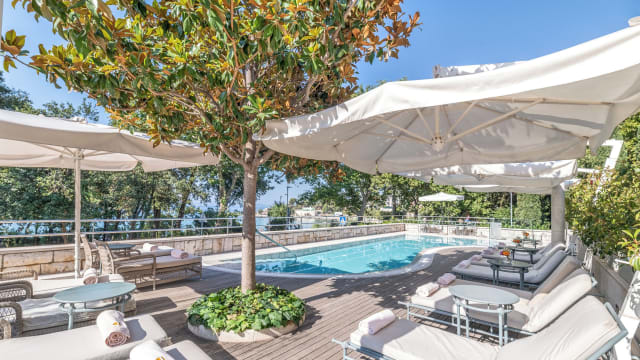
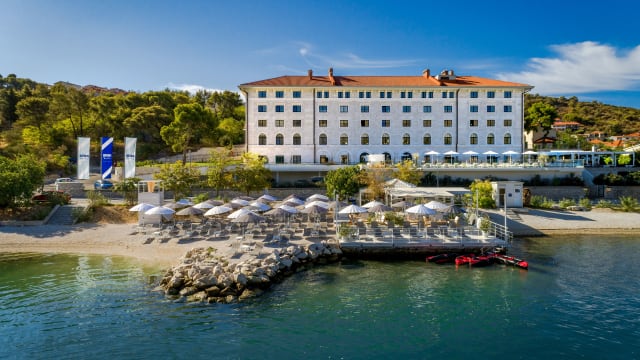
If your boat is in Trogir or Kaštela, and many are, stay at Brown Beach House. It is a former tobacco factory on the water with a pool and a beach, ten minutes from Split airport and a short taxi from the marinas. You can arrive on Friday, provision on Saturday morning and be aboard without going into Split at all. The caveat: it is quieter than the city, so if you want a last night out, choose Split instead.


Frequently asked questions
Do you need a licence to sail in Croatia?
For a bareboat charter, yes. Croatia accepts the International Certificate of Competence valid for coastal waters and a range of national certificates listed by its Ministry of the Sea. If the boat has VHF, you also need a radio operator certificate. A skippered charter needs nothing.
Is Split or Dubrovnik better for a sailing holiday?
Split for a first charter: more islands, shorter legs and marinas next to the airport. Dubrovnik for a quieter week with longer passages to the Elaphiti islands, Mljet and Korčula.
What is the best month for sailing in Croatia?
June and September, with May close behind. The water is warm, the afternoon maestral is reliable and the quays are not yet full. July and August are the most crowded and most expensive.
What is the maestral?
The summer sea breeze on the Croatian coast. It is a north-westerly that builds late in the morning, blows at about force 4 to 5 in the afternoon and dies down in the evening, which makes afternoons the time to sail.
Can you sail one way from Split to Dubrovnik?
Some charter companies offer one-way charters between their bases for an extra fee. Ask when you book, and check that flights into one city and out of the other work for you.
Sources
Certificates: Ministry of the Sea, Transport and Infrastructure of the Republic of Croatia, table of recognised foreign certificates for boats and yachts under the Croatian flag (May 2026), and the Ministry's instructions for charter activity (July 2026). Winds: descriptions of the maestral, bura and jugo from Croatian sailing pilots and the national meteorological service's marine forecast. Marina locations and airport distances from marina operators and charter companies. Hotel details from Picolo's hotel register. Confirm requirements with your charter base. Last checked: 13 November 2026.