Travel guide · Europe
Cliffs of Moher: how to visit, where to walk and when to go
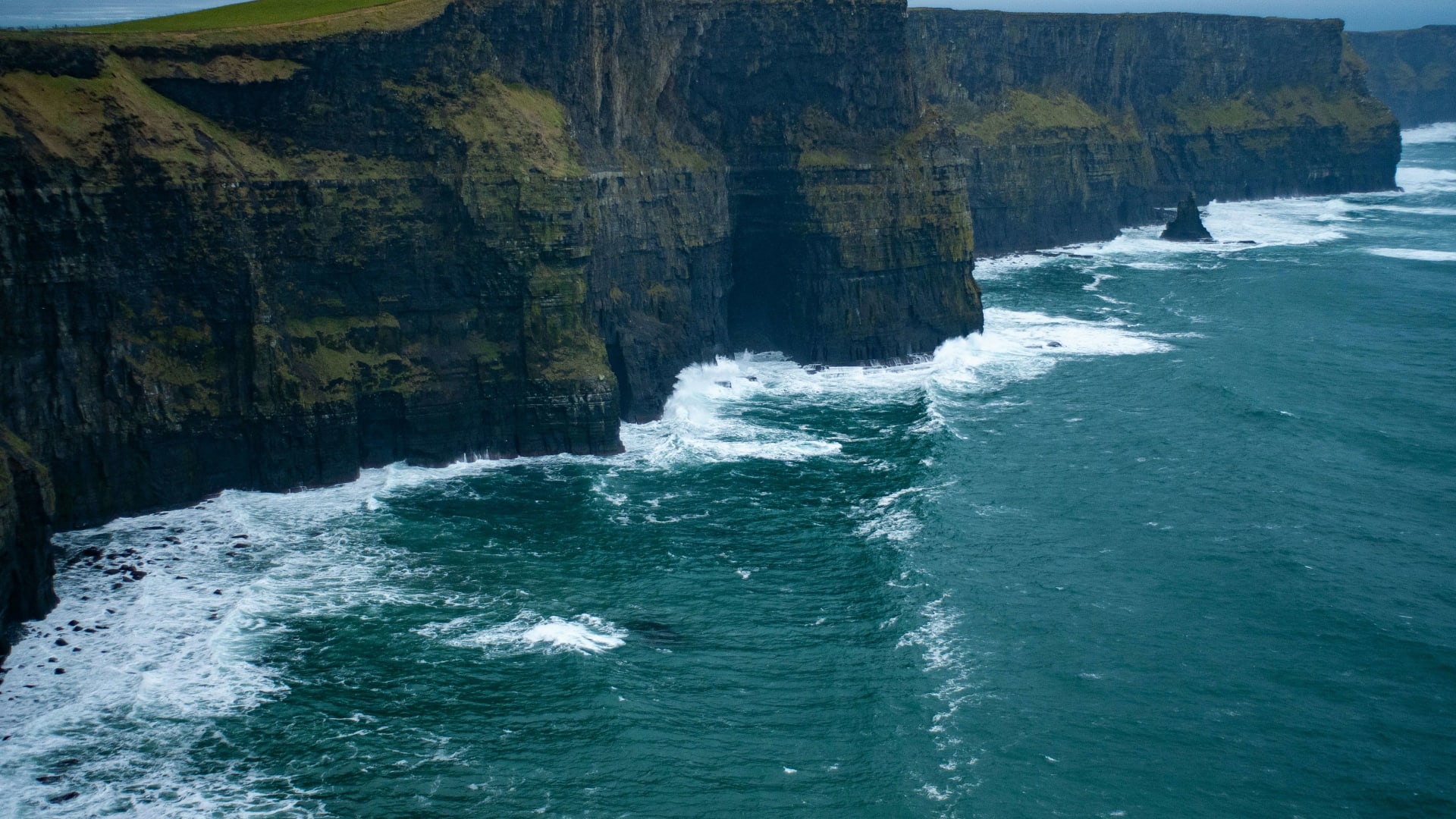
A wall of dark rock dropping more than 200 metres into the Atlantic, seabirds wheeling below your feet and, on a clear day, the Aran Islands on the horizon. Come early or late, and bring a jacket.
The edge of Ireland
Eight in the morning, and the car park is almost empty. The wind comes straight off the Atlantic, the grass is wet, and from the path you can hear the sea long before you see it. Then the cliffs open up to the south, layer upon layer of dark rock, with white water far below and gulls hanging in the updraught.
The Cliffs of Moher run for several kilometres along the coast of County Clare, south of Galway Bay, and rise more than 200 metres at their highest. They are among the most visited sights in Ireland, which is exactly why timing matters. For the rest of the country, see our Ireland travel guide.
What you see
O'Brien's Tower
A small stone tower built in the 1830s near the highest point of the cliffs, and the classic viewpoint. From here you look north towards Galway Bay and, in good weather, out to the Aran Islands.
The visitor centre
Built into the hillside so that it barely shows, with exhibitions about the cliffs and the birds. The main viewing paths start here.
The seabirds
From spring into early summer, the ledges are full of nesting seabirds, including puffins on the lower slopes and on the stack below the tower. Bring binoculars if you have them.

Walk the cliffs from Doolin
The best way to see the cliffs is on foot. A coastal path runs from the village of Doolin, famous for its traditional music, south along the clifftops to the visitor centre. The walk takes a few hours there and back, and the views build gradually. Parts of the path are narrow and close to the edge, so it is not for anyone uneasy with heights, and it is best avoided in strong wind.
A day in Clare
Morning: the cliffs before the coaches arrive, or the walk from Doolin.
Midday: lunch in Doolin or the surf town of Lahinch.
Afternoon: the Burren, a bare limestone landscape where wildflowers grow in the cracks, and the Poulnabrone dolmen, a stone tomb thousands of years old.
Getting there
The cliffs are around an hour and a half by car from Galway and a little further from Shannon Airport. Day tours run from Galway and Dublin, and local buses link Galway, Doolin and the cliffs, though less often outside summer. Many people combine the cliffs with a stay in Galway.
Good to know
Late morning to mid afternoon is the busiest time. Early morning and the last light of the evening are calmer and often more beautiful.
Fog and rain can hide the cliffs completely. Check the weather and keep a spare day if you can.
Stay behind the barriers and away from the edge. The ground can be slippery and gusts are strong.
Frequently asked questions about the Cliffs of Moher
How long do you need at the Cliffs of Moher?
Two hours is enough for the main viewpoints. Allow half a day if you want to walk from Doolin.
When is the best time to visit the Cliffs of Moher?
Early morning or early evening, from April to September. Spring and early summer are best for seabirds.
Can you walk from Doolin to the Cliffs of Moher?
Yes, on a marked coastal path along the clifftops. Check the weather first, as parts of the path can close in bad conditions.
Can you see puffins at the Cliffs of Moher?
Often, from spring into early summer, when they nest on the cliffs. They leave for the open sea later in the summer.
Is it worth staying in Galway to visit the cliffs?
Yes. Galway has the widest choice of places to stay and makes an easy day trip to the cliffs and the Burren.
More travel inspiration in Cliffs of Moher
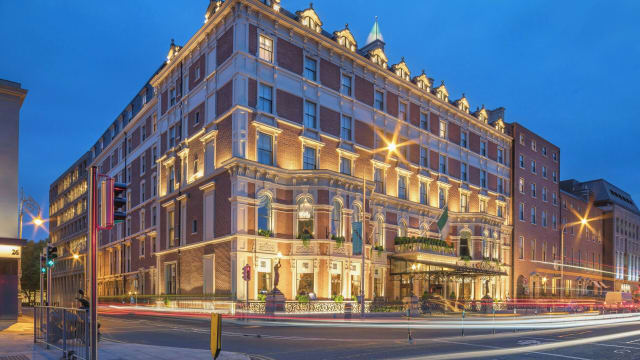
New Year's Eve in Dublin 2026, the hotels near the Castle countdown
Dublin's New Year's Festival runs from 30 December 2026 to 1 January 2027, with the Countdown Concert at Dublin Castle on New Year's Eve. These are the hotels a few minutes' walk from it, with guest ratings and when to book.
Where to stay in Dublin: the best areas and hotels
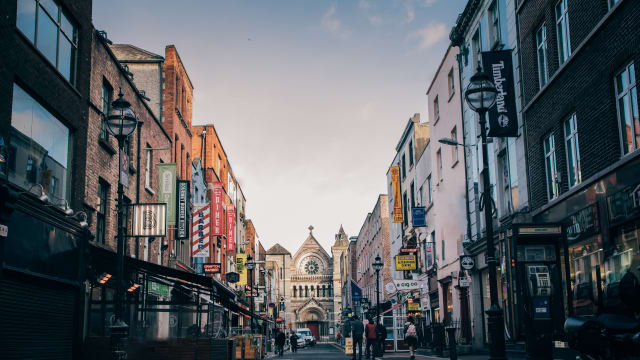
Georgian squares, the pubs of Temple Bar and St Stephen’s Green. Dublin is a city you walk, and it pays to stay centrally. Here are the areas and the hotels we recommend.