

Phuket · Thailand
Food and night markets in Phuket: where the island eats after dark
Woks clang against gas burners, and a woman stirs a pot of yellow curry so hot it stings the air. Phuket has a kitchen of its own, with Chinese roots and southern Thai heat, and the best of it is at the markets.
In short
UNESCO named Phuket a City of Gastronomy in 2015. Its food mixes southern Thai curries, often hotter than in the north, with dishes brought by Chinese migrants. The best places to eat cheaply are the night markets: the Sunday walking street in the old town, the weekend market outside Phuket Town and the seafood market in Rawai.
Dishes to try
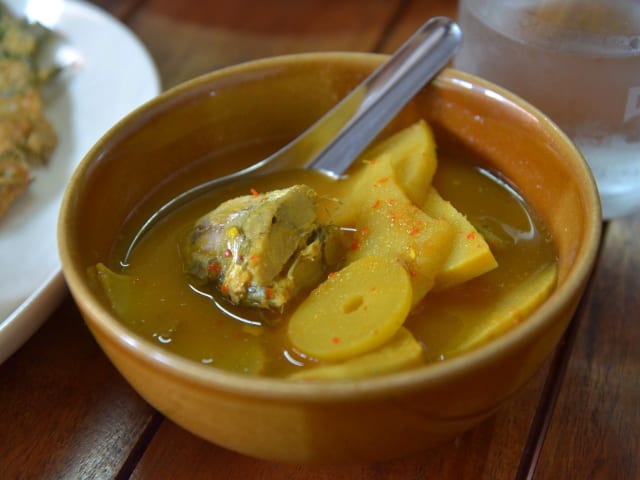 Photo: Takeaway / Wikimedia Commons, CC BY-SA 3.0
Yellow curry and sour fish curry
Southern Thai curries are often made without coconut milk and with plenty of turmeric and chilli. Gaeng som is a sour, fiery fish curry. Ask for it milder if you need to.
 Photo: Chunpeang1tan / Wikimedia Commons, CC BY-SA 4.0
Mee hokkien
Thick yellow noodles fried with seafood, pork and greens, a legacy of the migrants from Fujian. A standard breakfast and lunch in the old town.
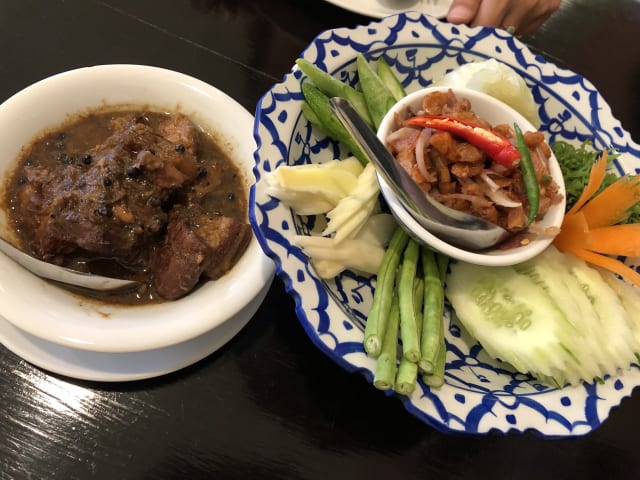 Photo: Chunpeang1tan / Wikimedia Commons, CC BY-SA 4.0
Moo hong
Pork belly braised slowly with soy sauce, black pepper and garlic. Sweet, salty and tender, served with rice.
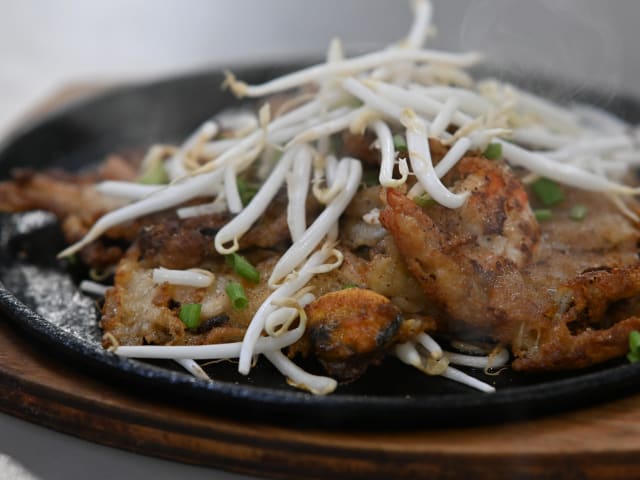 Photo: PattayaPatrol / Wikimedia Commons, CC BY-SA 4.0
O-tao
A small omelette with oysters, taro and bean sprouts, fried crisp on a griddle. You find it at street stalls around Phuket Town.
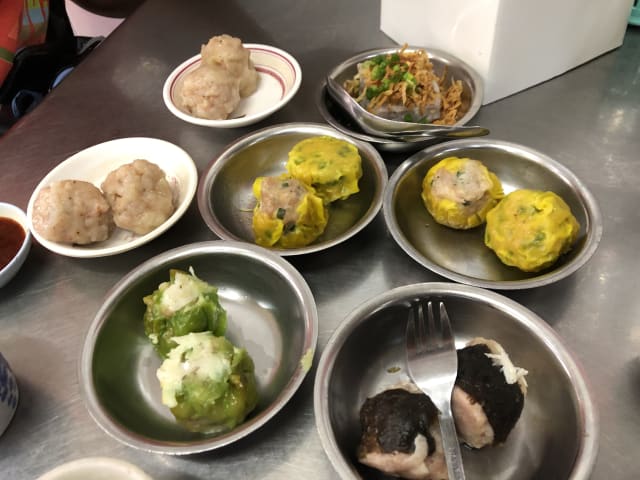 Photo: Chunpeang1tan / Wikimedia Commons, CC BY-SA 4.0
Dim sum for breakfast
The Chinese tea houses in the old town serve small dishes in bamboo baskets in the morning. Go early, as the popular ones run out before lunch.

The night markets
The Sunday walking street
Lard Yai fills Thalang Road in Phuket Town on Sunday evenings, with street food, desserts and crafts between the old shophouses. Arrive early, as it gets crowded after dark.
The weekend market
Phuket Weekend Market, also called Naka, is outside the centre and opens on Saturday and Sunday evenings. It is big, with food, clothes and just about everything else.
Banzaan in Patong
The local market in the middle of Patong. In the evening the food stalls set up around the market hall.
Seafood in Rawai
By the water in Rawai you buy fish and shellfish at the stalls, and a restaurant next door cooks them however you like. See more of the southern tip in our guide to Nai Harn.
Cooking classes
Many hotels and cookery schools in Phuket run half-day classes, often with a market visit first. You learn to make curry paste from scratch, a salad and a stir-fry, then eat what you have cooked. Pick a class with small groups and ask whether they teach southern Thai dishes.
How to choose street food
Pick stalls with plenty of local customers and a quick turnover. Food cooked while you wait is the safest. Carry cash in small notes. Many stalls have no English menu, so point and ask. Cooking classes and markets fit well with the rest of our things to do in Phuket.
Frequently asked questions about food in Phuket
What food is Phuket known for?
Mee hokkien noodles, moo hong pork belly with pepper, o-tao with oysters and fiery southern Thai curries. Dim sum for breakfast is also common in the old town.
Which night market in Phuket is best?
The Sunday walking street in the old town has the best atmosphere and food. The weekend market outside the centre is bigger and more varied, while Banzaan in Patong is easiest if you are staying there.
Is street food in Phuket safe?
Generally, yes. Choose stalls with lots of customers and food cooked fresh in front of you, and drink bottled water.
Is the food in Phuket spicy?
Southern Thai food is often hotter than elsewhere in Thailand. Ask for it milder, or choose Chinese-influenced dishes such as mee hokkien.
Where can you take a cooking class in Phuket?
Many hotels run their own classes, and there are cookery schools both in Phuket Town and near the beaches. The usual format is half a day with a market visit first.
Photo credits
Southern yellow curry: photo Takeaway, Wikimedia Commons, CC BY-SA 3.0. Cropped.
Mee hokkien: photo Chunpeang1tan, Wikimedia Commons, CC BY-SA 4.0. Cropped.
Moo hong: photo Chunpeang1tan, Wikimedia Commons, CC BY-SA 4.0. Cropped.
Oyster omelette: photo PattayaPatrol, Wikimedia Commons, CC BY-SA 4.0. Cropped.
Dim sum in Phuket: photo Chunpeang1tan, Wikimedia Commons, CC BY-SA 4.0. Cropped.