Surfing in Spain
Surfing in Spain on the green Atlantic north coast
Forget the Costa del Sol. Spain's surf is in the north, where the Bay of Biscay meets the Basque Country, Cantabria and Asturias, and lunch after a session is the best part of the trip.
In Zarautz the promenade fills up at about six in the evening. Surfers walk back from the beach with wetsuits peeled to the waist, past old men on benches and children with ice cream, and turn into a bar where the counter is already covered with pintxos, small snacks on bread.
Out on the long sandy beach, a school is packing away its foam boards while the last few surfers catch the evening waves under green hills.
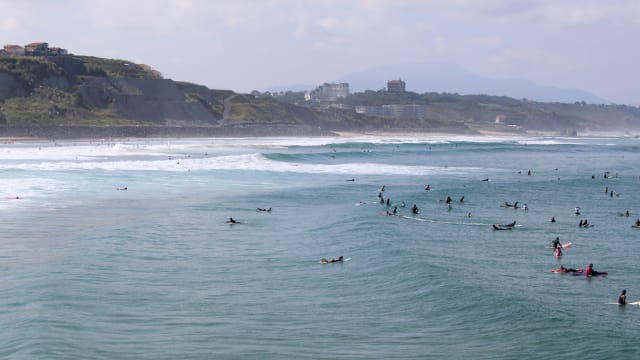
That is surfing in Spain at its best, and it happens almost entirely on the north coast. The Mediterranean rarely gets surfable waves. The Atlantic-facing Bay of Biscay does, all the way from the French border to Galicia. It is cooler, greener and rainier than the Spain most people know, and it combines proper surf with some of the best food in Europe.
In short
Where: the Basque Country, Cantabria and Asturias, all facing the Bay of Biscay.
Beginners: Zarautz and Bakio in the Basque Country, and Somo in Cantabria, in summer.
Experienced surfers: Mundaka's river-mouth left from autumn to winter, plus reef and point breaks along all three regions.
Best season: October to February for quality swell. June to September for learning.
Water: cold. Roughly 12 to 13 °C at the end of winter and about 20 °C at the height of summer.

The Basque Country
The Basque coast is short, steep and packed with waves. The regional tourist board, Turismo Euskadi, calls Zarautz the capital of surfing in Gipuzkoa, with a long sandy beach that suits learners and many schools along the front.
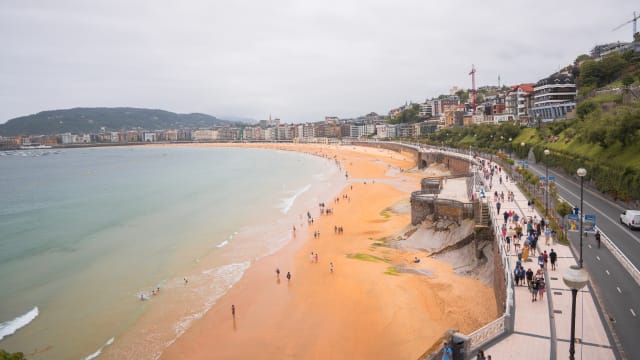
In San Sebastián, the city beach of Zurriola, in the Gros district, has waves that are fairly consistent through the year and you can be in the water ten minutes after breakfast in the old town. Our guide to San Sebastián's beaches explains how Zurriola differs from La Concha.
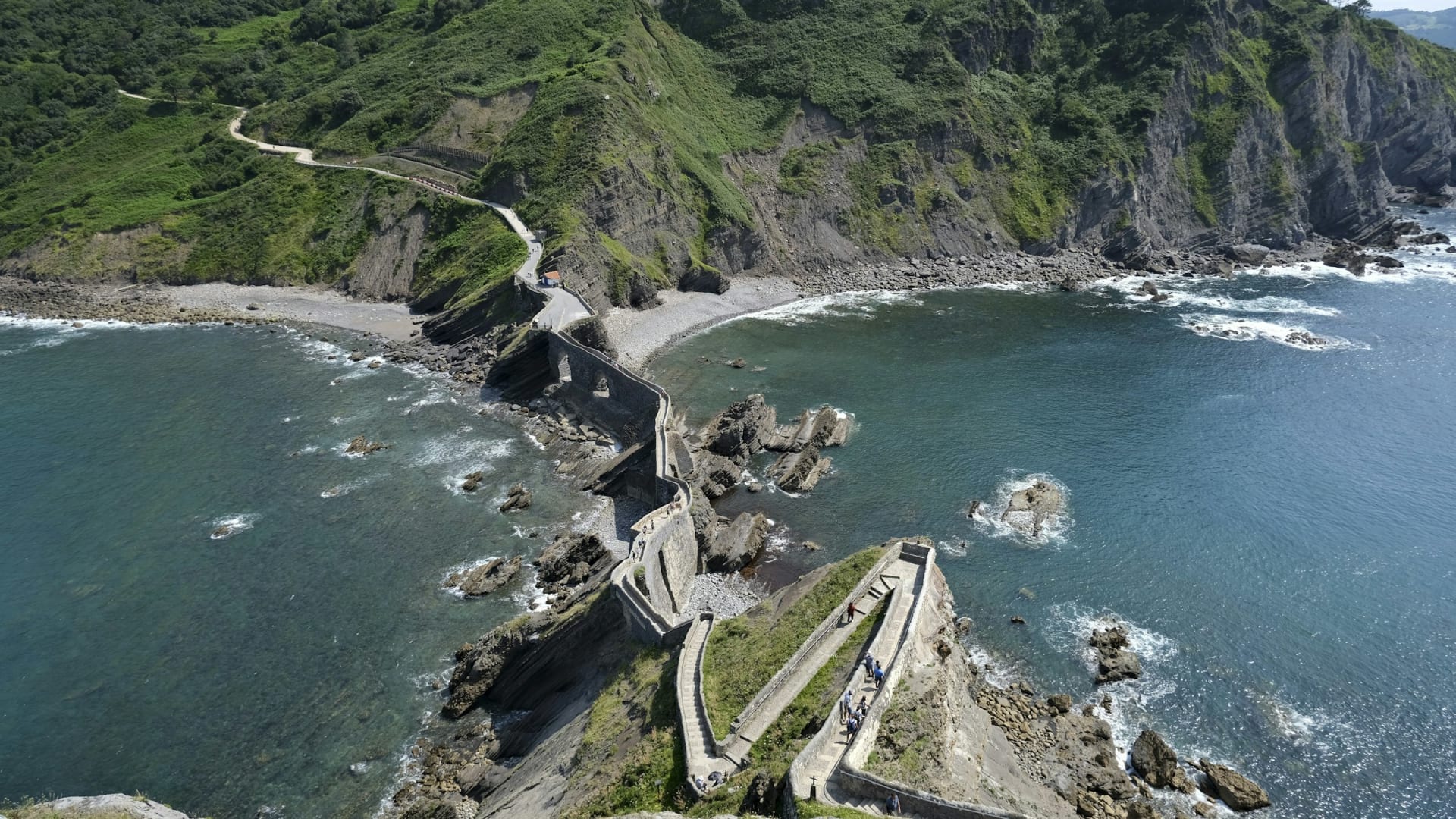
Near Bilbao, Bakio is another reliable beach for improvers, and it sits a short drive from the island hermitage of San Juan de Gaztelugatxe, a good half-day for anyone who does not surf. Further east lies the most famous wave in Spain.
Mundaka
Mundaka is a fishing village at the mouth of the estuary in the Urdaibai Biosphere Reserve, protected by UNESCO. When a big north-west swell meets a low and falling tide, the sandbank at the river mouth produces a fast, hollow left that Turismo Euskadi describes as one of the best waves in the world.
It only works on certain days, mostly from autumn into winter, it is for experienced surfers only, and on a good day the line-up is crowded with the best surfers in the region. Most visitors come to watch from the harbour wall, and that is no bad thing.

Cantabria
West of the Basque Country, Cantabria has longer beaches and a gentler feel. Somo, across the bay from Santander, is the region's surf town, and the Escuela Cántabra de Surf has taught there since 1991.
The school describes itself as Spain's first. The wide beach and shifting sandbanks make Somo a good place for lessons in summer, while experienced surfers look for points and reefs along the coast west of Santander when the autumn swell arrives.
Asturias
Asturias is wilder, with mountains running almost to the sea. Salinas, near Avilés, is the region's surf hub, a long beach with several peaks that is popular with schools. Rodiles, at the mouth of an estuary, is a river-mouth left for more experienced surfers. Further west, Tapia de Casariego is another well-known break. Water here is no warmer than in the Basque Country, and it rains often, which is why the hills are so green.
When to go
The Bay of Biscay is busiest with swell from autumn to late winter. Turismo Euskadi puts the best sessions between October and February, which is also when Mundaka is most likely to break. Summer brings small, friendly waves that suit lessons, long evenings and warmer water. September is often the sweet spot for improvers: the water is still close to its warmest and the first autumn swells arrive.

How cold is the water
Cooler than the Mediterranean and close to Portugal's. Surf forecasting data for Salinas in Asturias suggests the sea bottoms out at about 12 to 13 °C around March and peaks at roughly 19 to 22 °C in mid-August. That means a 4/3 mm wetsuit for most of the year, a thicker suit with boots in midwinter, and a thinner one in high summer.
And the Canary Islands
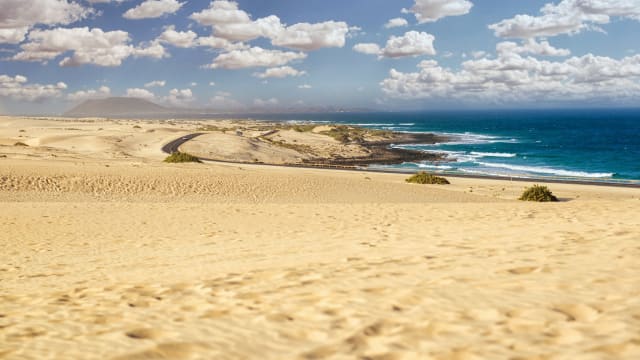
Spain also has warm-water surf, but it is far to the south, off the coast of Africa. If you want winter waves without a hood, read our separate guide to surfing in the Canary Islands, which covers Fuerteventura and Lanzarote.
Surf camp or hotel
The north coast has surf camps and surf houses, especially around Somo and Zarautz. They bundle lessons, boards and a bed. Picolo does not sell them.
In our view the north of Spain is the best case for a hotel instead: the towns are compact, the food is the reason many people come, and you can book lessons with a local school once you see the forecast. A car helps, because the best beach on a given day can be an hour away.
Hotels for surfing in northern Spain
Hotel Arrizul Beach, San Sebastián
A small hotel on the front at Zurriola. Cross the street and you are on the beach, and surfboards can be stored for free.
ZurriolaBoard storage

Our pick in Spain
Hotel Arrizul Beach for surfing in the city
Zurriola, in San Sebastián's Gros district, has waves that are fairly consistent through the year, and Hotel Arrizul Beach is a small hotel on the front there. Cross the street and you are on the beach, and your board can be stored for free. The old town is close enough for pintxos in the evening.


Make a trip of it
The Basque Country rewards a few days on land too. Our guide to the Basque Country gives the overview, Bilbao to San Sebastián explains the journey along the coast, and our pick of beach hotels in San Sebastián has more places to stay by the sea.
Frequently asked questions
Where is the best surfing in Spain?
On the north coast facing the Bay of Biscay. Zarautz and Somo suit beginners, while Mundaka in the Basque Country is the most famous wave for experienced surfers.
When is the best time to surf in northern Spain?
October to February brings the most powerful swell, and it is when Mundaka works best. Beginners usually do better from June to September, when waves are smaller.
Can you surf in San Sebastián?
Yes, at Zurriola beach in the Gros district, the city's surf beach. La Concha and Ondarreta, in the bay, are usually too sheltered for surfing.
What wetsuit do I need to surf in Spain?
On the north coast a 4/3 mm full suit works for most of the year, with boots and a thicker suit in midwinter. In high summer a thinner suit is enough for many.
Is Mundaka good for beginners?
No. It is a fast, hollow river-mouth wave that breaks only in big swell and is crowded with experienced surfers. Beginners should learn at Zarautz, Bakio or Somo.
Sources
Turismo Euskadi (Surfing Euskadi) on Mundaka, Zarautz, Zurriola, Bakio and the autumn-winter season. Escuela Cántabra de Surf on its history in Somo since 1991. Surf-forecast.com sea temperature data for Salinas and wave descriptions for Rodiles and Tapia de Casariego, and regional surf guides for Asturias. Hotel details from Hotel Arrizul Beach's own website. Swell, wind and tide change daily, so check a forecast and ask a local school. Last checked: 12 November 2026.