
Surf
Surf Fuerteventura and Lanzarote in the Canary Islands
Volcanic reefs, a long right on an empty island and a beginner beach under the cliffs. Surfing in the Canary Islands, season by season, with hotels to match.
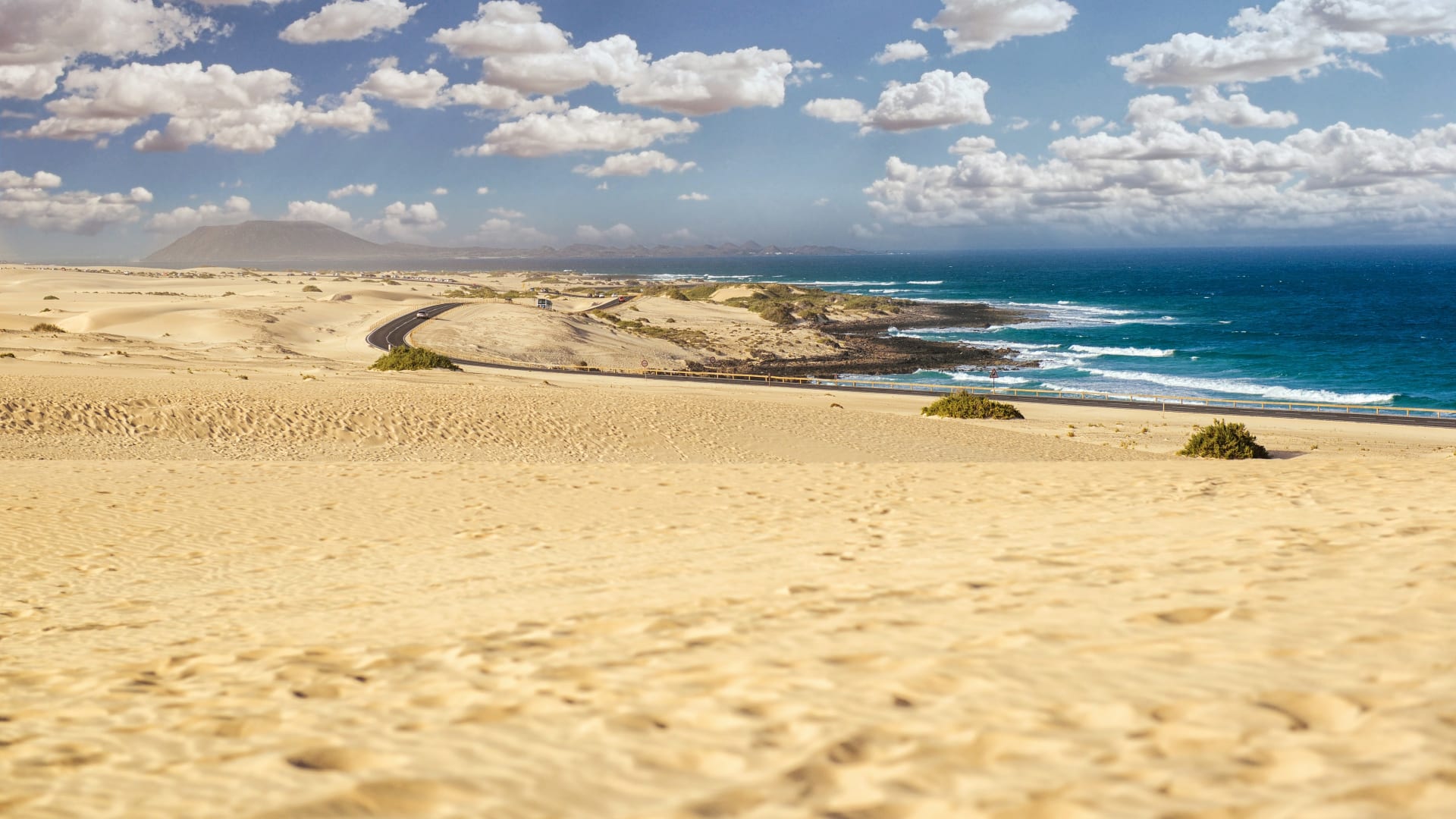
On Fuerteventura's north coast the road out of Corralejo turns to dirt, and every few kilometres a cluster of camper vans marks a reef where the swell is breaking. Across the strait, the small island of Lobos sits low in the water, and on the right day a single wave runs along its shore for several hundred metres.
The eastern Canary Islands are Europe's warm-water option when the rest of the continent's surfers are in hoods and gloves. This guide covers how to surf Fuerteventura and Lanzarote: which spots suit which level, when the swell comes and where to stay. Picolo does not sell surf camps. We choose the hotel, and you book lessons locally.
In short: surfing in the Canary Islands
Fuerteventura: the North Shore between Corralejo and El Cotillo for reef breaks, Lobos for the long right, El Cotillo and Corralejo's schools for beginners.
Lanzarote: Famara for learning, El Quemao at La Santa for experts only.
Season: you can surf all year, but the biggest and most reliable swell comes from October to March.
Water: around 18 to 19°C in late winter and 22 to 23°C in September.
Getting there: both islands have airports with direct flights from much of Europe.

Surf Fuerteventura: the North Shore and Lobos
The North Shore is the coast from Corralejo west to the lighthouse at El Cotillo, roughly 20 km joined by a dirt track. Most breaks here are reefs: waves that break over volcanic rock rather than sand. They are fast, shallow at low tide and best for intermediate and advanced surfers. Wear boots.
Lobos, the island off Corralejo, has what the Canary Islands tourist board calls the longest wave in the archipelago, a right-hander that runs 300 to 500 metres. Getting there is part of the trip: a boat from Corralejo, then about an hour's walk from the little port around the volcano. Conditions are most often good between October and March, and you enter from the jetty or over volcanic reef, always in boots.
El Cotillo changes with the seasons, with gentle beach waves in summer that suit learners and bigger, more serious surf in winter. Corralejo's town beaches and schools are the usual starting point for lessons.

Surf Lanzarote: Famara and La Santa
Famara is a long, wide beach on the north-west coast below a high line of cliffs, and it is where most people learn on Lanzarote. The tourist board calls it ideal for beginners, and it has hosted international surf contests. On bigger winter days it gets punchy, so stay close to where the schools are.
El Quemao, at La Santa on the north coast, is the opposite: a short, heavy left over shallow reef that surfers call the Canaries' Pipeline. It is a wave for experts, and its best days fall between October and March.
When to go
The islands get waves of two to four metres often enough that you can surf all year, but winter is the main season. Between October and March the North Atlantic sends the largest, most consistent swell, and the reefs come alive.
Summer brings smaller waves and steadier wind. That suits learners, and kitesurfers: Fuerteventura hosts the windsurfing and kiteboarding world championships each year. The catch is that the wind can blow the surf out by midday, so go early.
The water stays mild. Monthly averages around Corralejo are about 18 to 19°C from January to April and 22 to 23°C in late summer. A 3/2 wetsuit covers the winter.

Who it suits, and the caveat
Lanzarote suits beginners who want a long sandy beach and a school. Fuerteventura's North Shore suits intermediate surfers with a hire car and some reef experience. Our honest caveat: the reefs are sharp and the line-ups on the best days are busy and local. Wait your turn, and if you are learning, stay on sand.
Where to stay
On Fuerteventura, Corralejo puts you close to the North Shore, the Lobos boat and the schools. Inland, the countryside around Villaverde is a short drive from both Corralejo and El Cotillo.
On Lanzarote, Costa Teguise and Arrecife are on the east side, a drive across the island to Famara and La Santa. For a wider choice, see our guide to luxury hotels in the Canary Islands, or the rest of the best places to surf.
Hotels for surfing in the Canary Islands
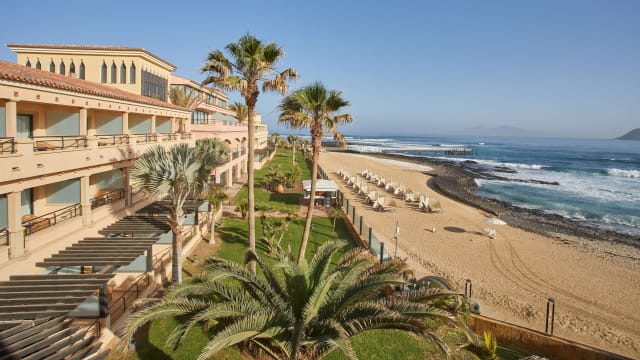
Secrets Bahía Real Resort & Spa
An adults-only resort on the seafront at Corralejo, close to the Lobos boat.
CorralejoAdults onlyHotel Rural Mahoh
A 19th-century country house outside Villaverde, with stone walls and four-poster beds.
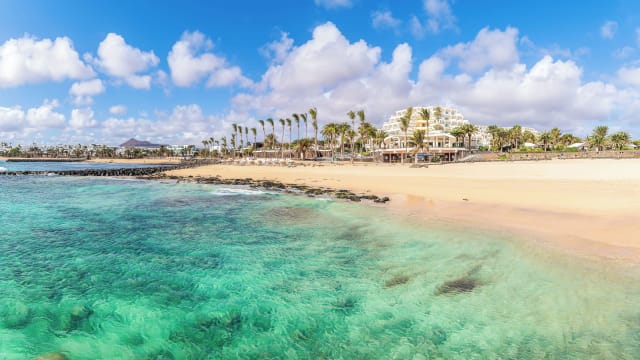
VillaverdeRuralBarceló Teguise Beach
On the seafront in Costa Teguise, on the east side of Lanzarote.
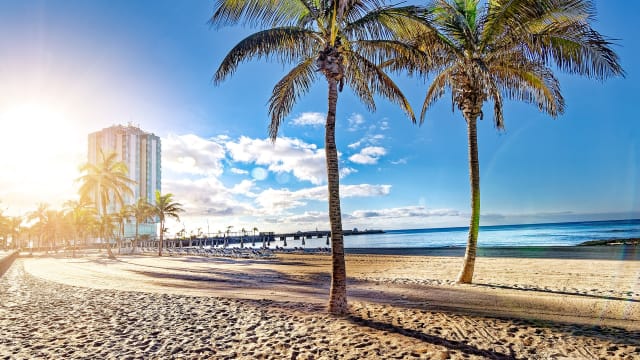
Costa TeguiseSeafrontArrecife Gran Hotel & Spa
The tall seafront hotel in the island capital, central for driving to either coast.
ArrecifeCentral

Our pick in the Canary Islands
Hotel Rural Mahoh on Fuerteventura
Mahoh is a 19th-century country house in the dry hills outside Villaverde, with thick stone walls, four-poster beds and a restaurant serving island food. It is not on the beach, and that is the point: after a session on the North Shore you come back to a quiet courtyard instead of a resort. Corralejo and El Cotillo are both a short drive away, so you need a car.


Frequently asked questions
Is Fuerteventura good for beginner surfers?
Yes, if you learn with a school in Corralejo, or at El Cotillo in summer when the waves are gentle. The North Shore reefs are for intermediate and advanced surfers.
Where is the best place to learn to surf on Lanzarote?
Famara, a long sandy beach on the north-west coast with several surf schools. The tourist board describes it as ideal for beginners.
When is the best time to surf the Canary Islands?
October to March, when the largest and most reliable swell arrives. Summer brings smaller waves and stronger wind.
How do you get to the wave on Lobos?
Take the boat from Corralejo to Lobos, then walk for about an hour from the port around the volcano. Wear boots, because you cross volcanic reef to get in.
Do I need a wetsuit to surf in the Canary Islands?
In winter, yes. The sea is around 18 to 19°C from January to April, and a 3/2 wetsuit is the usual choice.
Sources
Hello Canary Islands, the official tourism site of the Canary Islands: Surfing in the Canary Islands, and Surfing at Los Lobos. North Shore, El Cotillo and El Quemao: surf guides including The Surf Atlas and Perfect Wave Travel, checked against each other. Water temperature: monthly averages from seatemperature.info and weather2travel. Hotel details from Barceló and Hotels.com listings. Reefs and swell are unpredictable, so ask a local school before you surf an unfamiliar spot. Last checked: 12 November 2026.
