Hiking holidays
Hiking in Norway, the four classic hikes and how to do them
A tongue of rock over a lake, a flat cliff top above a fjord, a ridge between two lakes of different colours and a long edge above a valley town. What each one asks of you, and where to sleep before the early start.
The car park at Skjeggedal is half full at seven in the morning, and nobody is in a hurry to leave it. Boots are laced twice. Packs are weighed in the hand.
Ahead is a day that, for most people, runs to ten hours or more, most of it on bare rock and open mountain, to stand for a few minutes on a ledge of stone above a lake. Hiking in Norway is like that: the famous views are earned, and the mountain does not care how far you flew to see them.
This guide covers the four hikes most visitors come for, Trolltunga, Preikestolen, Besseggen and Romsdalseggen, with the facts that decide how your day goes: season, transport, time on your feet and the safety basics. Picolo does not sell guided hikes. We help you choose where to stay, and you book guides, boats and buses locally.
In short
Trolltunga: the longest. 27 km return from Skjeggedal, 10 to 12 hours. Guide only from October to May.
Preikestolen: the shortest. About 8 km return, roughly four hours, to a cliff 604 metres above the Lysefjord.
Besseggen: the classic ridge in Jotunheimen. Six to eight hours, nearly 1,000 metres of climbing, with a boat to the start.
Romsdalseggen: a 10.3 km ridge above Åndalsnes, five to eight hours, with exposed sections and chains.
Season: mid-June to September for all four. Snow can linger on the high ground until mid-June.
Emergency: call 112 for police and 113 for an ambulance.
Trolltunga
Trolltunga, the Troll's Tongue, sits above Ringedalsvatnet near Odda in Hardanger. From the main trailhead at Skjeggedal (P2) the return hike is 27 km with almost 800 metres of ascent, and Visit Norway advises planning 10 to 12 hours including breaks. From the upper car park at Mågelitopp (P3), it is 20 km return and seven to ten hours.
The practical details matter here. P3 has only around 30 spaces and must be pre-booked in the high season; in 2026 its season ran from 8 June to 30 September.
P2 is paid parking without pre-booking, and shuttle buses run from Odda to the lower car parks and from Skjeggedal up to Mågelitopp. Start before 8 am so you are back before dark, and allow a spare day for weather. There are no fences at the edges, which is dangerous in fog.
The official advice is clear: from 1 October to 31 May, always go with a guide. Even in summer a guide is recommended for less experienced hikers. A mountain guard is present at Trolltunga day and night in summer, and there are two emergency cabins on the trail, not meant for overnight stays.
Preikestolen
Preikestolen, the Pulpit Rock, is a flat-topped cliff rising 604 metres above the Lysefjord, east of Stavanger. The path is about 4 km each way, with roughly 500 metres of climbing, and most people take around four hours return. It is the easiest of the four, but it is still a mountain path with steep, rocky steps, and more than 300,000 people walk it each year.
You can walk it all year, but the main season runs from April to October. In winter the trail can be covered in snow and ice and the days are short, so go with proper equipment or a guide. To avoid the crowds, start early in the morning or late on a summer afternoon.
Besseggen
Besseggen is Norway's best-known ridge walk, in Jotunheimen National Park. Most walkers take the Gjende boat from Gjendesheim to Memurubu and walk back over the ridge, with the deep green Gjende on one side and the blue Bessvatnet on the other. Visit Norway estimates that around 60,000 people walk it each year, and most need six to eight hours including breaks, with nearly 1,000 metres of ascent.
The boat runs from about mid-June to mid-October, and some departures sell out, so book tickets in advance. There is some scrambling on the ridge, but most hikers manage it; if you dislike heights, you can turn back to Memurubu or take the lakeside path instead. Carry at least a litre of water, a basic first-aid kit and a map.
Romsdalseggen
Romsdalseggen runs along a ridge above Åndalsnes and the Romsdal valley. Visit Norway gives it as 10.3 km with 970 metres of ascent and five to eight hours of walking. A shuttle bus runs from the Norwegian Mountaineering Centre in Åndalsnes to the start, and the season is 15 June to 30 September; hiking outside it is not advised.
This is a demanding route with exposed sections, and chains are fixed on the steepest parts. It is not recommended for children. Walkers with a strong fear of heights should take the Høgnosa route instead. At the end you can take the Romsdalsgondolen gondola down to Åndalsnes rather than the steep stone steps. Skip the hike in fog, rain with strong wind, low temperatures or forecast thunder.
Safety basics for all four
Start early: long days and late starts are the commonest cause of rescues.
Turn back: fog, wind and rain change everything on bare rock. The view will still be there next year.
Pack: wind and waterproof layers, warm clothes, food, water, a map, a charged phone and a head torch.
Do not trust coverage: mobile signal is patchy in the mountains, so do not rely on a phone map alone.

Where to stay before the big hikes
Preikestolen BaseCamp
Lodge rooms, cabins and a hostel at the trailhead for Preikestolen.
PreikestolenTrailheadHotel Ullensvang, Lofthus
A long-established fjord hotel on the Hardangerfjord, about 30 km from Odda.
TrolltungaFjordEilert Smith Hotel, Stavanger
A small hotel in central Stavanger, for those who want the city before Preikestolen.
StavangerCity

Our pick in Norway
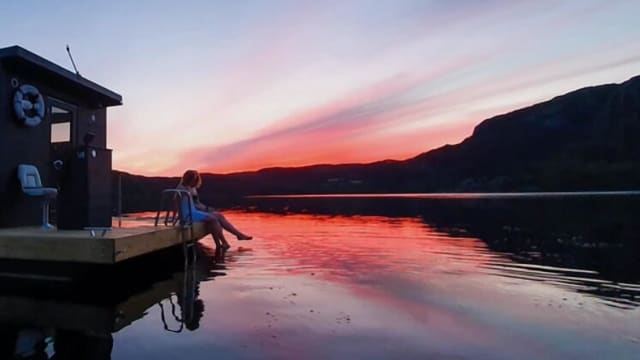
Preikestolen BaseCamp, for the early start
The best way to see Preikestolen without hundreds of others is to be on the path before the day visitors arrive, and the easiest way to do that is to sleep at the trailhead. Preikestolen BaseCamp has modern lodge rooms with big windows, cabins and a simple hostel, so it suits couples and families on different budgets. Walk up at first light, and be back for breakfast while the car park fills. It is a lodge, not a city hotel, so book a night in Stavanger too if you want restaurants.


More from Hardanger
Trolltunga has been the setting for more than hikes. Read the story of a Trolltunga wedding, and see our walking holidays guide to compare Norway with the Dolomites, Madeira and the Camino.
Frequently asked questions
How long does the Trolltunga hike take?
From the Skjeggedal car park the return hike is 27 km and takes 10 to 12 hours including breaks. From the upper car park at Mågelitopp it is 20 km and seven to ten hours.
Can you hike Trolltunga in winter?
Only with a guide. The official advice is to always go with a guide from 1 October to 31 May, when snow, short days and weather make the route dangerous.
Which is the easiest of Norway's famous hikes?
Preikestolen, at about 8 km return and around four hours. It is still a rocky mountain path with steep steps, so wear proper footwear.
Do you need to book the boat for Besseggen?
It is wise to. The Gjende boat runs from about mid-June to mid-October, and some departures sell out in the high season.
Is Romsdalseggen dangerous?
It is demanding and exposed in places, with chains on the steepest parts, and it is not recommended for children. Walkers who dislike heights can take the easier Høgnosa route.
Sources
Visit Norway: Hiking to Trolltunga, Preikestolen, the Besseggen ridge in Jotunheimen and Hiking the Romsdalseggen ridge. Trolltunga AS (trolltunga.com): parking, P3 season 2026 and pre-booking. Hotel details from Visit Norway, Fjord Norway, Ut.no and the hotels' own listings. Seasons, parking fees and boat timetables change every year, so check them before you go, and check the forecast on yr.no on the day. Last checked: 12 November 2026.