In short
Maui has the Road to Hana, with hundreds of bends and waterfalls, and sunrise on the Haleakalā volcano, which needs a reservation. On the Big Island, Kīlauea lies in Hawaiʻi Volcanoes National Park. Allow at least four days on each island and fly between them. April, May, September and October bring good weather and lower prices.
Our first choice: Hana-Maui Resort, where you spend the night at the end of the Road to Hana. Check availability and prices
It is freezing and pitch dark at the top of Haleakala. You stand with a blanket around your shoulders, looking down on a sea of cloud. Then the sun breaks over the rim, and the crater below turns from black to red and orange.
Maui and the Big Island are the two islands of Hawaii with the most dramatic scenery. Maui brings rainforest, waterfalls and beaches. The Big Island brings live volcanoes, lava fields and some of the best stargazing on earth. With a short flight between them, you can see both in ten days.
How to do it
Fly into Kahului on Maui and Kona or Hilo on the Big Island. Short flights link the islands.
Hire a car on both islands. Public transport is limited.
Reserve Haleakala sunrise and entry to popular parks in advance.
Always follow advice and closures in volcanic areas. Activity changes.
Maui: the Road to Hana and Haleakala
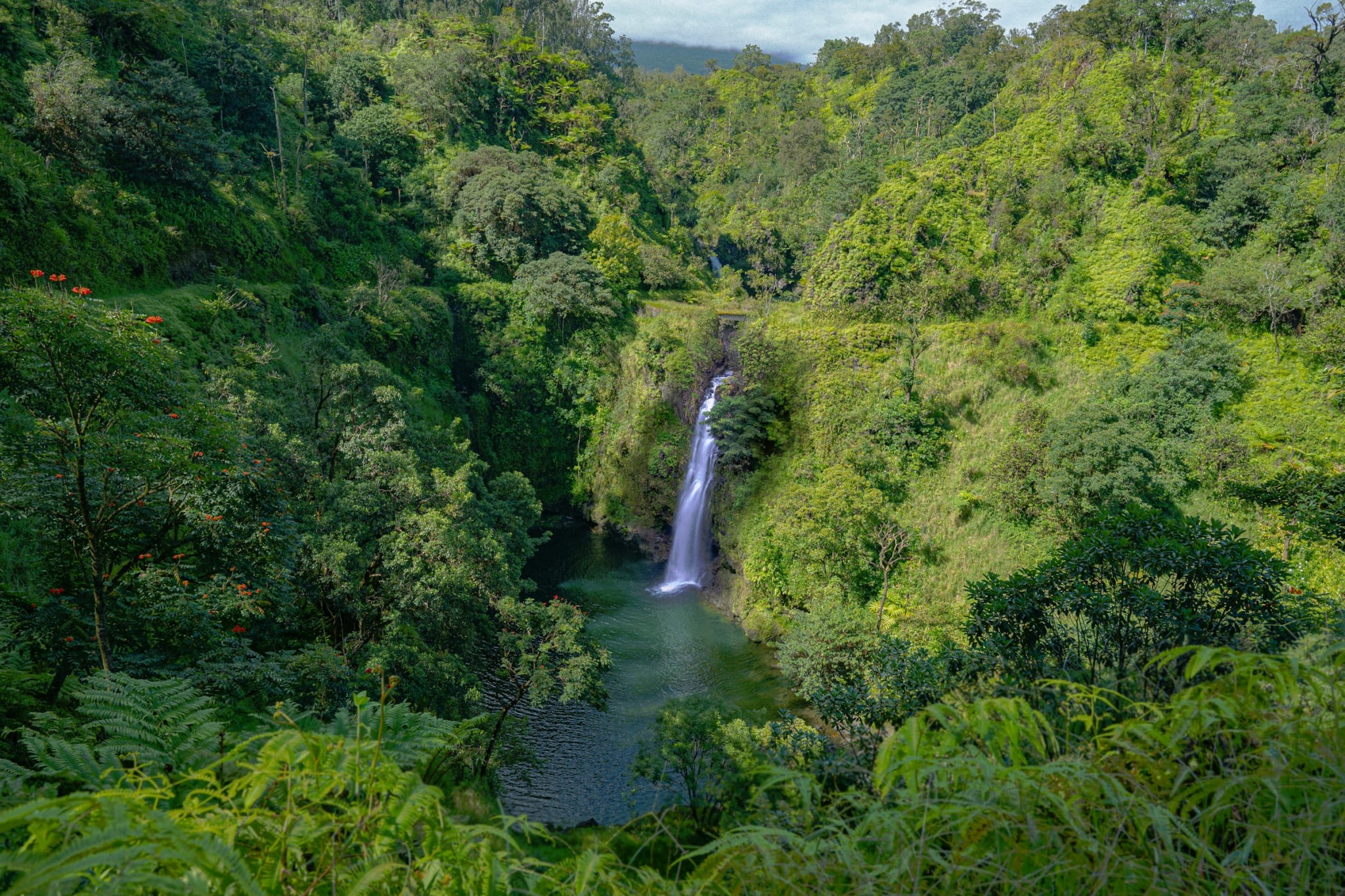
The Road to Hana winds along the north-east coast with hundreds of bends and many narrow one-lane bridges. The point is the stops: waterfalls, rainforest, the black sand beach at Waiʻānapanapa and the pools at ʻOheʻo in Haleakala National Park. Stay overnight in Hana rather than driving there and back in a day.
Sunrise on Haleakala requires a reservation to drive up in the early morning. In winter you can spot humpback whales from shore, and by boat you can snorkel at the half-sunken crater of Molokini.