
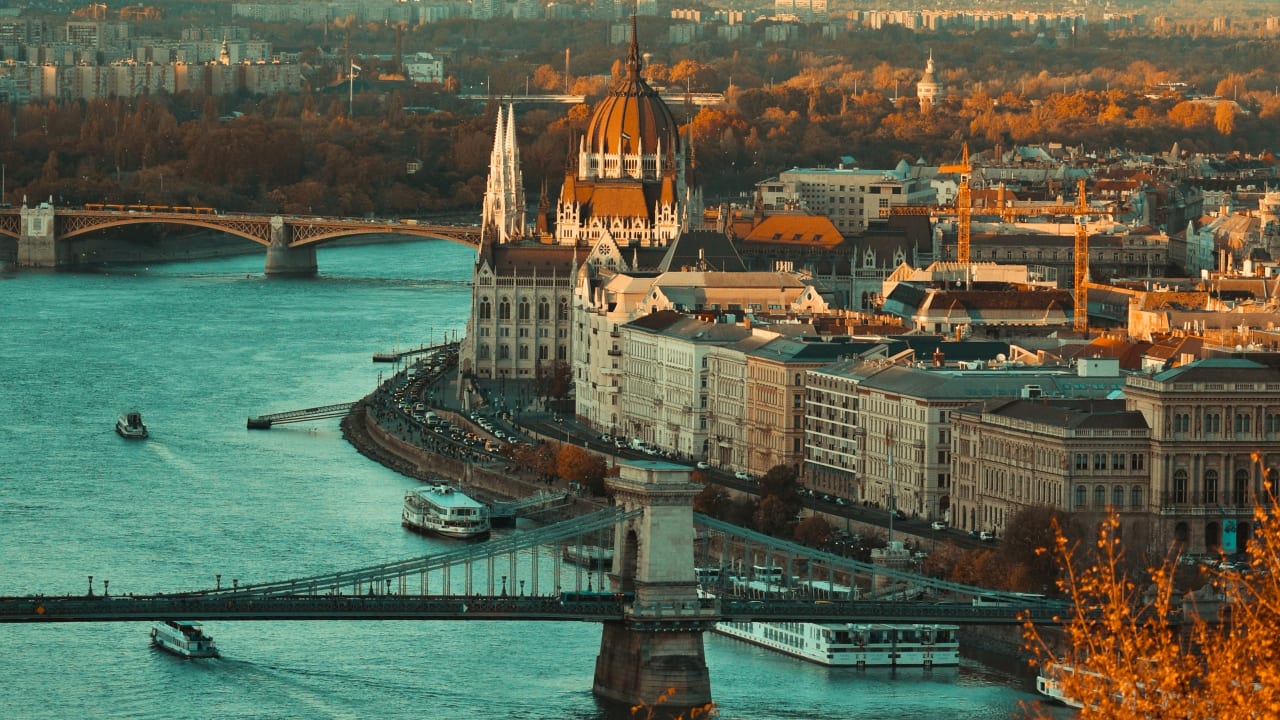
The Pest side
Belváros
The Basilica, the Parliament and the Chain Bridge within walking distance in central Pest.

Down at Clark Ádám tér the traffic stops in front of the Chain Bridge and the funicular glides up behind you. From the Pest bank Castle Hill is a row of roofs and domes, but only up there do you see the city laid out below.
The Royal Palace dominates the hill and now houses the Hungarian National Gallery, the Budapest History Museum and the National Széchényi Library. The buildings were damaged in the war and rebuilt in a simplified style. The facade is sober, and it is the view from the terraces towards Pest that makes the climb worthwhile.
Buda is the older and quieter half of Budapest. The castle district is part of UNESCO's listing for the banks of the Danube, inscribed in 1987. The rest of the city is in our Budapest travel guide.
The architect Frigyes Schulek designed the bastion and it was built between 1895 and 1902. Its seven towers stand for the seven Magyar tribes that settled the land. The lower terraces are open to all, while some upper parts need a ticket in season. Check before you go.

Schulek rebuilt the church in Gothic style in the late 1800s, and its roof is covered in coloured tiles from the Zsolnay factory in Pécs. Franz Joseph was crowned King of Hungary here on 8 June 1867, to Liszt's Coronation Mass. Charles IV was crowned here in 1916, the last Habsburg coronation. The equestrian statue of King Stephen stands outside.

Gellért Hill rises about 235 metres above sea level, with the Citadella from the 1850s on top. The Liberty Statue, raised in 1947, is 14 metres high and can be seen from much of the city. At the foot lie the Gellért Baths from 1918, attached to Hotel Gellért and known for their Art Nouveau interiors.

Day 1: the funicular up, then Matthias Church and the Fisherman's Bastion before the tour groups arrive.
Day 2: the National Gallery or the History Museum in the palace, and a long evening on the terrace.
Day 3: Gellért Hill in the morning, then across the bridge to Belváros or on to Andrássy út and the Jewish Quarter.
Buda suits you if you want calm, views and a grown-up mood, and you are happy to cross the bridge to eat. Two hotels, each in a different spot. For more options, see our hotels in Budapest.

The hotel stands on Clark Ádám tér, named after the engineer Adam Clark, right at the foot of the Chain Bridge. The funicular up to the castle is next door. River-facing rooms have the Chain Bridge and the Pest bank in the window. From the rooftop bar Leo you watch the city light up, though tables often need booking ahead. The rooms are not large, and for restaurants and bars you cross the bridge. The hotel is marketed to adults and is a poor fit for families.


The hotel is on Fortuna utca on Castle Hill, a few minutes from Matthias Church, in an old house with a bistro on the ground floor. There are few rooms, furnished in wood and pale fabrics. The street is quiet once the day visitors have taken the funicular down. The drawback is the distance to the bridge and a limited choice of restaurants in the evening.

The funicular, the Budavári Sikló, opened on 2 March 1870 and runs from Clark Ádám tér up to the castle. Trams 19 and 41 stop at Clark Ádám tér, and bus 16 crosses the Chain Bridge from Deák Ferenc tér and climbs onto Castle Hill. Check service and tickets with BKV.
The funicular closes for maintenance at times, and on some Mondays. Check opening times before you plan the trip.
The choice of restaurants on the hill is limited in the evening. Plan dinner in advance.
Area guides
Pick another area and see what it has to offer.
The Pest side
The Basilica, the Parliament and the Chain Bridge within walking distance in central Pest.
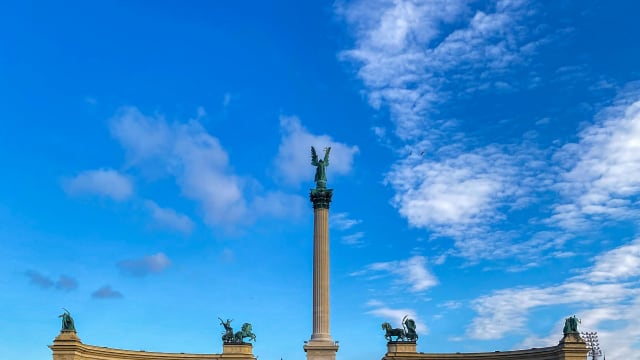
The Opera, the Dohány Street Synagogue and the ruin bar Szimpla Kert.
Yes, if you want calm and views. You get Castle Hill and the riverbank on your doorstep, but fewer restaurants and bars. For nightlife, the Pest side is across the bridge.
Buda is on the west bank of the Danube and is shaped by hills, villas and the castle. Pest is on the east bank, flat, and has most of the hotels, shops and bars.
Take the funicular from Clark Ádám tér, or bus 16 from Deák Ferenc tér. Many people also walk the steps and paths up from the river, which are steep but short.
Much of it is open to everyone, but some upper parts need a ticket in season. Check the current rules before you go, and arrive early in the day.
It is a 14-metre statue raised in 1947 on top of the Citadella. It can be seen from much of the city and counts as one of Budapest's best-known landmarks.