Travel guide · Europe
The Cyclades: which island to choose, and how to hop between them
White villages, blue doors, dry hills and a wind that never quite stops in summer. The Cyclades are the Greek islands of the postcards, and each one has its own pace.
The Cyclades, the islands of the postcards
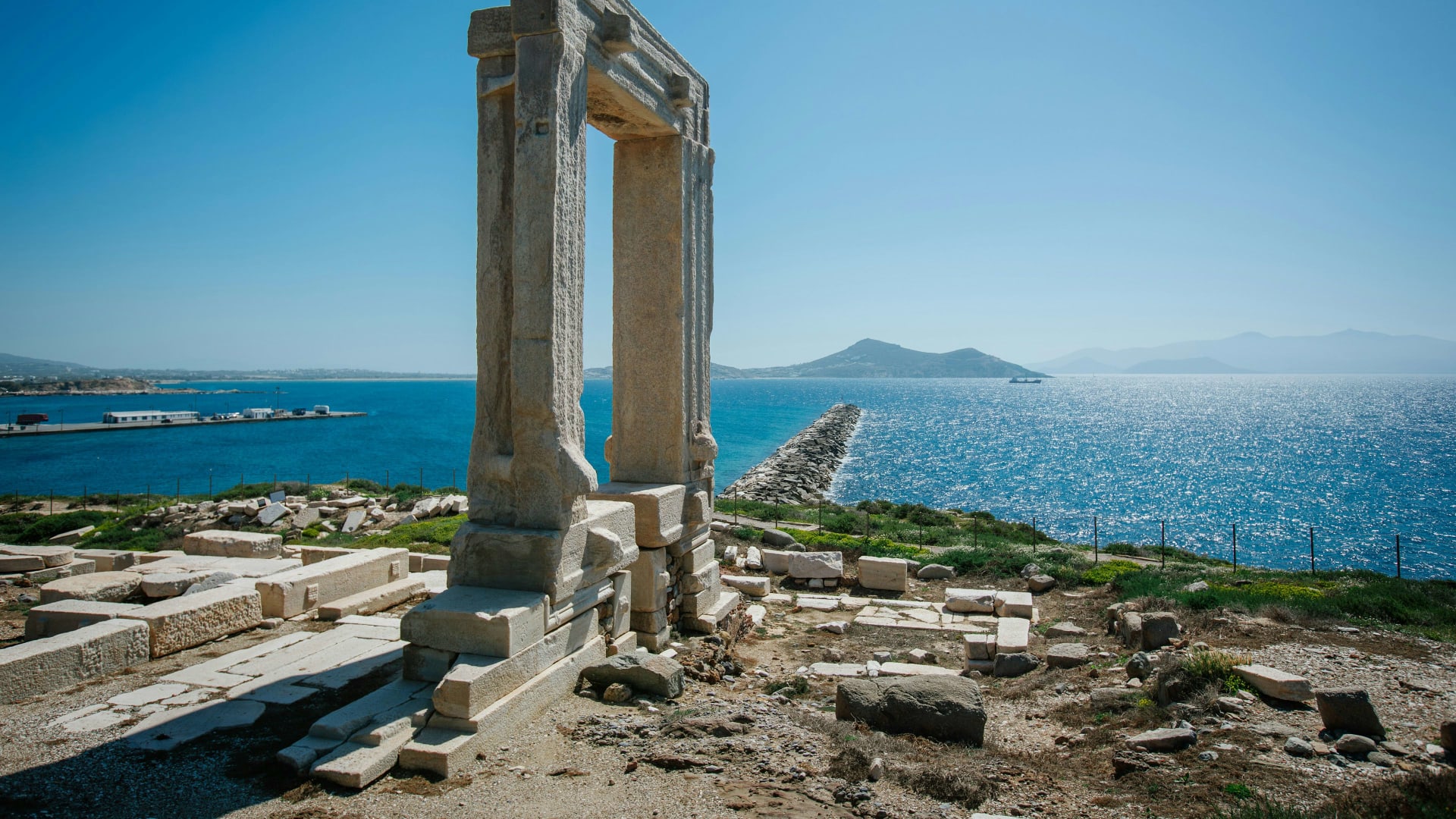
Late afternoon on Naxos, and people walk out along the causeway to the Portara, the great marble doorway of a temple to Apollo that was never finished. Behind them the old town climbs the hill in white cubes. The sun drops into the sea through the empty frame, and everyone goes quiet for a moment.
The Cyclades lie in the Aegean south-east of Athens, and take their name from the circle they form around the small sacred island of Delos. More than twenty are inhabited. Most are dry and rocky, with whitewashed villages, chapels on every hill and beaches in sheltered bays. For the rest of the country, see our Greece travel guide.
The islands at a glance
Santorini
Cliff-top villages above a flooded volcanic crater and the most famous view in Greece, with crowds and prices to match. Read our Santorini guide.
Mykonos
Beaches, bars and a pretty old town, and the boat to the ruins on Delos. Busy and expensive in July and August.
Naxos
The largest of the Cyclades, with long sandy beaches, marble-built mountain villages and a farming tradition of its own, from cheese to potatoes. Calmer than its famous neighbours and good for families.
Paros and Antiparos
The harbour village of Naoussa, good beaches and easy ferry links. Little Antiparos is a short boat ride away.
Milos
Volcanic rock in strange colours, the white moonscape at Sarakiniko and sea caves at Kleftiko you reach by boat. The Venus de Milo was found here in 1820.
Folegandros and Sifnos
Smaller and quieter. Folegandros has a village on the edge of a cliff, and Sifnos is known for its pottery and its food.

How to combine the islands
Choose two or three islands close to each other rather than trying to see them all. A classic route is Athens, then Naxos and Paros, ending on Santorini. For something quieter, try Milos with Folegandros and Sifnos. A week with two islands is more relaxing than a week with four.
Getting there
Ferries and fast catamarans leave from Piraeus and Rafina near Athens. Santorini and Mykonos have international flights in summer, while Naxos, Paros, Milos and Syros have smaller domestic airports with flights from Athens.
Good to know
The meltemi, a strong north wind, blows in July and August. It keeps the heat down but can make the sea rough and delay small boats.
Book ferries early for July and August, and expect timetables to shrink outside summer.
There is little shade and few trees on many islands. Bring a hat, and plan walks for the morning.
For the other island groups, see the Dodecanese and the Sporades.
Frequently asked questions about the Cyclades
Which Cyclades island is best for a first visit?
Naxos is a good choice, with beaches, villages and easy ferries to Paros and Santorini. Santorini is unique but crowded and expensive.
What is the quietest island in the Cyclades?
Of the well-known islands, Folegandros and Sifnos are among the calmest. The small islands of Koufonisia are another option.
When is the best time to visit the Cyclades?
June and September, when the sea is warm and the crowds thinner. July and August are busiest and windiest.
How do you get between the Cyclades islands?
By ferry or fast catamaran. Neighbouring islands are often less than two hours apart, but check timetables, as routes change with the season.
Are the Cyclades good for families?
Yes, especially Naxos and Paros, which have long sandy beaches with shallow water and plenty of space.
More travel inspiration in The Cyclades
Crete villas with private pool: your own pool with resort service
A villa with a private pool gives you privacy, but at a resort you skip the cooking and cleaning. Crete has several resorts with villas and suites with a private pool. These are the ones we pick.
Adults only hotels in Crete: the ones we pick for a quiet holiday
At an adults only hotel the pool is quiet and the restaurant has room. Crete has several good adults only hotels, both on the beach and close to the towns. These are the ones we pick, and what sets them apart.
Georgioupolis and Kalyves: beaches, villages and Lake Kournas
Between Chania and Rethymno lies Apokoronas, a green area of small villages, long beaches and the only natural freshwater lake on Crete. Georgioupolis and Kalyves are its two largest resorts. Both suit you if you want a quieter beach holiday.
Rethymno: the old town, the Fortezza and the hotels we pick
Rethymno sits halfway between Chania and Heraklion, with an old town on a headland and a long sandy beach to the east. It is smaller and calmer than Chania. Here is what to see, and where to stay.
Chania old town: the harbour, the lanes and a day on foot
Chania has the best preserved old town on Crete, with a Venetian harbour, a lighthouse on the breakwater and narrow lanes behind. Everything is within walking distance. Here is a route through the old town, and where to stay to have it on your doorstep.
Knossos and Heraklion: tickets, opening hours and the hotels we pick
Knossos was the centre of Minoan culture more than 3,500 years ago. The palace is only five kilometres from Heraklion, and the finds are in the museum in town. Here is how to see both, and where to stay.