Surfing in Portugal
Surf camp in Portugal or a hotel by the waves
Portugal has more good surf within an hour of an airport than anywhere else in Europe. How the coasts differ, when to go, and why a hotel plus local lessons often beats a camp.
On the cliff path above the beach the wind smells of salt and eucalyptus. Below, the sets roll in from the north-west in neat lines, and from up here you can read the whole coast: a sandy bay with a dozen foam boards in the shallows, then a rocky point where three surfers sit waiting, then another bay.
This is the rhythm of surfing in Portugal. Beginners and experienced surfers are rarely more than a short drive apart.
That is why so many people look for a surf camp in Portugal, and why the choice is harder than it looks. The coast runs for hundreds of kilometres, faces two different directions in the Algarve, and changes completely between August and January. This guide sorts it by region and season. Picolo does not sell surf camps, so we are also honest about the alternative: a good hotel, with lessons booked locally.
In short
Best for beginners: Peniche and Baleal, or the beaches south of Ericeira, in summer.
Best for experienced surfers: Ericeira's reefs and Peniche's Supertubos in autumn and winter.
Best with the family: the western Algarve, where the beach holiday comes first.
Best season overall: September to November.
Water: cool all year. Bring or hire a full wetsuit.

The surf coasts, north to south
Peniche and Baleal
Peniche was once an island and now sits at the end of a short peninsula north of Lisbon. Its beaches face different directions, so one side is often clean when the other is messy. Baleal, a wide sandy bay, is where schools teach, while Supertubos, a shallow sandbank south of town, throws heavy, hollow waves for experienced surfers.
Nazaré
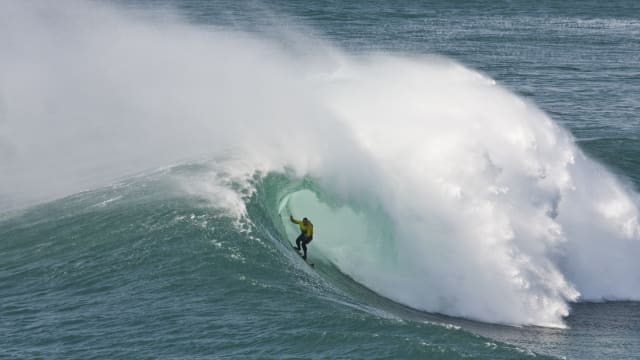
Nazaré is a little further north and famous for the biggest waves in Europe at Praia do Norte. They are for tow-in professionals, pulled into the waves by jet ski, and the place to watch them is the cliff by the lighthouse in winter. Our separate story on Nazaré's big waves covers when and where.
Ericeira
Ericeira, a fishing town under an hour from Lisbon airport, was named Europe's first World Surfing Reserve in 2011 by the Save The Waves Coalition. The reefs and points north of town draw experienced surfers, while the sandy beaches to the south host lessons. It is the most complete surf town in the country, and we give it its own Ericeira surf guide.
The Lisbon coast
If you are staying in Lisbon, you can surf without a car. Carcavelos, on the train line to Cascais, and the long beaches of Costa da Caparica south of the river are the city's local breaks. They are busy on summer weekends and are better for a session or two than a whole surfing holiday.
The western Algarve
The Algarve has two coasts. The west coast, part of a protected natural park, faces the open Atlantic and catches the most swell, with Amado and Arrifana as the best-known beaches. The south coast is sheltered from north-west swell, so around Sagres, Beliche and Zavial often work when the west coast is too big. In winter the exposed west can see waves over three metres, so that is a season for experienced surfers.

When to go
Portugal has surf all year, but the season changes the trip. From June to September the waves are smaller, the schools are busiest and the line-ups on easy beaches are crowded. September to November is the window most experienced surfers aim for: the swell returns, the summer crowds leave and the water is still at its warmest. From December to February the Atlantic is powerful, and exposed spots are for confident surfers only.
How cold is the water
Cooler than you might expect. In summer the northerly wind along the west coast pushes warm surface water out to sea and draws cold water up from below, a process called upwelling.
Measurements by IPMA, Portugal's sea and weather institute, off Cascais show water usually below 16 °C in winter and spring and above 18 °C between June and November. In practice most surfers wear a full wetsuit all year, with a thicker one in winter.

Surf camp or hotel
A surf camp in Portugal usually bundles a bed, daily lessons, equipment and transport to the beach. It is simple, social and suits solo travellers. The trade-offs are shared rooms, a fixed school and often a fixed beach.
The alternative is to choose the hotel first, then book lessons, board hire or a surf guide with a local school. That gives you a private room, a pool or restaurant for the days when the sea is flat or too big, and freedom to follow the conditions.
It also works better for couples and families where not everyone surfs. Look for a school that teaches on sand, keeps groups small and tells you honestly when the sea is wrong for your level.
Where to stay
Stay close to the waves you plan to surf. In Ericeira that means town for walking to restaurants, or the countryside for quiet. In the Algarve, Sagres gives you both coasts within a short drive. These are hotels we would book for a surf trip.
Hotels for a surf trip in Portugal
Immerso Hotel, Ericeira
A Design Hotels member set low in a valley inland of Ericeira, with a pool for flat days.
EriceiraQuietVila Galé Ericeira
A 1950s seaside villa turned big hotel, on the square above Praia do Sul.
EriceiraIn townMartinhal Sagres
Villas by a beach near Sagres, with both Algarve coasts a short drive away.
SagresFamilies
Our pick in Portugal
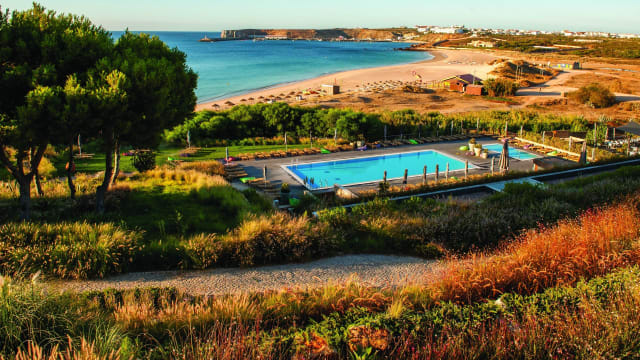
Martinhal Sagres for a surf trip with the family
Sagres sits at the corner of Europe, where the Algarve's west and south coasts meet, and that is its great advantage for surfers: when one coast is too big or blown out, the other is often clean. Martinhal Sagres is a family resort by a beach just outside town, with villas, pools and plenty for children, so the surfers can leave early and the rest can stay put. Pack a jumper as well as a wetsuit: this corner of the Algarve is exposed, and the Atlantic here is chillier than the beaches further east.


Frequently asked questions
Where is the best surf camp location in Portugal?
Peniche and Ericeira have the most schools and camps, with beginner beaches and quality reefs close together. The western Algarve suits those who want warmer air and a beach holiday too.
What is the best month for surfing in Portugal?
October is often the best all-round month, with returning swell and warm water. Beginners usually do better from June to early September, when waves are smaller.
Is Portugal good for beginner surfers?
Yes, among the best in Europe, thanks to many sandy beaches and schools. Stick to beach breaks such as Baleal or Foz do Lizandro and avoid reefs and points.
Can you surf in Lisbon?
Yes. Carcavelos is reachable by train towards Cascais, and Costa da Caparica lies across the river. They are fine for a session but busy on summer weekends.
Do I need a car for a surf trip in Portugal?
It helps a lot, because the best beach changes with wind and swell. Without one, base yourself in Ericeira or Peniche and use school transport.
Sources
Save The Waves Coalition, Ericeira World Surfing Reserve (approved February 2011, dedicated October 2011). Visit Portugal on surfing in Ericeira. IPMA, Cascais Watch station and notes on coastal upwelling. Wave types and seasons for Peniche, the Algarve and Nazaré from regional surf guides and forecasting services. Hotel details from the hotels and Picolo's hotel register. Swell, wind and tide change daily, so check a forecast and ask a local school. Last checked: 12 November 2026.