
Surf
Surfing in Morocco around Taghazout and Imsouane
Long right-handers along a dry, sunny coast north of Agadir. When the swell comes, which point suits which surfer, and where to sleep between sessions.
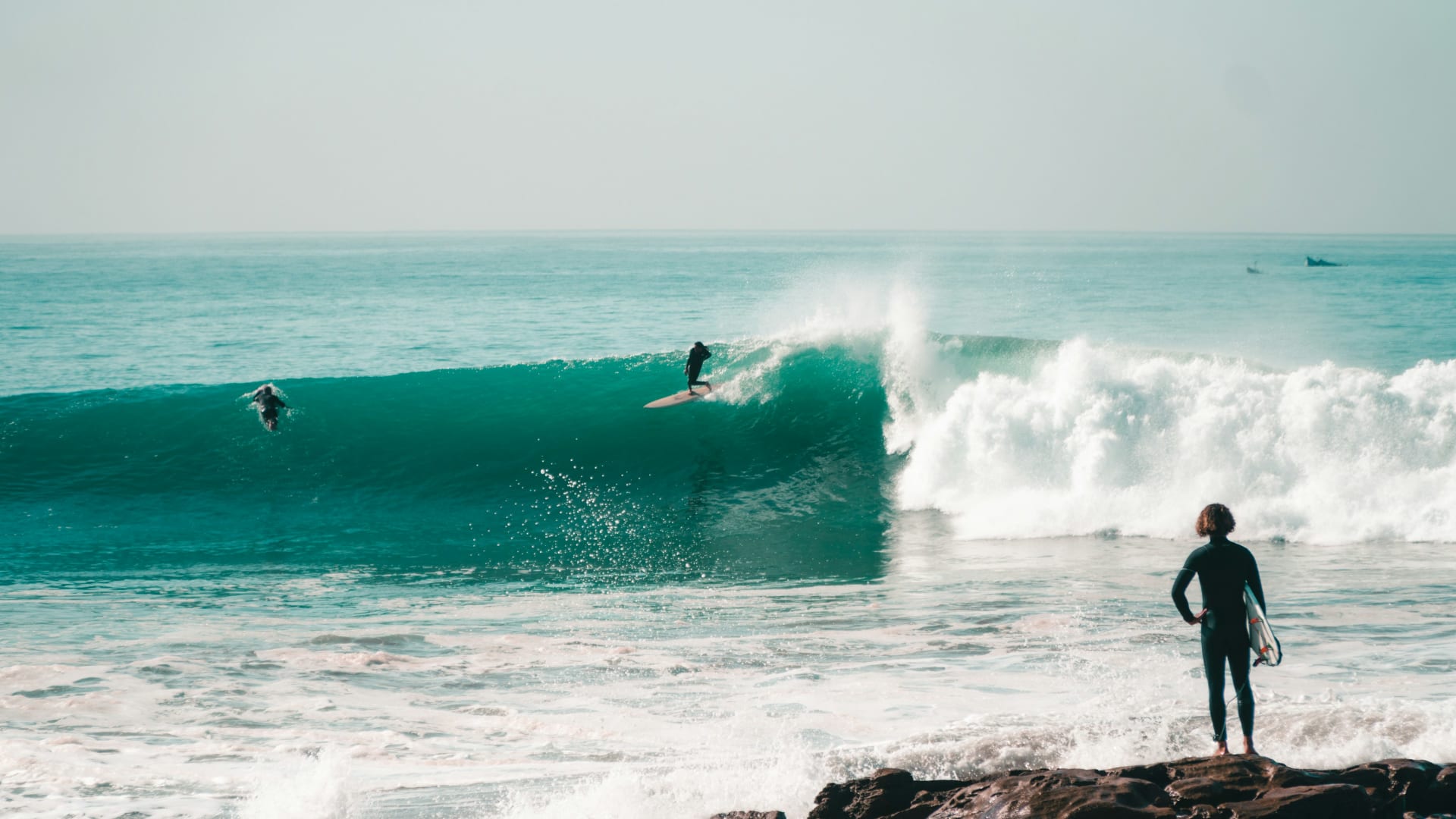
On a winter morning in Taghazout the swell comes in from the north-west and bends around the rocky points north of the village, one right-hander after another. Surfers pick their way out over the rocks with boards under their arms, and on the café terraces above the beach the ones waiting for the tide watch the sets over mint tea.
Morocco is the obvious answer for Europeans who want winter waves without winter weather. This guide covers surfing in Morocco: where the breaks are, which ones suit your level, when the swell arrives and where to stay. Picolo does not sell surf camps. We choose the hotel, and you book lessons or a guide locally.
In short: surfing in Morocco
Where: Taghazout and the coast just north of Agadir, with Imsouane further north for long, gentle rides.
Season: roughly September or October to March or April, when Atlantic storms send the most swell.
Level: the famous points, Anchor Point and Killer Point, are for experienced surfers. Beginners learn on the beach breaks and in the bay at Imsouane.
Water: cool rather than cold, roughly 16 to 18°C in winter. Pack a full 3/2 wetsuit.
Getting there: fly to Agadir Al Massira and take a taxi up the coast. Morocco's tourist board puts Taghazout about half an hour from Agadir.

Taghazout surf and the famous points
Taghazout was a fishing village before it became a surf town, and Morocco's national tourist board dates its pull among travelling surfers to the 1970s. The draw is the point breaks. A point break is a wave that wraps around a headland or reef and peels in one direction for a long way. Here they peel to the right, seen from the surfer riding the wave.
Anchor Point, just north of the village, is the best known: a long right-hander that needs a solid swell and a surfer who already knows what they are doing. Killer Point, further along the coast, is another right-hand point for advanced surfers, and it gets busy when it works. Both break over rock, and on a big day the paddle out is part of the test.
Below that level the coast is kinder. Surf schools take their groups to the beach breaks around Tamraght and closer to Agadir, and a local guide will drive you to whichever spot suits the day's swell and wind.
Imsouane for long, easy rides
Imsouane is a small fishing village north of Taghazout. Its bay, known simply as The Bay, is a long, slow right-hander sheltered by the harbour, and one of the best-known places in Morocco to learn to ride a longer wave. On a good day the queue for it is long as well. It works best in winter, when the north-west swells arrive.

When to go
The main season runs from autumn to early spring. This is when storms in the North Atlantic push the most consistent swell down the coast, and when the points start to break properly. Summer brings smaller, gentler waves that suit lessons but rarely wake the famous breaks. The air is mild all year, though winter evenings are cool enough for a jumper.
The water is the pleasant surprise for anyone used to the North Sea. Modelled monthly averages for Taghazout sit around 16 to 18°C from January to March and around 20 to 21°C in August. A full 3/2 wetsuit, three millimetres thick at the body and two at the arms and legs, covers most of the winter.
Who it suits, and who it does not
Morocco suits intermediate surfers who want long walls of water in the dark months, and beginners who are happy to learn on the beach breaks with a school. It does not suit beginners who expect to paddle out at Anchor Point after two days of lessons.
Our honest caveat: in high season the best-known breaks are crowded, and on small days there are far more surfers than waves. Keep a day free for the quieter spots, or for a trip inland.

Where to stay
Taghazout itself has guesthouses and surf houses in the lanes above the beach. The larger hotels are in Taghazout Bay, a newer resort area next to the village with a golf course and a long beach. From there it is a short taxi ride to the points, and most surf schools will collect you. Book lessons or a guide locally once you have seen the forecast.
Comparing destinations? Our guide to the best places to surf covers the rest of Europe and North Africa.
Hotels near Taghazout for a surf trip
Fairmont Taghazout Bay
A large resort on the Atlantic about 17 km north of Agadir, with argan-covered hills behind it.
Taghazout BayBeachfrontHyatt Place Taghazout Bay
A relaxed, modern hotel in the resort area with two outdoor pools, one of them heated.
Taghazout BayPoolsParadis Plage Surf Yoga & Spa
Built around surfing and yoga, on a long sandy beach further up the coast from Taghazout.
North of TaghazoutSurf and yoga

Our pick in Morocco
Fairmont Taghazout Bay
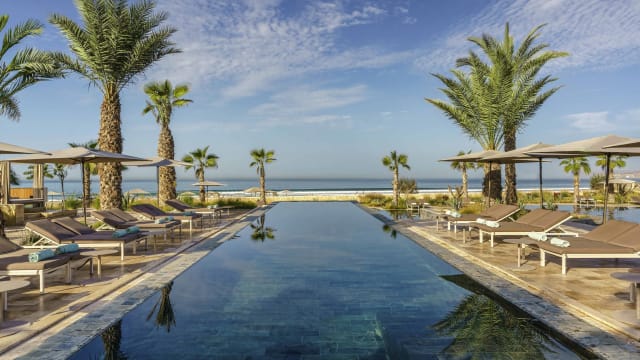
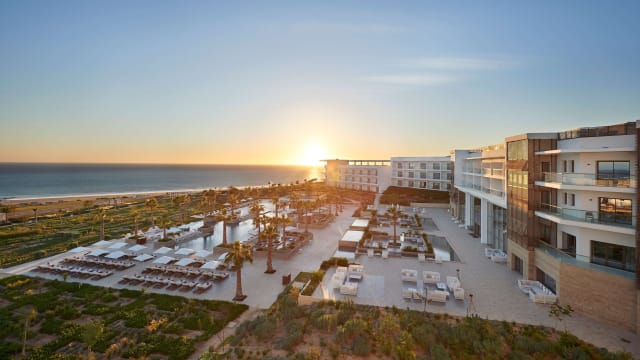
Fairmont Taghazout Bay sits right next to the village, with the Atlantic in front and argan-covered hills behind. It is the base we would choose for a surf trip where not everyone surfs: the rest of the group gets the pools and the spa while the surfers are collected for the points at first light. If you would rather walk out of the door into the village cafés, stay in Taghazout itself.


Frequently asked questions
When is the best time to surf in Morocco?
From autumn to early spring, roughly September or October to March or April. That is when North Atlantic storms send the most reliable swell and the point breaks around Taghazout come alive.
Is Taghazout good for beginners?
The village is, the famous points are not. Anchor Point and Killer Point are for experienced surfers, while beginners learn on the beach breaks nearby or in the bay at Imsouane.
How do I get from Agadir to Taghazout?
Fly into Agadir Al Massira and take a taxi north along the coast. Morocco’s tourist board puts Taghazout about 30 minutes from Agadir, and many hotels and surf schools can arrange a transfer.
Do I need a wetsuit to surf in Morocco?
Yes, for most of the season. The water around Taghazout averages roughly 16 to 18°C from January to March, so a full 3/2 wetsuit is the standard choice.
Can I book a surf camp through Picolo?
No. We recommend hotels you can book, and you arrange lessons, a guide or board hire with local schools once you know the forecast.
Sources
Taghazout, its beaches and surf history: Visit Morocco, the official site of the Moroccan National Tourist Office (ONMT), Agadir-Taghazout pages. Spots, levels and season: surf guides including The Surf Atlas and Surfertoday, checked against each other. Water temperature: modelled monthly averages from seatemperature.info. Hotel details from the hotels’ own listings and Hotels.com. Conditions change with every swell, so check a forecast and ask a local school before you paddle out. Last checked: 12 November 2026.
