Hiking holidays
Camino de Santiago, how to walk it and where to sleep
A pilgrim road across northern Spain that ends in front of a cathedral. Which route to choose, what the credential and the Compostela involve, and why the hotel at the end matters more than you think.
Most people do not cry when they reach the Praza do Obradoiro. But a surprising number sit down on the stones, take off their boots and say nothing for a while. In front of them is the cathedral of Santiago de Compostela; behind them are a hundred kilometres or eight hundred, and a small folded card full of stamps that proves it.
The Camino de Santiago is a network of pilgrim routes that all end at the tomb of the apostle James in Santiago, in Galicia in north-west Spain. People have walked them for more than a thousand years, for faith, for grief, for a break from screens or simply for the walk.
This guide covers the routes, the paperwork for the Compostela certificate, and where to stay. A note before we start: Picolo recommends hotels. We do not sell albergues, the simple pilgrim hostels along the way, and we do not sell Camino packages.
In short
Routes: the Camino Francés from the Pyrenees is the classic. The Portuguese route from Porto is the popular shorter alternative.
The minimum: to earn the Compostela you must walk at least the last 100 km to Santiago, or cycle at least the last 200 km.
The credential: a pilgrim passport that you get stamped along the way. On the last 100 km you need at least two stamps a day.
Where you sleep: albergues for pilgrims, or hotels and guesthouses in the towns. Both count.
2027: a Holy Year, because 25 July, the feast of St James, falls on a Sunday. Expect more pilgrims than usual.
Which route to walk
Camino Francés
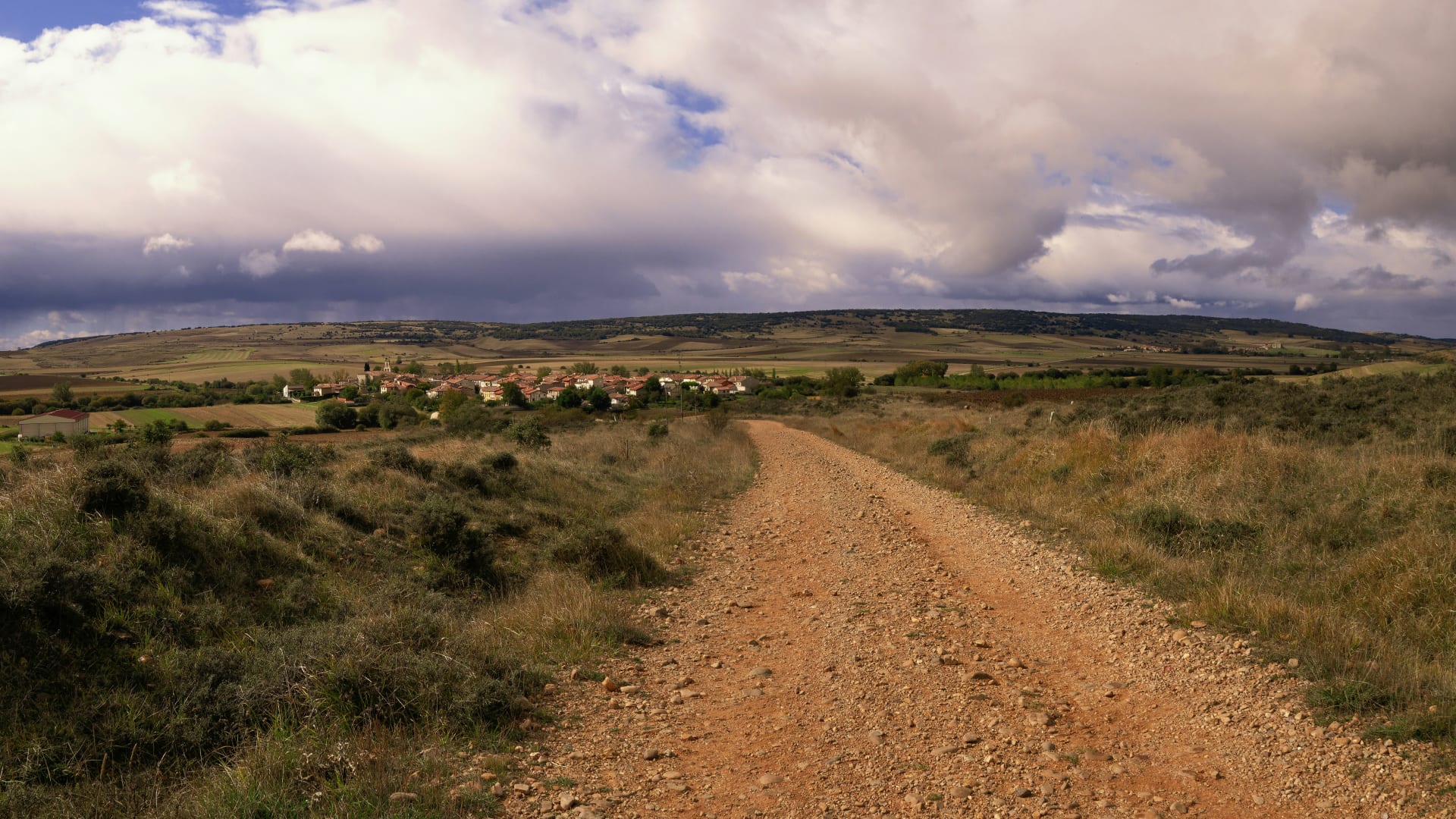
The French Way starts in Saint-Jean-Pied-de-Port on the French side of the Pyrenees and crosses northern Spain through Pamplona, Burgos and León. Walking all of it takes most people around five weeks. Most people who walk only the minimum start in Sarria, just over 100 km from Santiago, which makes the final stretch the busiest part of any Camino.
Camino Portugués
The Portuguese Way runs north from Porto, either inland or along the coast, and enters Spain at Tui. It suits walkers who want something shorter than the Francés but more than the last 100 km, and it is easy to reach by air through Porto.
Other routes
The Camino del Norte follows the Bay of Biscay coast and is hillier and quieter. The Camino Primitivo from Oviedo is shorter and steep. Both are better second Caminos than first ones.
The credential and the Compostela
The credential, the Credencial del Peregrino, is the document you carry and get stamped. The Pilgrim's Office in Santiago only accepts credentials issued by the cathedral through its office or by a specifically authorised organisation, such as the confraternities and pilgrim associations.
You can get one in person at the Pilgrim's Reception Office at Rúa Carretas 33 in Santiago, or from an authorised association before you leave. You also need it to sleep in pilgrim hostels.
Stamps, called sellos, are available at churches, hostels, hotels, town halls, cafés and many other places along the routes. The rule from the Pilgrim's Office is at least two stamps a day for at least the last 100 km on foot or horseback, or the last 200 km by bicycle.
To receive the Compostela, the certificate in Latin, you must have walked or ridden at least 100 continuous kilometres on a recognised route, with the final stage ending at the cathedral, and made the journey for religious or spiritual reasons.
You may walk the Camino in sections over several trips, as long as you do them in order along the route; if you only walk the minimum, get your credential stamped and dated at the start and end of each stage.
The Pilgrim's Office is open every day from 10:00 to 19:00, except 25 December and 1 January. You need a ticket with a QR code to collect the Compostela, and in busy periods same-day collection is not guaranteed.
Where to stay on the Camino
Albergues are cheap, social and part of the tradition, but you need the credential, beds are often in dormitories, and many do not take bookings. Picolo cannot sell you an albergue bed, and we would not pretend otherwise.
What we can help with is the other half: hotels and guesthouses along the route for the nights when you want a door that locks, and above all the hotel at the end. Arriving on foot after a week or a month, a room with a bath in the old town of Santiago is worth booking well ahead, especially in 2027.
When to walk
May, June and September are the favourite months: long days, mild temperatures and open services. July and August are hot inland on the Francés and crowded on the final 100 km. In winter some hostels close and the Galician rain sets in.
Hotels at the end of the Camino
Our pick in Santiago
The Parador on the Obradoiro
There is only one place where the end of the Camino and the hotel are the same square. The Hostal dos Reis Católicos was founded by the Catholic Monarchs around 1499 as a royal hospital for pilgrims, and it still stands beside the cathedral on the Praza do Obradoiro. Today it is a parador, one of Spain's state-run historic hotels, with its cloisters and long corridors. It is not cheap, and it is not quiet in Holy Year summers, but after the last kilometre there is nowhere more fitting to take off your boots.


Before you set off
Credential first: get it before you start, so your first stamp is on day one.
Boots and socks: walk at least a few long days in them at home. Blisters, not hills, end most Caminos.
Book the end: if you walk in 2027, book your nights in Santiago as soon as your dates are fixed.
Luggage: bag transfer services run on the popular routes, booked locally.
Want to compare the Camino with a mountain walk? Our walking holidays guide sets it beside the Dolomites, Madeira and Norway.
Frequently asked questions
How many km do you need to walk for the Compostela?
At least the last 100 km on foot or horseback, or the last 200 km by bicycle, on a recognised route ending at the cathedral in Santiago.
How many stamps do you need on the Camino de Santiago?
The Pilgrim's Office asks for at least two stamps a day on the last 100 km if you walk, or the last 200 km if you cycle. Before that, one a day is usual.
Where do you get a Camino credential?
At the Pilgrim's Reception Office in Santiago, or from a confraternity or pilgrim association authorised by the cathedral. Credentials from other sources are not accepted.
Where do most people start the Camino de Santiago?
On the Camino Francés, Sarria is the most common start for walkers doing only the minimum distance. For the whole route, Saint-Jean-Pied-de-Port in France.
Is 2027 a Holy Year on the Camino?
Yes. A Holy Year is held when 25 July, the feast of St James, falls on a Sunday, which it does in 2027, so expect more pilgrims and fuller hotels.
Sources
Oficina del Peregrino (Pilgrim's Office, Santiago de Compostela): requirements for the Compostela, the Credencial del Peregrino and two stamps a day, opening hours and collection with a QR ticket. Holy Year 2027 dates from the Santiago tourist office as reported in travel media, and the calendar rule for Holy Years. Parador history from Spain's official tourism site and other published sources, which differ on whether 1499 or 1501 is the founding date. A Quinta da Auga from the Michelin Guide. Rules can change, so check with the Pilgrim's Office before you set out. Last checked: 12 November 2026.