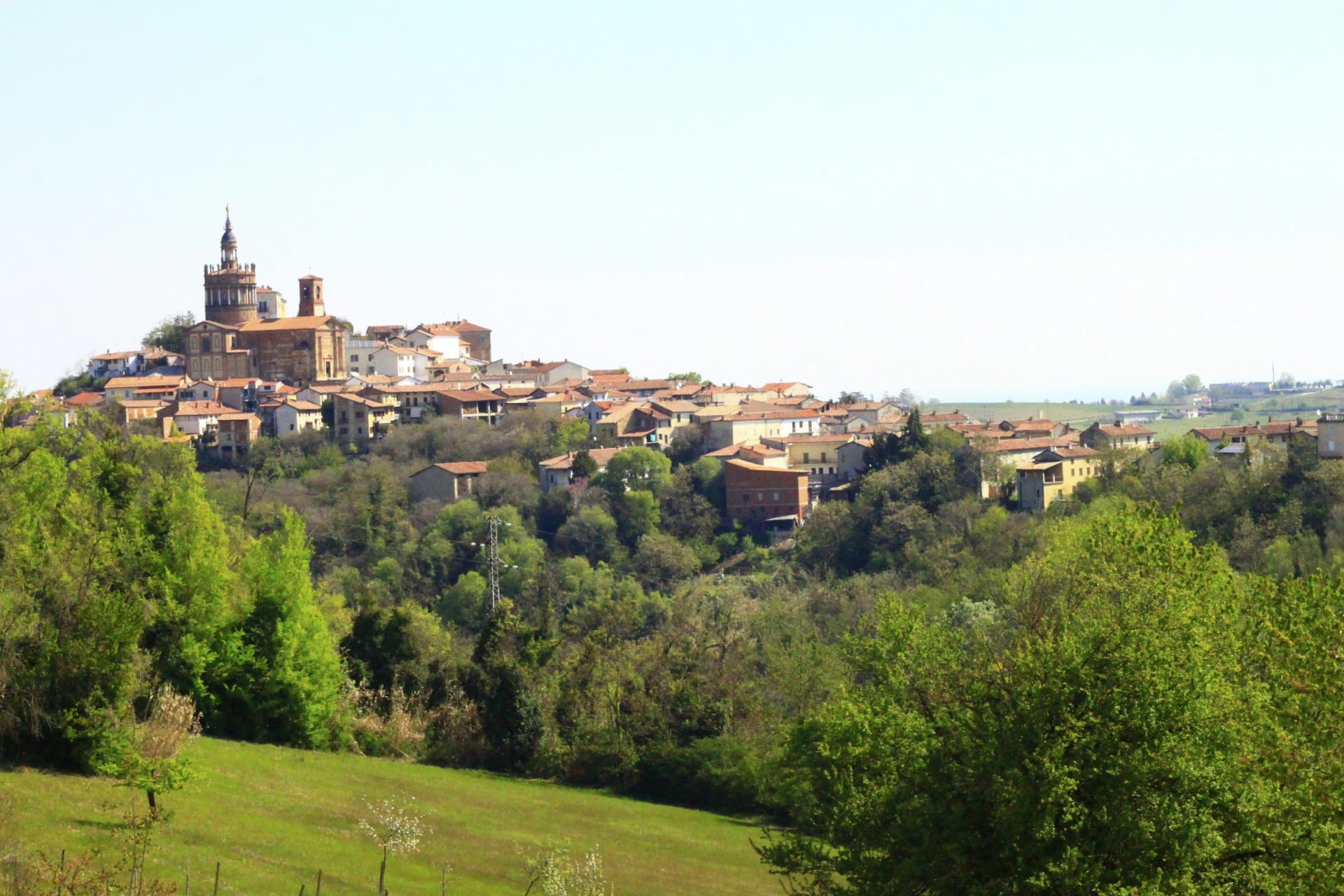
The village of Rodello on a hill in the Langhe, with vineyards and hazelnut orchards below

Cycling in Italy

Cycling in Piedmont: Langhe wine hills and passes above 2,400 metres

On autumn mornings the fog fills the valleys below La Morra and the vine rows rise out of it in stripes. An hour or so west, the roads start climbing past the tree line towards France.

15 November 202610 min read

© Luis van den Bos / Unsplash

In harvest season the Langhe sounds of tractors. They crawl between the vines towing crates of nebbiolo, and on the descent from La Morra you tuck in to let them pass. Every village has its own hilltop, and every road between them drops into a valley and climbs out again. None of the hills is long. There are simply a great many of them.

Piedmont offers two quite different trips in one region. In the wine country around Barolo, La Morra and Alba you ride short climbs on quiet lanes, with a bar in every village. Further west and north, towards France and the Aosta Valley, are some of the highest paved roads in the Alps. And to the east, near Novi Ligure, is the village where Fausto Coppi was born.

The short answer

  • Flat or hilly: hilly. Langhe climbs rarely last more than a few kilometres, but they come one after another. The western passes are over 20 km long and top out between 2,400 and 2,750 metres.

  • Traffic: quiet on the lanes between the wine villages, busier around Alba and in the Tanaro valley floor, and heavy on the approach roads into Turin.

  • When to go: May, June, September and October for the wine country. The high passes are generally open from June until mid-October.

  • Car-free days: during Scalate Leggendarie, passes including the Colle dell'Agnello and the Colle della Fauniera close to motor traffic on set summer days.

  • Where to stay: a wine village in the Langhe, with the passes as day trips by car or a couple of nights in the mountains.

Cycling in Piedmont at a glance

Colle dell'Agnello
2,744 m just 13 metres lower than the Stelvio
Colle del Nivolet
2,612 m a dead end; no road down the far side
Colle della Fauniera
2,481 m with a monument to Marco Pantani
La Morra
513 m Alba sits at 172 m
UNESCO
2014 the vineyard landscape of Langhe-Roero and Monferrato
Grape harvest
Late September-October nebbiolo is picked last
High passes open
Roughly June-mid October
Castellania Coppi
90 residents Fausto Coppi's birthplace, renamed in 2019

Last checked:

Chapter 1 · The wine

1402

first mention of nebbiolo in La Morra

A grape written into law

La Morra's statutes of 1402 contain the first local record of nebbiolo, the grape behind Barolo. The vineyard landscape of Langhe-Roero and Monferrato joined UNESCO's World Heritage List in 2014.

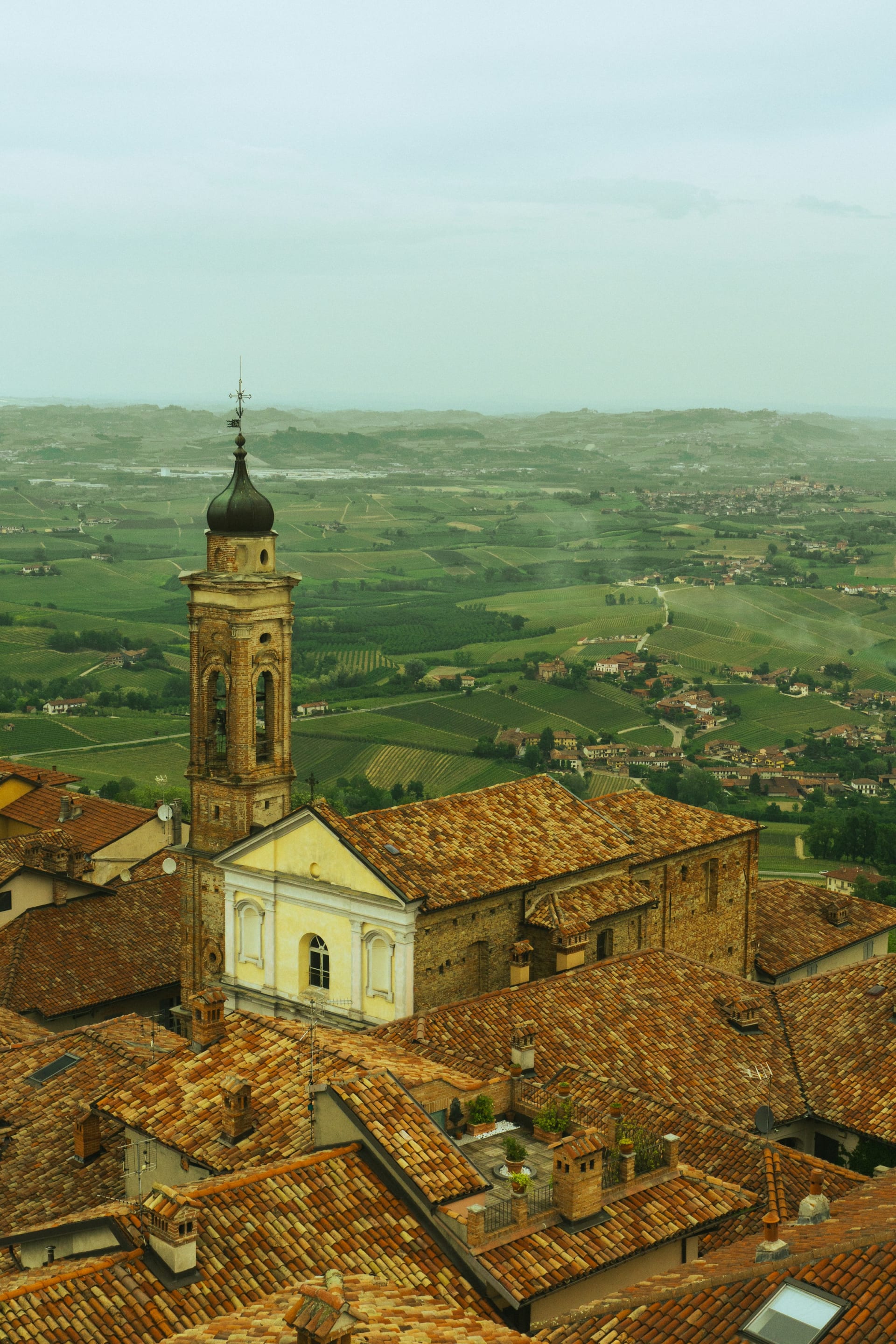
The church tower and rooftops of La Morra with the Langhe vineyards behind

Chapter 2 · Campionissimo

1919

the year Fausto Coppi was born

The village that changed its name

Fausto Coppi was born in Castellania in 1919. A century later, in 2019, the village became Castellania Coppi. His family home is a museum, and Novi Ligure has a museum to Coppi and Costante Girardengo.

The hilltop village of Camagna Monferrato above green woods in the province of Alessandria

Chapter 3 · Fauniera

2,481 m

Colle della Fauniera above sea level

A monument at 2,481 metres

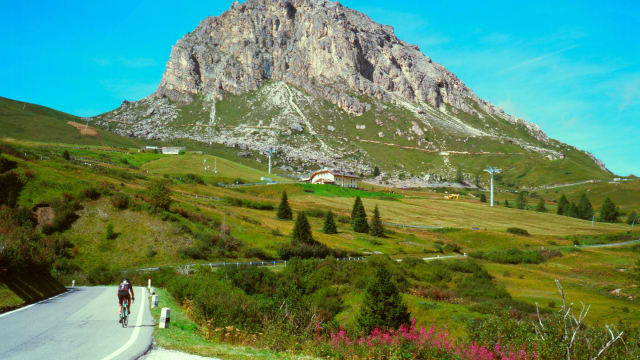
The 1999 Giro d'Italia crossed the Colle della Fauniera. A monument to Marco Pantani now stands at the top, in memory of that stage.

Green mountain valley below the clouds near Rifugio Vallanta in Val Varaita in the Cuneo Alps

Chapter 4 · Nivolet

1931

the year the Nivolet road opened

The road to nowhere

The road to the Colle del Nivolet was finished in 1931 and ends at 2,612 metres. The link down into the Aosta Valley was never built, so you turn at the top and descend the way you came.

The road to Colle del Nivolet winding past mountain lakes below snowy peaks

Flat or hilly?

Nothing in the Langhe is flat, but little of it is truly steep. Alba sits at 172 metres and La Morra at 513, and the roads between the villages dip into valleys and climb out again. From Gallo d'Alba to La Morra is 6.2 km at 4.9 per cent, with five hairpins. From Barolo the climb is longer but gentler. Over a full day the metres add up, without a single long hill.

The western passes are another sport entirely. The Agnello, the Fauniera and the Nivolet all run to more than 20 km from their usual starting points and finish well above 2,000 metres. The air is thin, cafés are few and there are long stretches without water. Coppi country, in the east, is more like the Langhe.

High alpine meadow at Piana di Soustra above Pontechianale in Val Varaita, the valley that leads up to Colle dell'AgnelloLuc Santeramo / Unsplash
Val Varaita, below the Colle dell'AgnelloThe pass on the French border is only 13 metres lower than the Stelvio.

The climbs

Three climbs, from wine hill to high mountain

One short Langhe classic and two of the long passes in the west.

La Morra from Gallo d'Alba · Light traffic

Langhe: five bends up to the view

6.2 km at an average of 4.9 per cent, with a short pitch of more than 11 per cent near the top. A good warm-up, or a last climb before dinner in La Morra.

From / To
Gallo d'Alba 192 m → La Morra 497 m
Length
6.2 km
Average
4.9 %
Max
11.4 %
Hairpins
5

Colle della Fauniera from Pradleves

Valle Grana: steep and empty

21.2 km at 7.8 per cent, with ramps of 13 per cent. The road is narrow and quiet, but there is almost nowhere to refill your bottles. The Pantani monument waits at the top.

From / To
Pradleves 822 m → Colle della Fauniera 2,481 m
Length
21.2 km
Average
7.8 %
Max
13 %

Colle del Nivolet from Ceresole Reale

Valle dell'Orco: past the dams

About 18.5 km from Ceresole Reale, past the dams at Lago Serrù and Lago Agnel. The average is moderate, but a few pitches reach 14 per cent. Start lower down in Locana and the climb becomes 40 km.

From / To
Ceresole Reale 1,580 m → Colle del Nivolet 2,612 m
Length
18.5 km
Average
5.6 %
Max
14 %

Recommended rides

Easy: Barolo and La Morra

Ride from Barolo up to La Morra, 8.3 km at 3.4 per cent, then follow the ridge before rolling back down. A short loop with lunch at the top; on an e-bike, almost anyone can do it.

Moderate: Coppi country

From the Museo dei Campionissimi in Novi Ligure, loops of 39 and 59 km head into the hills towards Gavi. Add a detour to Castellania Coppi, where Coppi's family home is now a museum.

Hard: Colle dell'Agnello

From Casteldelfino in the Valle Varaita it is 22.4 km to the summit at 2,744 metres, averaging 6.5 per cent with a maximum of 15. The last section from Chianale is the hardest, at around 9 to 10 per cent. The Tour de France crossed it in 2008 and 2011.

AlbaGrinzane Cavour253 mSerralunga d'Alba392 mBarolo293 mLa Morra504 m

Simplified map. Colour shows traffic: green light, yellow moderate, red heavy.

The route

A day in the wine villages

From Alba into the Langa del Barolo, with La Morra as the final climb. Scroll to ride it.

  • Bike
  • Light traffic
  • Some traffic

Bike · 177 → 253 m · Some traffic

Leaving Alba

The first kilometres out of town are the busiest. Once you have climbed away from the valley floor towards the castle at Grinzane Cavour, it goes quiet.

  • Town traffic
  • Castle

Bike · 253 → 392 m · Light traffic

Along the ridge

Narrow lanes between the vineyards, with Serralunga's castle as the landmark. Several places here rent out e-bikes.

  • Vineyards
  • E-bike hire

Bike · 392 → 293 m · Light traffic

Down to the village that named the wine

Barolo lies low, at around 213 metres.

  • Cafés
  • Wine museum

Bike · 8.3 km · 293 → 504 m · Light traffic

Up to the view

The climb from Barolo is gentle and steady. From the square in La Morra you look out over the whole Langa del Barolo.

  • Views
  • Final climb

Quiet roads, and roads to avoid

  • Quiet: the lanes between the wine villages of the Langhe and Roero.

  • Busier: the approaches to Alba and the roads along the Tanaro valley floor, especially at rush hour and at weekends during the truffle fair, which in 2026 runs from 10 October to 6 December.

  • Heavy: the roads in and out of Turin. Take the train out and start elsewhere.

  • The mountains: check that a pass is open before you drive to it. The Agnello usually opens in June and closes in mid-October.

The car-free days

During Scalate Leggendarie, run by Terres Monviso, several passes in the province of Cuneo close to motor traffic on set days between June and September. In 2026 there were eleven, including days on the Agnello and the Fauniera. It is free and it is not a race: you ride at your own pace. The 2027 dates had not been published when we checked in November 2026.

On the Nivolet, the final kilometres above Lago Serrù have been closed to private cars on summer Sundays in many years, but the arrangement has changed from year to year. Check with the national park before you build a trip around it.

Hire bikes and getting around

In the Langhe it is easiest to hire an e-bike, in places such as Serralunga d'Alba, Novello and Alba. If you want a good road bike, bring your own. Turin is the nearest major airport, and Alba is around 50 km away. The western passes are a couple of hours' drive from the Langhe, so most riders go for the day or spend a few nights in the mountains.

An honest caveat: Piedmont is not a ready-made cycling destination like Girona or Mallorca. There are fewer road bike rental shops, fewer bike hotels and little signage. In return, you will often have the wine roads and the passes almost to yourself.

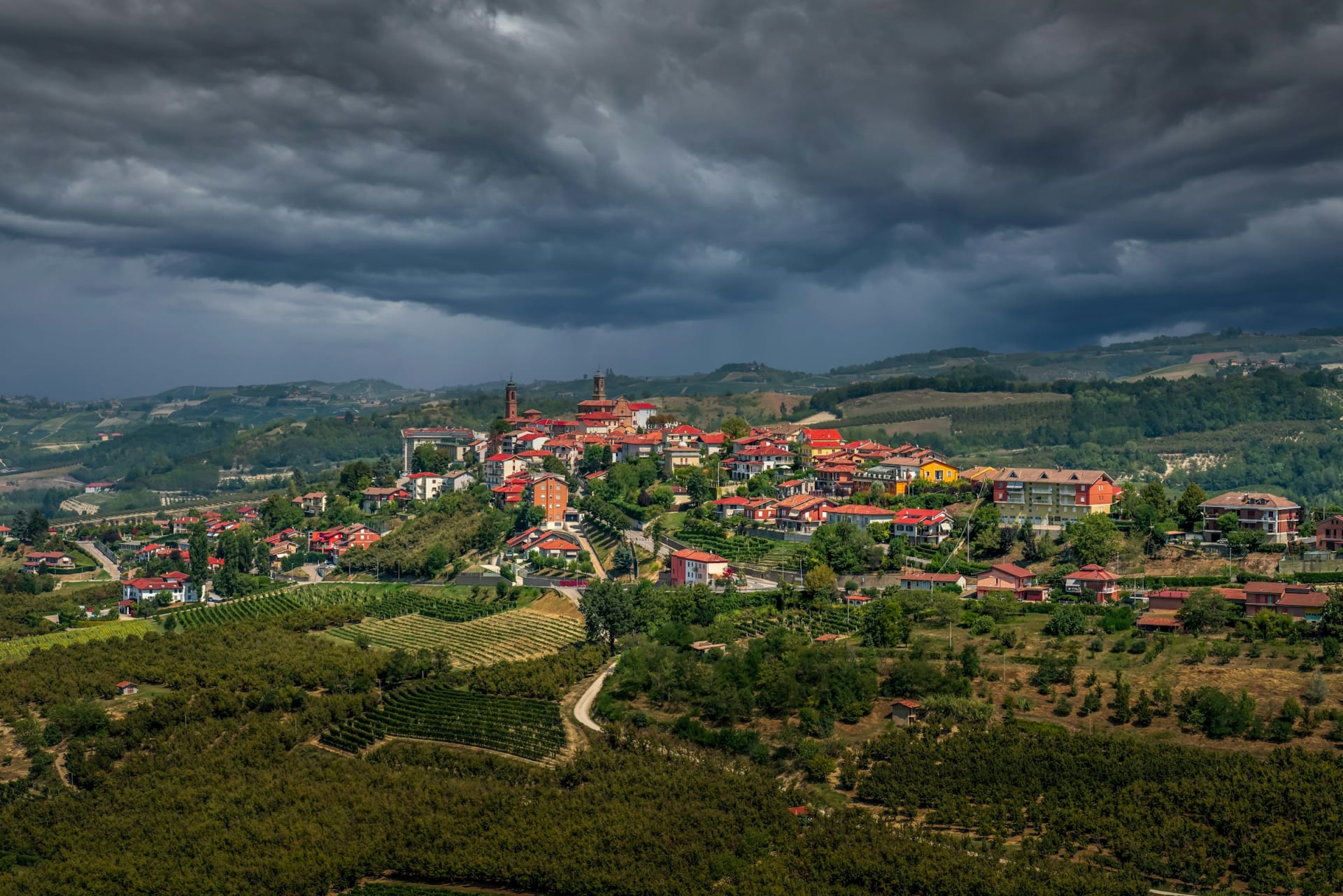
View from La Morra over the vineyards and farmhouses of the LangheDavid Salamanca / Unsplash
La MorraThe square at 513 metres is the natural place to end the day.

Where to stay

Cycle-friendly hotels in Piedmont

Stay in the wine country and drive to the passes, or choose a bike hotel in the Monferrato. Check bike storage directly with the hotel before you book.

Picolo-redaksjonen

Picolo-redaksjonen · Updated 15 Nov 2026

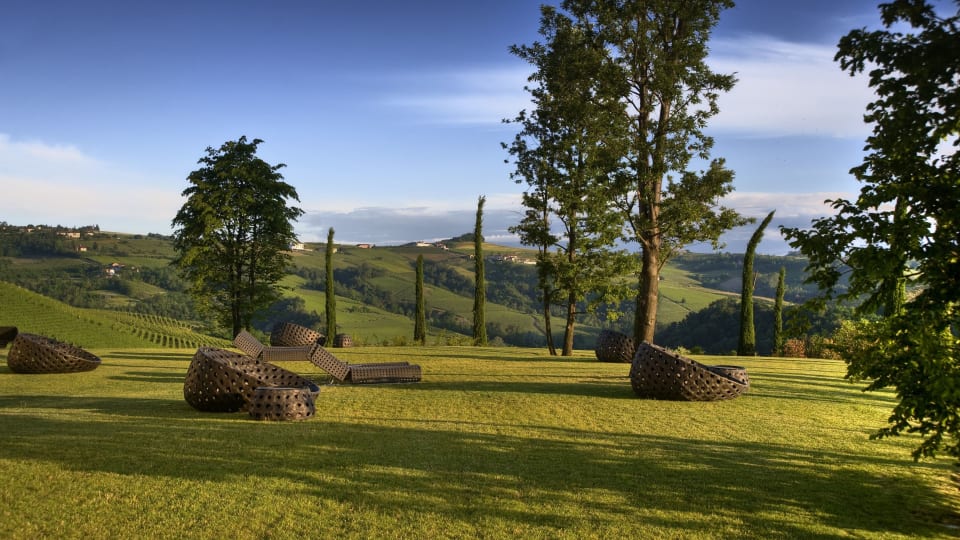
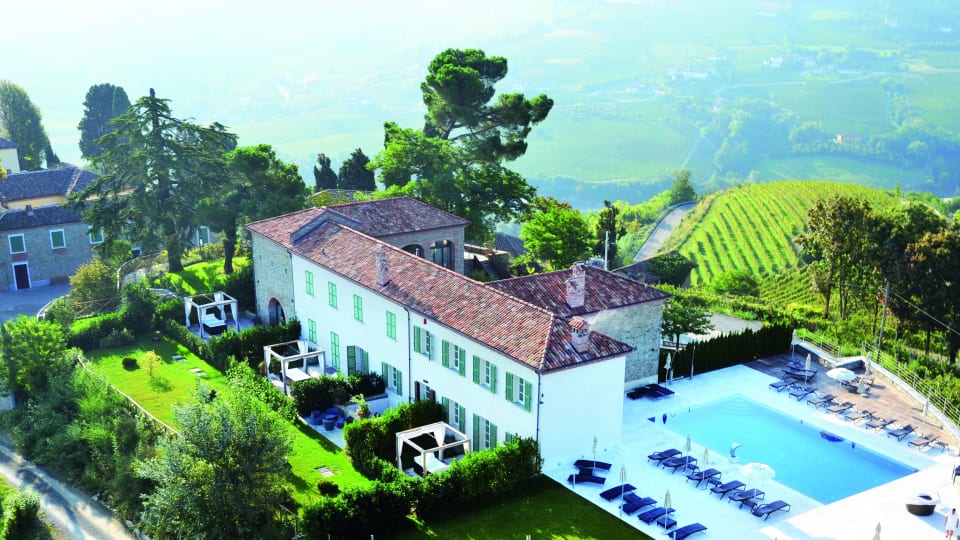
Il Boscareto Resort among the vineyards near Serralunga d'Alba

Serralunga d'Alba

1. Il Boscareto Resort & Spa

  • Serralunga d'Alba
  • Spa

The resort sits among the vineyards outside Serralunga d'Alba, in the heart of the Langa del Barolo. Rides and walks can start straight from the hotel, and e-bikes can be hired from wine estates in the village. Right for riders who want short climbs in the morning and wine in the afternoon.

Best for: Barolo loops from the door

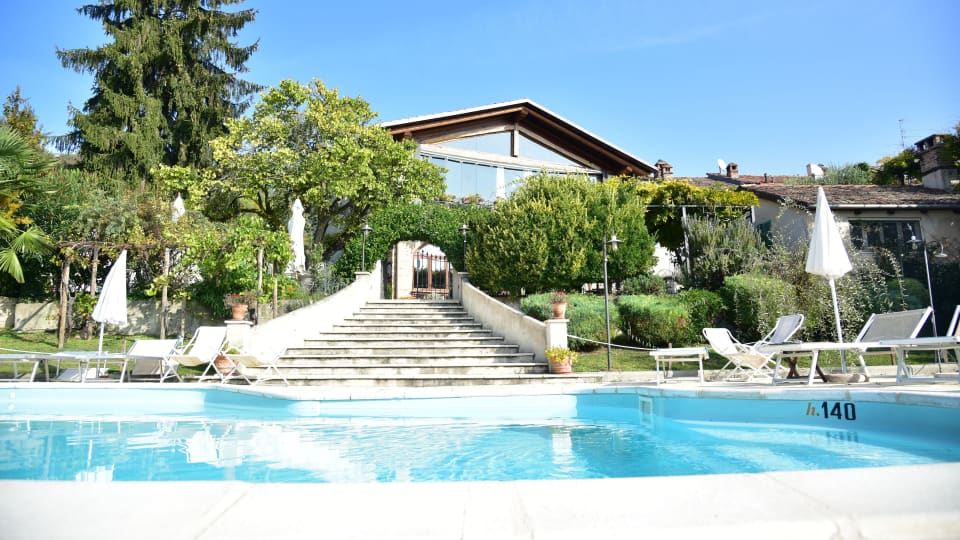
The pool and villa in the garden at Ca San Sebastiano Wine Resort and Spa in Camino, Piedmont

Camino, Monferrato

2. Cà San Sebastiano Wine Resort & Spa

  • Bike room
  • Workshop
  • Guided rides

A bike hotel in the Monferrato hills, with its own bike room, workshop, wash area and kit laundry. There is a dedicated bike manager, and guided rides are on offer. The Langhe is some distance away, so this is for riders who want to explore the Monferrato with everything taken care of.

Best for: Riders who want a workshop and bike wash

Relais San Maurizio on the hill above Santo Stefano Belbo

Santo Stefano Belbo

3. Relais San Maurizio

  • Spa
  • Restaurant
  • Former monastery

A former monastery on a hill above Santo Stefano Belbo, with vineyards on every side. It is not a bike hotel, and the hills around it are shorter and steeper than around Barolo. Choose it for the final nights, when your legs want the spa and dinner can take its time. Ask about bike storage before you book, or read our full review of Relais San Maurizio.

Best for: Last nights with a spa and a long dinner

How Picolo chooses

Our editors pick every hotel and experience themselves, and most of them we have tried. Nobody can pay to be included or ranked higher. When you book through our links, Picolo earns a small commission. It never changes the price you pay, and it never decides what we write.

Frequently asked questions

What is the highest pass you can cycle in Piedmont?

The Colle dell'Agnello, at 2,744 metres on the French border. It is just 13 metres lower than the Stelvio.

Is the Langhe good for e-bikes?

Yes. The hills are short and frequent, and e-bikes are the most common rental in the area.

Can you cycle to the Colle del Nivolet all year?

No. The upper road is closed by snow from mid-October until around 1 June.

Where was Fausto Coppi born?

In Castellania Coppi, a village of around 90 people in the hills near Novi Ligure and Tortona. His family home is now a museum.

How far is the Langhe from Turin?

Alba is around 50 km from Turin. Avoid rush hour, when the roads in and out of the city are congested.