Travel guide · Europe
Tirana travel guide: bunkers, cafés and a city in colour
A vast square under a bronze horseman, apartment blocks painted in bright colours and museums inside Cold War bunkers. Tirana is changing so fast that it is worth seeing now.
Tirana, the capital in a hurry
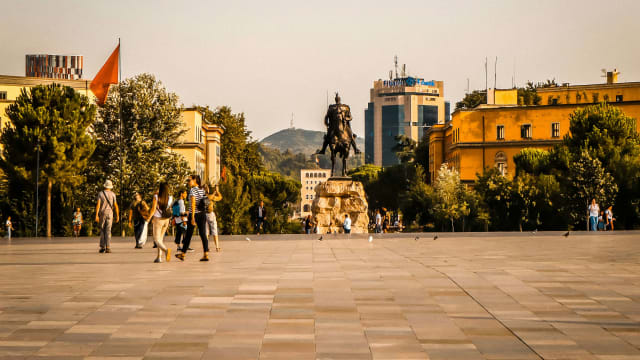
Evening in Blloku. The cafés spill onto the pavements, the bars are filling up, and it is hard to imagine that this was once a sealed-off quarter where only the communist leadership lived. Ten minutes' walk away, families cross the open stone expanse of Skanderbeg Square under the statue of the national hero.
Tirana is the capital of Albania and lies inland in the centre of the country, with Mount Dajti rising to the east. For decades it was one of the most closed cities in Europe. Today it is loud, young and full of building sites. For the rest of the country, see our Albania travel guide.
What to see
Skanderbeg Square
The huge central square, named after the 15th-century hero whose statue stands on it. The National History Museum, with its large mosaic on the facade, lines one side.
The mosque and the clock tower
The small Et'hem Bey Mosque and the clock tower beside it are among the few older buildings to survive in the centre.
Bunk'Art
Two museums in former Cold War bunkers, one on the edge of the city and one near the centre, tell the story of the communist years and the secret police. Sobering, and well done.
Blloku and the Pyramid
The former party quarter is now the city's café and nightlife district. Nearby, the concrete Pyramid built as a museum for the dictator has been turned into a public space you can climb.

Two days in Tirana
Day 1: Skanderbeg Square, the mosque and the National History Museum, then Bunk'Art in the afternoon and dinner in Blloku.
Day 2: the cable car up Mount Dajti for the view, then the New Bazaar for lunch and an evening walk through the centre.
Getting there
Tirana International Airport is around half an hour by road from the centre, and there are airport buses. Tirana is a natural starting point for Berat, the north and the coast.
Good to know
Traffic is heavy and driving in the centre is stressful. Walk or take a taxi within the city.
The lek is the currency. Cards are widely taken in the centre, but carry some cash.
The colourful facades on many blocks date from the early 2000s, when the city painted its grey buildings.
Building work is everywhere. Expect cranes, noise and a skyline that changes from year to year.
Frequently asked questions about Tirana
Is Tirana worth visiting?
Yes, for two days of museums, food and a good look at how fast Albania is changing. It is not a classic beauty, and that is part of its charm.
How many days do you need in Tirana?
Two days covers the centre, Bunk'Art, Blloku and Mount Dajti.
How do you get from Tirana airport to the city?
By airport bus or taxi. The journey takes around half an hour without heavy traffic.
What is Blloku in Tirana?
A district that was closed to ordinary Albanians under communism. Today it is full of cafés, bars and restaurants.
Is Tirana a good base for exploring Albania?
For the north and Berat, yes. For the riviera in the south, you are better off moving on and staying on the coast.
More travel inspiration in Tirana
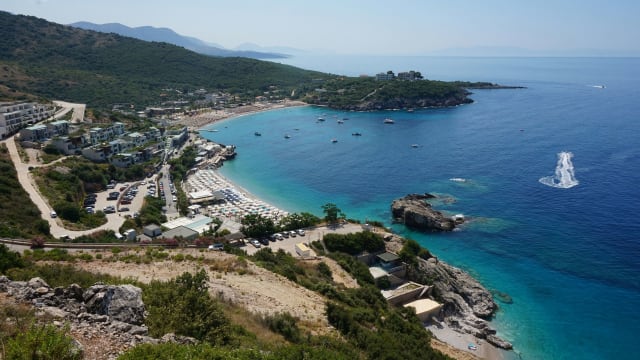
The best beaches in Albania: 10 coves from Dhërmi to Ksamil
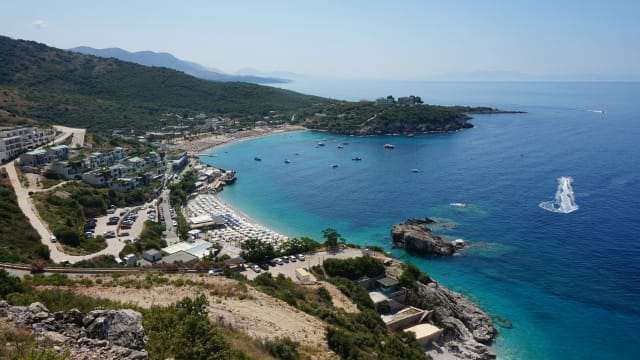
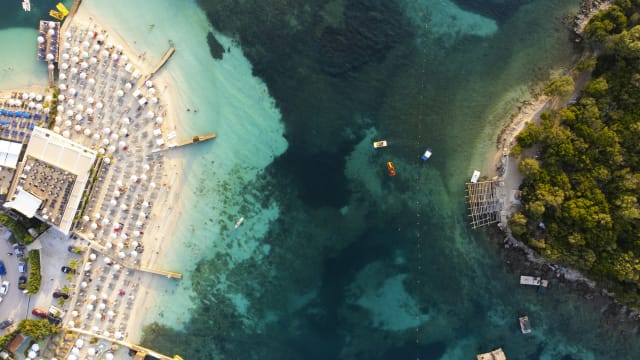
The Albanian Riviera has mountains dropping straight into the sea, pebbles that keep the water crystal clear and coves you can only reach on foot or by boat. These are the beaches we would choose.