Bike · 8 → 131 m · Some traffic
Across the plain
The first hour is flat, on the Ma-2200 inland towards Campanet. Expect a headwind some days.
- Flat
- Warm-up

Cycling
Twenty-six hairpins down to the sea, and the same twenty-six back up. Where to base yourself, which month to go and which hotels look after the bike as well as the rider.
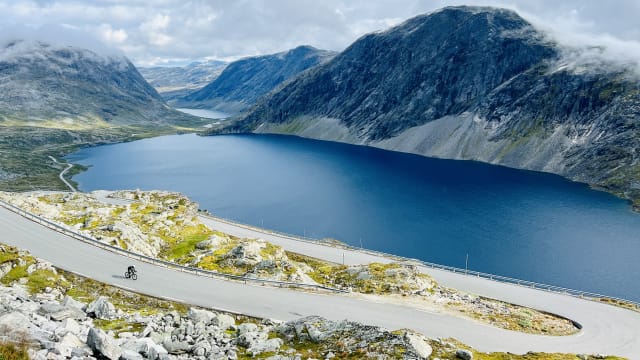
At the bottom of Sa Calobra there is a café, a small harbour and a queue of cyclists eating cake while they look back up at the road they just came down.
It drops from the Coll dels Reis to the sea in a series of hairpins, and there is only one way out for a rider: the same road, back up. That climb is the reason many people book a cycling holiday in Mallorca in the first place.
The island has more to offer than one famous hill, though. The Serra de Tramuntana runs along the north-west coast with the long climbs, the central plain has quiet farm roads, and the bays of Pollença and Alcúdia in the north are full of hotels that are used to bikes in the lobby. This guide covers where to stay, when to go and how to organise the bike.
Best months: February to May and again in autumn. Spring is busiest, with clubs and pro teams on the roads.
Where to stay: Pollença or Port d'Alcúdia for the most choice of routes and bike shops; Port de Sóller for the mountains on the doorstep.
The climb: Sa Calobra is about 9.5 km at an average of around 7 percent, with 26 hairpins.
Hire or bring: hiring is easy in the north, where shops keep large fleets of road bikes.
The event: the Mallorca 312 sportive runs on 24 April 2027 from Playa de Muro.
The classic base. You are close to the Formentor peninsula, the start of the Tramuntana and the flat roads around Alcúdia bay, so you can choose between a mountain day and an easy spin from the same breakfast table. The town of Pollença is a few kilometres inland from the port and quieter in the evening.
Flatter and more built-up, with big resort hotels and a long beach. It suits a group with mixed abilities, families where only one person rides, and anyone entering the Mallorca 312, which starts and finishes at Playa de Muro.
On the other side of the mountains. You start the day climbing, the Puig Major and the road to Sa Calobra are close, and the harbour is a good place to finish. The caveat is that every ride starts or ends with a climb, which is not for everyone on a first trip.
The city has the airport, the restaurants and the culture. The riding starts with traffic, so it works best for a short trip with one or two long days into the hills.
Sa Calobra: ride over the Tramuntana to the Coll dels Reis, at around 680 metres, then descend to the sea and climb back. Go early, before the coaches.
Formentor: the road to the lighthouse at the island's northern tip, with short climbs and drops to the sea.
Puig Major: the long climb on the main mountain road, the Ma-10, past the island's highest peak.
The plain: quiet roads through almond groves and villages such as Sineu and Petra for a recovery day.
Simplified map. Colour shows traffic: green light, yellow moderate, red heavy. The loop is around 105 km and distances are approximate.
The route
Scroll to ride the classic loop: across the plain to the mountains, down to the sea at Sa Calobra and home over the Coll de Femenia.
Bike · 8 → 131 m · Some traffic
The first hour is flat, on the Ma-2200 inland towards Campanet. Expect a headwind some days.
Bike · about 30 km from the start · 131 → 179 m · Light traffic
From Campanet a narrow country lane runs between the farms to Caimari, at the foot of the mountains.
Bike · about 9 km · 179 → 581 m · Some traffic
A steady climb of around 5 percent on the Ma-2130. Most riders refill their bottles at the top before the mountains.
Bike · about 11 km · 581 → 720 m · Some traffic
On along the Ma-10 past Escorca, then onto the Ma-2141 to the pass at 682 metres. From here you can see the hairpins below.
Bike · 9.5 km · 720 → 15 m · Heavy traffic
The coaches use the same narrow road, so keep right on the bends. At the bottom are the cafés and the small harbour.
Bike · 9.5 km · 15 → 720 m · Heavy traffic
The only way out is the road you came down. Around 7 percent on average, with no short cut.
Bike · about 17 km · 720 → 541 m · Some traffic
Back on the Ma-10, past the turn for the monastery at Lluc, and over the last pass before the bay.
Bike · about 20 km · 541 → 8 m · Some traffic
A long, open descent with good sight lines. Watch for goats on the road.

The climbs
Two of the longest climbs in the Tramuntana. Scroll to ride the profiles.
Sa Calobra from the harbour · Heavy traffic
The hairpins come thick and fast from about 5 km, and the last stretch from the aqueduct is easier. Go early, before the coaches.
Puig Major from Sóller · Some traffic
The Ma-10 climbs from Sóller to the Monnàber tunnel, below the highest peak on the island. The gradient barely changes, so find a rhythm and hold it.
The roads fill with cyclists from late winter, when it is cold in the north of Europe and the island is mild and mostly dry. March, April and May are the most popular months, with the Mallorca 312 in late April. September to November is the quieter alternative.
In July and August the heat on the exposed climbs is hard work, so start at first light if you ride then. The Tramuntana is cooler and windier than the coast, and the weather can change quickly up there, so bring a gilet and arm warmers even in spring.
The north of the island has many rental shops with carbon road bikes, and several hotels work with partners who deliver a bike set up to your measurements. Bring your own pedals, shoes and saddle height. If you bring your own bike, check that the hotel has a locked room, not just space in the garage.
These hotels have thought about cyclists. Facilities come from each hotel's own website, so check the details for your dates.
Inland from Pollença, with a bike centre, room to work on the bike and laundry for kit.
High above the harbour, with a partner who sets up your hire bike and tailored rides on request.
Our pick in Mallorca
Son Brull sits inland from Pollença, the classic base, with Formentor, the start of the Tramuntana and the flat roads around Alcúdia bay all within reach. The hotel has a bike centre, room to work on the bike and laundry for your kit. The town of Pollença is quieter in the evening than the port, which suits a week of early starts.
March to May is the main season, with mild days and the most bike shops open. October is a quieter alternative, while July and August are hot on the climbs.
It is about 9.5 km at an average of around 7 percent, from sea level to the Coll dels Reis. Steady rather than brutal, but you have to ride down it first, so there is no way to skip the climb back.
Pollença and Port d'Alcúdia in the north give you the most choice of routes, shops and cyclist hotels. Port de Sóller puts you in the mountains but every ride includes a climb.
Yes. The north of the island has many rental shops with carbon road bikes, and several hotels work with partners that deliver a bike set up to your size.
The Mallorca 312 runs on Saturday 24 April 2027, starting and finishing in Playa de Muro. Places sell quickly, so check the organiser's site for any remaining entries.
Sa Calobra figures: Cycling UK and other climb databases, which vary slightly by start point. Mallorca 312 date: mallorca312.com. Hotel facilities: sonbrull.com (luxury cycling in Mallorca) and jumeirah.com (Port Sóller cycling experience). Facilities and partner shops change, so confirm with the hotel before you travel. Last checked: 12 November 2026.