
Travel guide · Europe
Edinburgh travel guide
A castle on an old volcano, a medieval Old Town full of closes and a summer of festivals. Here is our guide to Scotland's capital, from the Royal Mile to Leith.
Edinburgh: Scotland's capital between castles and volcanoes
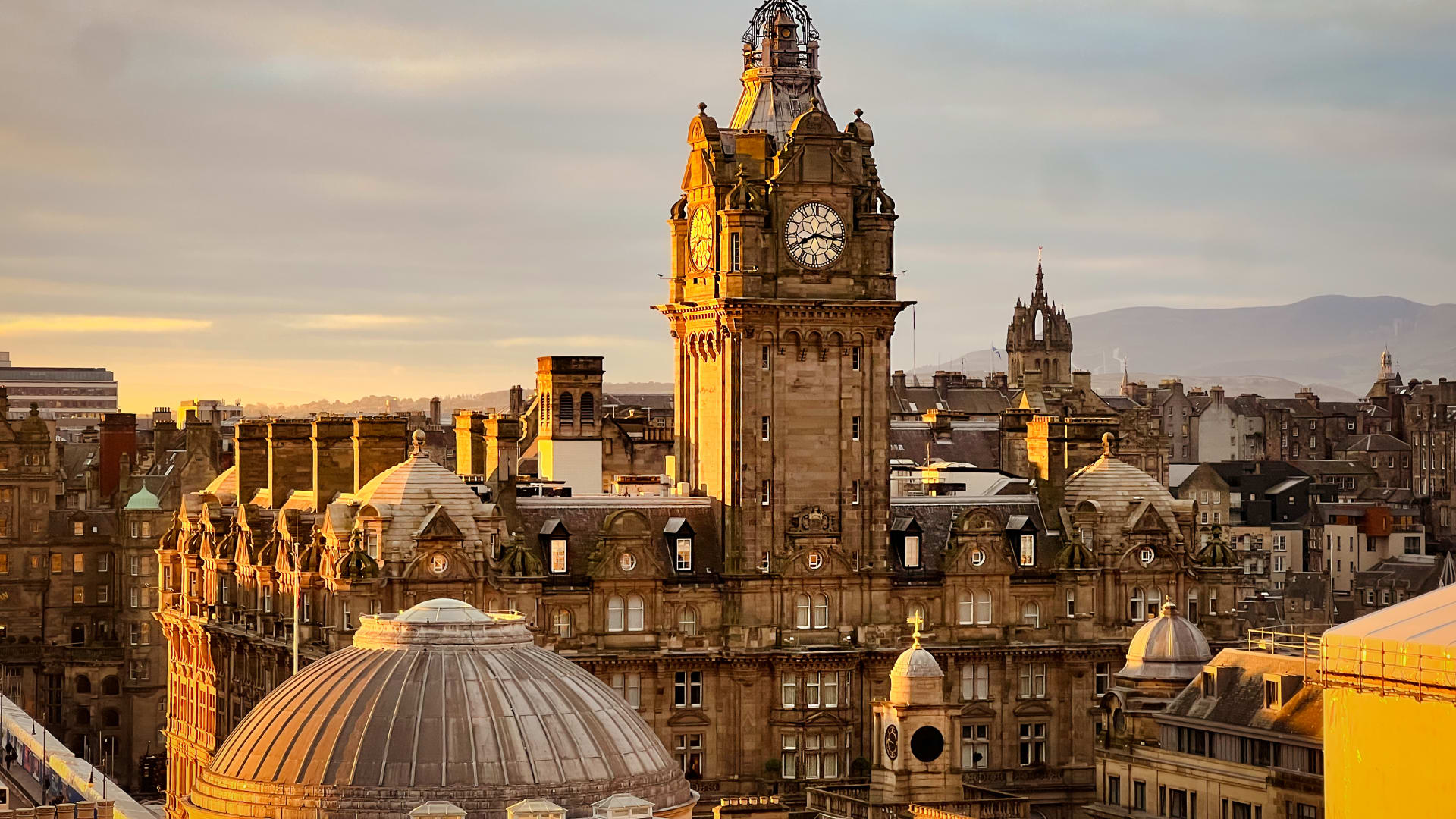
The tram from the airport drops you on Princes Street, right below a castle standing on an old volcano. Behind it the Old Town rises in layer upon layer of dark stone, towers and steep lanes.
Edinburgh has been Scotland's capital for hundreds of years. Royal palaces, old churches and large museums sit side by side with bars and restaurants, and both the Old Town and the New Town are a UNESCO World Heritage Site.
The centre is small enough to walk everywhere. On a long weekend you can fit in the castle, a climb up Arthur's Seat, a couple of museums and an evening in a whisky bar. In August the festivals fill the whole city.
In short: Edinburgh
Edinburgh is the castle, the Royal Mile and Arthur’s Seat, and in winter the Christmas market. Stay in the Old Town or the New Town and most things are within walking distance.
The icon by Waverley: The Balmoral. Check availability and prices at The Balmoral
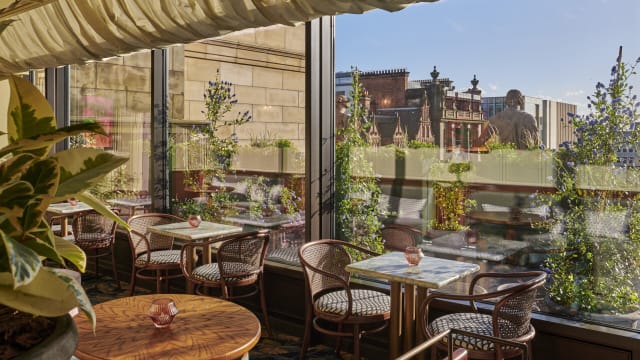
On the Royal Mile: Radisson Collection Royal Mile. Check availability and prices at Radisson Collection Royal Mile

Sights and experiences in Edinburgh
Most of Edinburgh's highlights are packed in and around the Old Town, so you can see a lot in a short time without a map or a bus. We start at the castle at the top and work our way down and out, all the way to the quieter neighbourhoods and the coast.
Edinburgh Castle: the city's rock-solid centrepiece
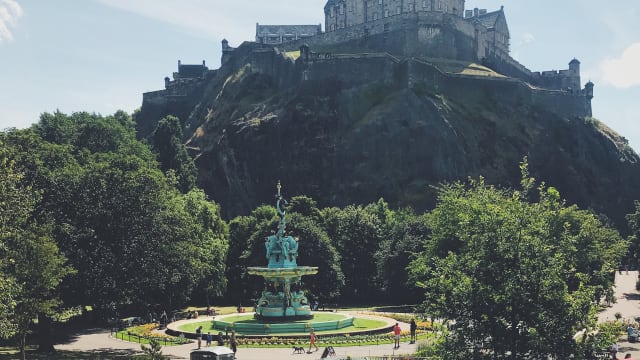
Nowhere tells the city's story more clearly. The castle has stood on its rock for centuries and has been a fortress, a royal residence and a prison before becoming the city's best-known landmark. Inside the walls you will find the Scottish Crown Jewels, a tiny medieval chapel and old cannons, but it is the view and the atmosphere people remember most.
Arrive just before one o'clock and you will catch one of the city's oddest rituals: a gun fired from the castle walls that makes unsuspecting tourists jump. Linger a moment afterwards, because from the esplanade in front of the castle the whole city opens up before you, with the sea as a backdrop.

The Royal Mile: the backbone of the Old Town
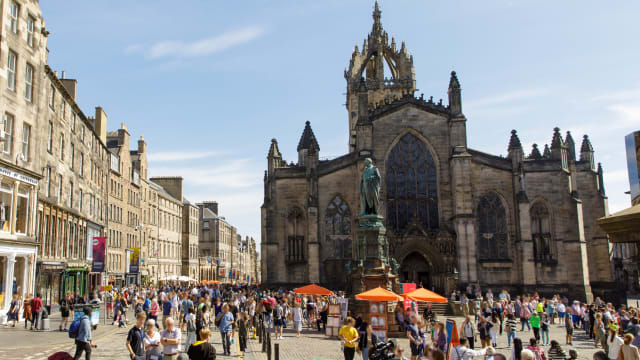
From the castle, the Royal Mile runs down through the whole Old Town, a long cobbled street full of buskers, pubs and small shops. On the way you pass the mighty St Giles' Cathedral. But it is when you turn off the main street into the narrow passages the Scots call closes that the city feels most authentic.
Below ground lies a whole little city. At the Real Mary King's Close you can head down into old streets that were built over and forgotten centuries ago. The guides are just as happy to talk about ghosts as about history. If you need warmth and a little calm afterwards, the free National Museum of Scotland is close by, one of the very best places in the city to spend a rainy hour.

Victoria Street and the Grassmarket: the city's Harry Potter corner
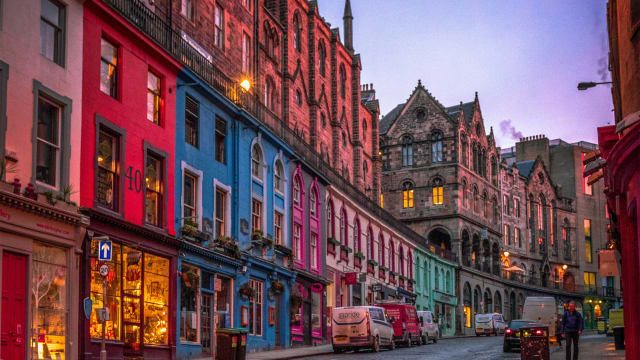
A little further down is the street everyone wants a photo of. Victoria Street curves downhill in an arc of brightly painted shopfronts. Many believe it inspired Diagon Alley in Harry Potter. J.K. Rowling has never said so outright, but fans find their way here anyway.
It is no accident that Harry Potter turns up here. Rowling wrote in several of the city's cafés while working on the first books, including The Elephant House, which has reopened after a fire in 2021. Just around the corner is the old Greyfriars Kirkyard, where a gravestone bears the name Thomas Riddell, strikingly close to Voldemort's real name, Tom Riddle. No wonder fans stop and stare. At the bottom of the hill the Grassmarket opens up, an old market square full of pubs and outdoor tables, with the castle high above you on its rock.

Arthur's Seat and Holyrood: the volcano in the middle of the city
By now you have seen Edinburgh up close, down in the streets. For the big picture you need to climb, and luckily it is not far. Right in the city is a real, though long extinct, volcano: Arthur's Seat, the city's green lung, which you can climb in under an hour. From the top the whole city, the sea and the surrounding hills are spread out before you, and you soon understand why locals come here to breathe.
At the foot of the volcano is Holyrood, with the Palace of Holyroodhouse, where the King still stays when he is in Scotland. When he is not in residence you can visit the palace yourself, where Mary, Queen of Scots held court almost 500 years ago.

Calton Hill and the New Town: views and Georgian elegance
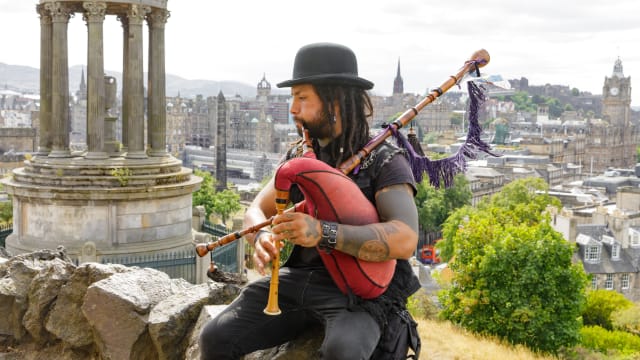
Not far away is the city's other famous viewpoint, Calton Hill. You reach the top of this little hill in the middle of the city in ten minutes. Up there stands a collection of old columns and monuments that earned Edinburgh the nickname the Athens of the North. Come at sunrise or sunset, when the light falls softly over the whole city.
Just below begins the New Town, the newer part of the city, with wide, straight streets in sharp contrast to the tangle of the Old Town. Stroll along Princes Street, with Princes Street Gardens on one side and the castle towering on the other, before turning into George Street. This is the place to shop, have a coffee at a pavement café and simply watch the world go by.

Dean Village, Stockbridge and Leith: the city's quieter corners
Just a few minutes from busy Princes Street, the city almost disappears. Dean Village is tucked away in a little valley along a river, an old mill village with stone houses and a weir, right in the capital. Follow the riverside path and you reach Stockbridge, a relaxed neighbourhood with cosy cafés, charity shops and a lively market at weekends.

Furthest north, where the city meets the sea, is the harbour district of Leith. For a long time it was a rough area, but today it is one of the coolest places in Edinburgh to eat and drink. It is also home to the Royal Yacht Britannia, the royal family's former luxury yacht, which you can board and explore from the engine room to the elegant state rooms.

Edinburgh, the festival city
In August every stage, cellar and street corner in the city fills up. That is when the Edinburgh Festival Fringe, one of the world's largest arts festivals, runs alongside the Edinburgh International Festival and several others. The city is full of life these weeks, but also full of people, so book tickets and a room well ahead.
In December the Christmas market takes over Princes Street Gardens, with a big wheel, stalls and mulled wine. Hogmanay, the New Year celebration, is known far beyond Scotland, with a torchlight procession through the Old Town, a street party and fireworks over the castle at midnight. On New Year's Day the bravest take an icy dip in the sea, a tradition called the Loony Dook.

Whisky and Scottish food in Edinburgh
Scotland and whisky belong together, and in Edinburgh you can taste your way through the country's regions without leaving the centre. The Scotch Whisky Experience is up by the castle, and Johnnie Walker Princes Street runs tastings down on Princes Street. The city also has its own gin distilleries and several good cocktail bars.
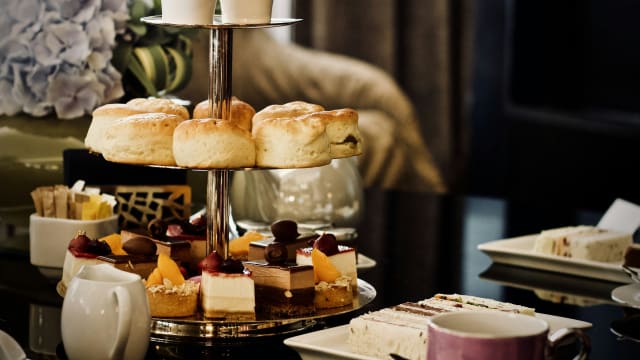
Try haggis, the Scottish national dish, at least once. The seafood comes from the coast just outside the city, and several of Edinburgh's restaurants are in the Michelin Guide. We have gathered the restaurants we recommend in a separate guide, and afternoon tea in Edinburgh has its own page.

When is the best time to visit Edinburgh?
For mild weather and fewer people than during the August festivals, late spring and early autumn are the best times to go. Pack waterproofs whatever the season, as the weather changes quickly, and check the forecast from the Met Office before you leave.
From the airport the tram takes about half an hour to Princes Street. Hotels are most expensive in August and around New Year, and cheapest from January to March.
Much of the best is free: the Royal Mile, Arthur’s Seat, Dean Village and the National Museum of Scotland cost nothing. If you pay for one thing, make it the castle, and book your ticket in advance.
Where to stay in Edinburgh
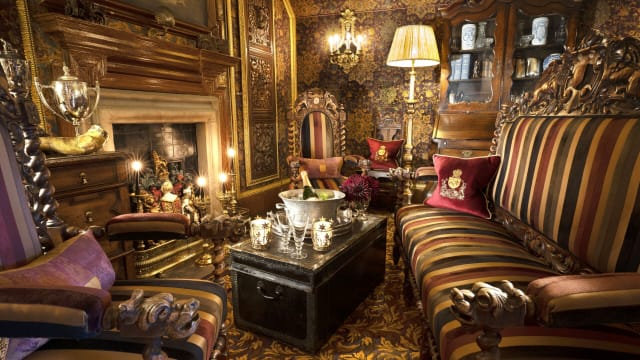

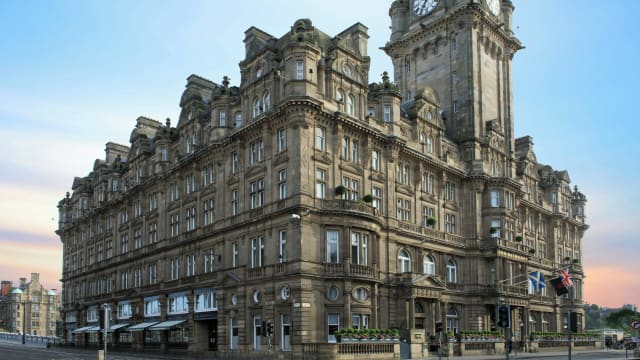
The hotel we recommend in Edinburgh
The Caledonian: the castle in your window
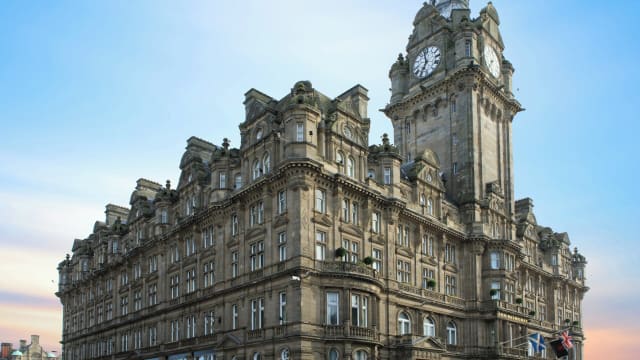
The Caledonian opened in 1903 as the hotel at the old Princes Street station and is now a Waldorf Astoria with 241 rooms and suites. The spa has an indoor pool, sauna and steam room, and the airport tram stops a few minutes away. Both the Old Town and the New Town are within walking distance, and the West End with the Usher Hall and the theatres is right outside.


Frequently asked questions about Edinburgh
How many days do you need in Edinburgh?
Two to three days is enough for Edinburgh Castle, the Royal Mile, Arthur's Seat, Calton Hill and a few good dinners. With an extra day you can take the train from Waverley to Stirling, join a day trip to the Highlands or head out to the coast at North Berwick. Stay central and you can walk to almost everything.
What is the best time to visit Edinburgh?
May, June and September bring long days without the August crowds. August is festival month, when the city is full of life but hotels are expensive and fill early. December has the Christmas market and Hogmanay, with short, cold days. Whenever you go, pack a rain jacket, because the weather changes quickly.
What is free to do in Edinburgh?
The Royal Mile, Arthur's Seat, Calton Hill, Dean Village and the walk along the Water of Leith are all free. So is the National Museum of Scotland, and the Scottish National Gallery on the Mound. During the August festivals many street performances on the Royal Mile are free too, so you can enjoy the Fringe without a ticket.
Is Edinburgh worth visiting for Harry Potter fans?
Yes. J.K. Rowling wrote parts of the early books in cafés in the city and finished the last one in room 552 at The Balmoral in 2007. Fans walk down the curving Victoria Street, which many link to Diagon Alley, and visit Greyfriars Kirkyard, where a gravestone bears the name Thomas Riddell.
Where is the best area to stay in Edinburgh?
The Old Town around the Royal Mile puts the castle and the closes on your doorstep. The New Town has Georgian streets, Princes Street and a short walk to Waverley station. Stockbridge and Leith are quieter, with good restaurants. Book early for August. See best hotels in Edinburgh and where to stay in Edinburgh.
Sources
Details of the castle and the One O’Clock Gun come from Edinburgh Castle, and the Christmas market dates from VisitEdinburgh. Sights and neighbourhoods are described after VisitScotland and UNESCO's listing for the Old and New Towns, and the tram after Edinburgh Trams. The history of The Balmoral is documented in the Wikipedia article on the hotel, and other hotel details come from the hotels and Hotels.com. Photos are from VisitBritain, Unsplash and Hotels.com, as credited with each image. Last checked 2 November 2026.
This page contains affiliate links. If you book through them, Picolo earns a commission at no extra cost to you. Our picks are made independently by our editors.