
Champagne
Things to do in Épernay
Épernay is a small town that makes more sense underground than above it. Beneath it lie more than 100 kilometres of cellars, and the houses above them open their doors to anyone who books. Here is how to spend a day or two.
13 November 20266 min read

Picolo Editorial
In short: Épernay
Walk the Avenue de Champagne, then go underground: Mercier takes you through its cellars on a small train, and Moët & Chandon has the longest cellars in the region. Climb the 66-metre tower at De Castellane, and visit the champagne museum in Château Perrier. Drive or cycle six kilometres to Hautvillers, where Dom Pérignon is buried. La Villa Eugène, on the Avenue itself, is our first choice.
Last checked: November 2026.
The Avenue de Champagne
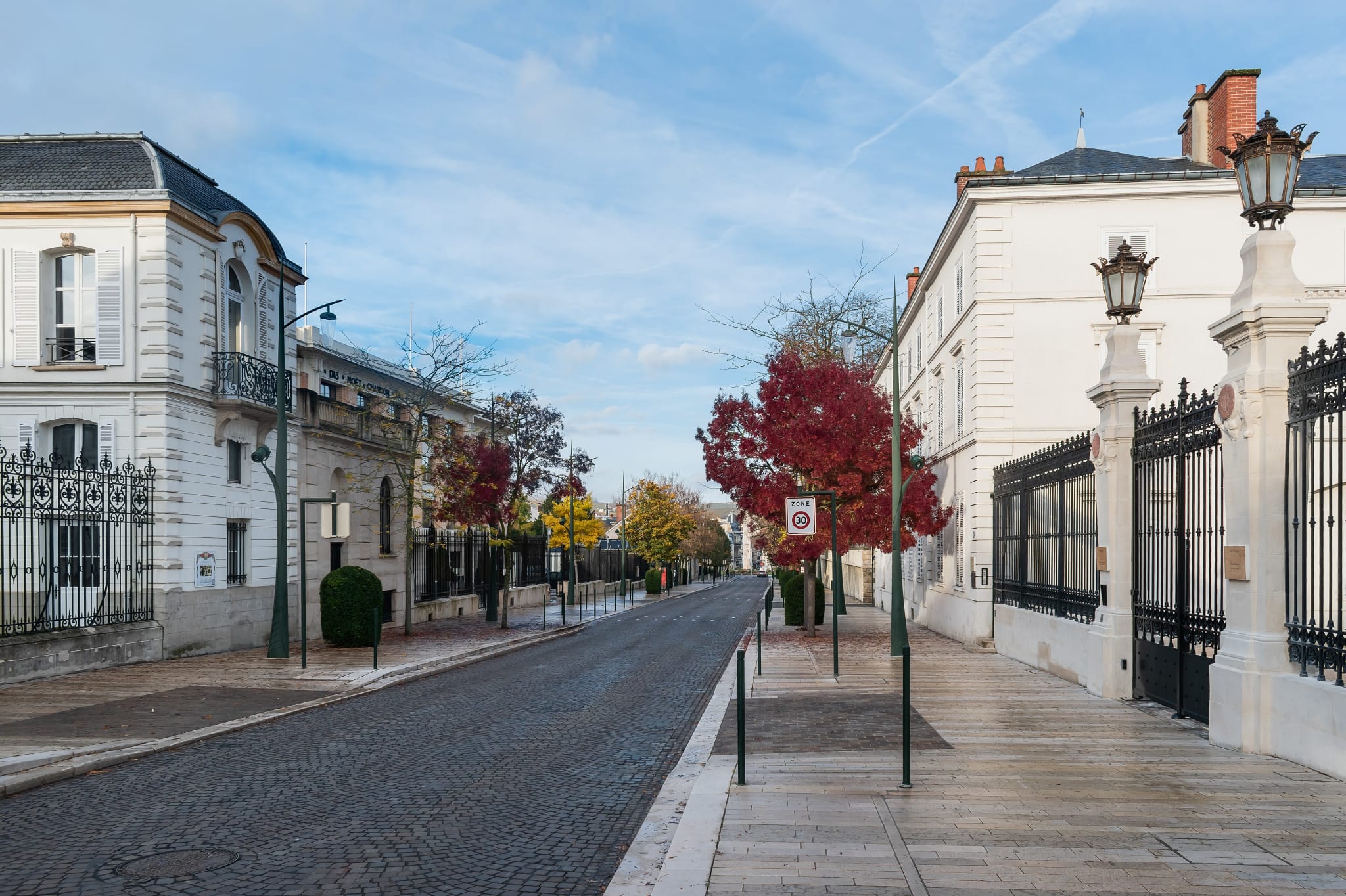
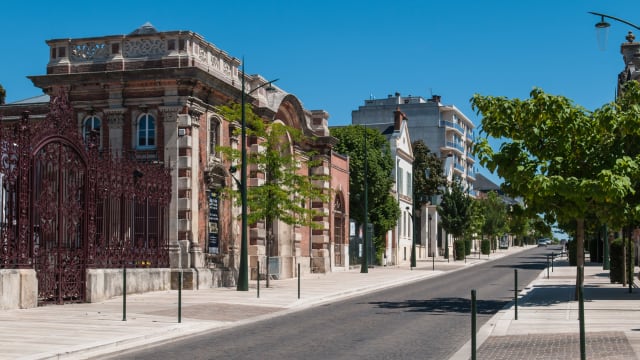
The Avenue de Champagne is about a kilometre long. Moët was founded here in 1743, and the street has been lined with the houses' mansions ever since. UNESCO lists the avenue, together with the cellars and hillsides around it, as a World Heritage Site. Walk it in the late afternoon, when the stone turns gold and the tasting rooms are still open.
Go underground
Mercier
Mercier is one of the most visited houses in Champagne. A lift takes you 30 metres down, and a small automatic train carries you through part of the 18 kilometres of cellars. At the entrance stands the giant barrel Eugène Mercier had built for the 1889 World Exhibition in Paris. The tour ends with a tasting.
Moët & Chandon
The largest house on the avenue has the longest cellars in Champagne. Tours go deep into the chalk and end with a tasting in the house's reception rooms. See our guide to visiting Moët & Chandon.
De Castellane
De Castellane's tower rises 66 metres above the town and can be seen from almost everywhere in it. Climb it for a view over the rooftops and the Marne valley. The house also has a label room with a collection of around 7,000 labels and collars.

The champagne museum
The Musée du Vin de Champagne et d'Archéologie Régionale occupies Château Perrier, a 19th-century mansion at the top of the avenue. It tells the story of champagne from the chalk upwards, alongside archaeology from the region. Allow an hour and a half.
Hautvillers and the vineyards
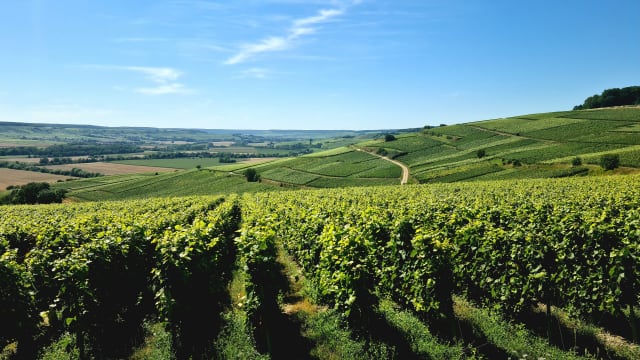
Hautvillers is a hillside village about six kilometres north of Épernay. Dom Pérignon, the Benedictine monk often called the father of champagne, worked and is buried in its abbey church. The view from the village over the vineyards to the Marne is one of the best in the region. Go by car, taxi or bicycle, and stop at a grower on the way.
If you come in December
In mid-December, the Habits de Lumière festival fills the avenue with lights, video projections and fireworks, and on the Sunday a long parade of vintage cars winds through the town. Hotels fill up, so book months ahead.
Before you go
Book the houses first. Nearly all tours require a reservation.
Two houses a day is enough. Three tastings before dinner turn a pleasure into work.
Bring a layer. The cellars stay at around ten degrees all year.
For where to stay, see our guide to Épernay hotels.

Picolo picks the hotel for you
Picolo is the hotel guest's best friend. We take on the role of guide and do the work before you book: we look at the hotels in the area, where they stand, what guests say and what is actually there. Then we choose the one hotel that suits this particular trip best. In Épernay the choice fell on La Villa Eugène, because you stay on the avenue itself and walk to the cellars without a car.
Our first choice in Épernay
La Villa Eugène
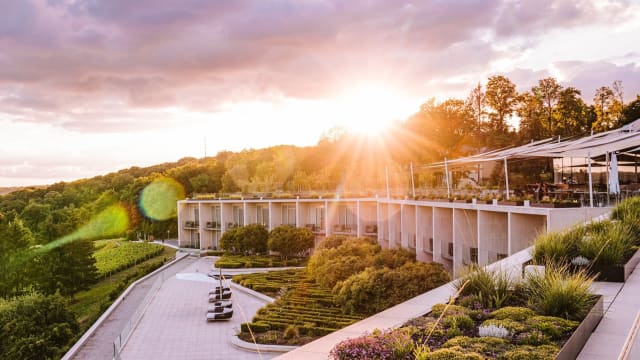
La Villa Eugène was the Mercier family's villa, at number 84 on the Avenue de Champagne. From the gate you walk to Mercier, Moët & Chandon and De Castellane in minutes, so the day needs no car. The garden has an outdoor pool and the conservatory makes a calm place for breakfast. When the cellars close, you are back at the hotel before the evening light leaves the avenue.


Frequently asked questions about Épernay
What is Épernay famous for?
Épernay is famous for the Avenue de Champagne, a kilometre-long street lined with champagne houses such as Moët & Chandon, Pol Roger and Perrier-Jouët. Beneath the town lie more than 100 kilometres of cellars. UNESCO lists the avenue, cellars and surrounding hillsides as part of a World Heritage Site.
How many days do you need in Épernay?
One full day covers the Avenue de Champagne, two cellar tours and the museum. Two days let you add Hautvillers and the vineyards, or a trip to Reims, about half an hour away by train. Most visitors find two nights the right length for a relaxed trip without too many tastings.
Which champagne houses can you visit in Épernay?
Mercier, Moët & Chandon and De Castellane offer regular tours with tastings, and Mercier's includes a train ride through the cellars. Several smaller houses and growers on and around the avenue also take visitors. Nearly all require booking, so reserve your tours before you travel.
Is Épernay better than Reims?
They suit different trips. Épernay is smaller and quieter, with most of its houses on one walkable street. Reims is a city with a Gothic cathedral, more restaurants and houses such as Taittinger and Veuve Clicquot. Many visitors stay in one and visit the other by train.
Sources
Details of Mercier, De Castellane and the Avenue de Champagne come from Épernay Tourisme and the Rue des Vignerons travel guide. The Habits de Lumière programme comes from the festival's own website. World Heritage status comes from UNESCO. The photograph of the Avenue de Champagne is by Krzysztof Golik, the tower by Daniel Jolivet and the vineyards by October Ends, all via Wikimedia Commons. Hotel photographs are from Hotels.com (Expedia Group). Last checked November 2026.
Santé from Épernay
Picolo Editorial