
Countries
Mauritius: beaches, nature and where to stay on the island
A small island state located in the southwestern Indian Ocean east of Madagascar, Mauritius is known for its white beaches and crystal-clear waters. Looking for a holiday where you can experience nature, good food and relax completely? Mauritius has it all!
26 October 2024
Mauritius was formed by a volcanic hot spot in the Indian Ocean. The island has plants and animals found nowhere else, and coral reefs around almost the whole coast. Nicknamed "Nirvana’s blueprint", Mauritius gives you high expectations. Fortunately, it does not disappoint.
In short: Mauritius
Mauritius lies in the Indian Ocean east of Madagascar, with white beaches, lagoons inside the coral reef and mountains inland. The island is warm all year, and there is no malaria. Stay in the north for nightlife and restaurants, in the east for quiet beaches, and in the south and west for nature and sunsets.
If you book through the links in this article, Picolo earns a commission based on a percentage of the price. The views in this article are nonetheless entirely our own.
Our first choice: One&Only Le Saint Géran, the beach resort on its own peninsula on the east coast. See rooms at One&Only Le Saint Géran (Paid link)
Explore the beaches of Mauritius
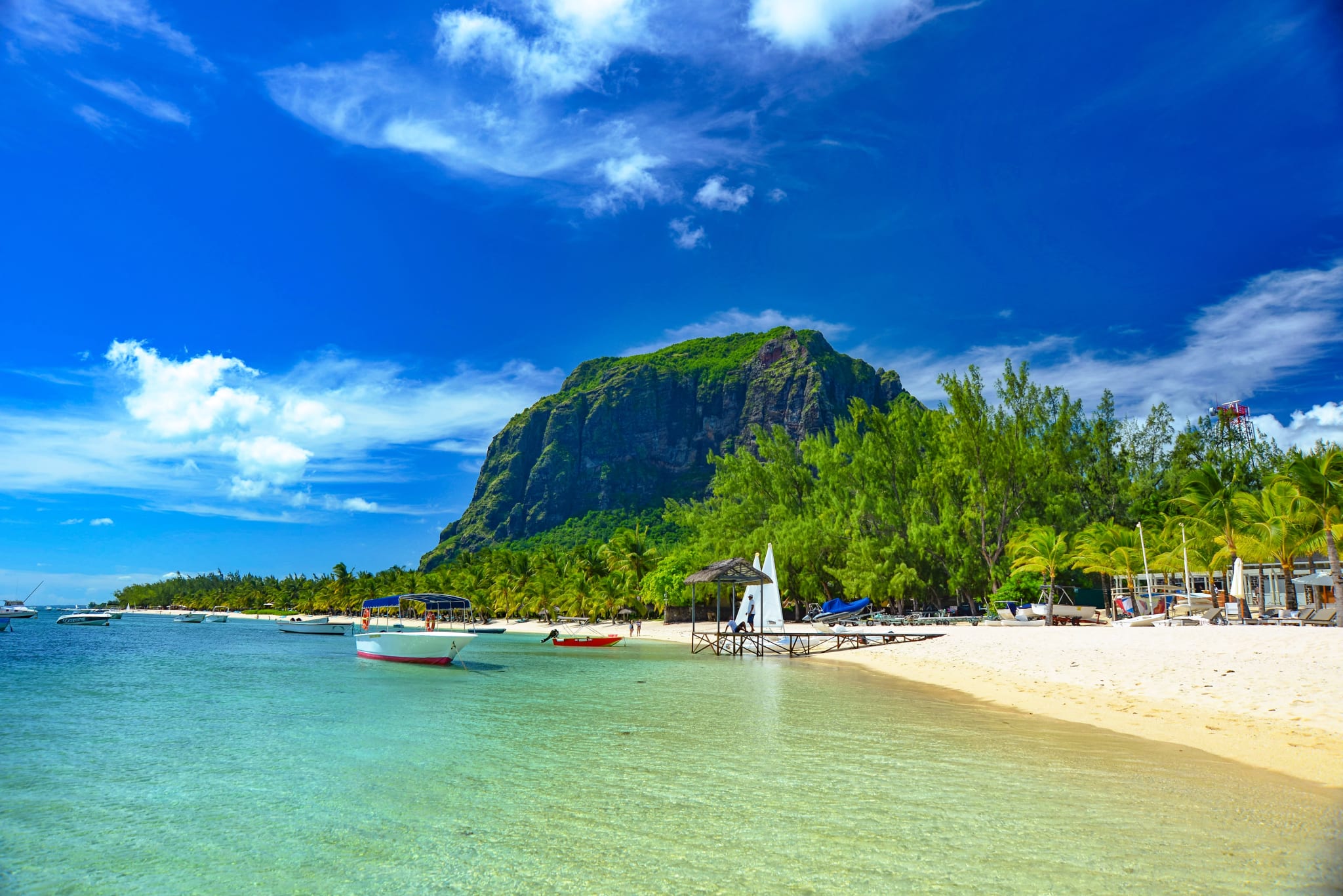
Here, there are white beaches that never end, crystal clear and turquoise water, and palm trees laden with coconuts. A destination made for romance or relaxation, it is equally popular with families and couples going on honeymoon or a babymoon. This is what the resorts on the island have provided. The beaches on Mauritius are long and white, and inside the reef the lagoons are calm and clear. Diving and snorkelling are popular activities, as well as jet skiing and windsurfing.
Five-star resorts all along the coast
An additional advantage of Mauritius compared to similar destinations, like the Seychelles or the Maldives, is that one can choose from among several resorts catering to different budgets. The hotels are often a destination in themselves, as they have made sure that you do not even have to leave the area. The hotels have several on-site restaurants and pools, various land and water activities, spa facilities and tennis courts. Some hotels also have their own golf courses.
Read more: Isla Holbox, the car-free island in Mexico
Food from many cultures
Mauritius has an exciting mix of different cultures as the country has been both a Dutch, French and, finally, a British colony before becoming independent.
Food lovers will be able to explore a variety of flavours and aromas inherited from those who once migrated to Mauritius. Culinary traditions from France, India, China, and Africa — many of the most renowned and cherished kitchens in the world — can be found on the island.
Mauritius has maintained strong ties to French culture throughout its history. French dishes such as daube, civet de lièvre or coq au vin served with a fine wine are not uncommon in Mauritius. As the years have passed, the dishes have also been adapted to incorporate the more exotic ingredients found on the island.
Luxury hotel
A tropical Island Hideaway
At One&Only Le Saint Géran, life by the beach becomes a blissful escape, where private cabanas, sun umbrellas, and beachside yoga set the stage for pure relaxation. Embrace adventure with windsurfing, beach volleyball, or water skiing, while three sparkling outdoor pools offer endless enjoyment.

Indian inspiration
During the nineteenth century, after the abolition of slavery, Indian workers who came to Mauritius brought with them their own exquisite cuisine. The workers came from different parts of India, with each with their own culinary tradition, depending on the region from which they hailed. Indian food is distinguished by spices such as saffron, cinnamon, cardamom, and cloves. These are the most common ingredients that give a powerful yet subtle taste. Dal, vegetables, beans and pickles are also widely used. Dholl Puri and roti, originally an Indian street dish, are like fish and chips for Mauritians.
Chinese immigrants arrived at the end of the 19th century. Most of the migrants originally came from the south-eastern part of China. Although the Chinese population is one of the smallest on the island, its food is well represented in the restaurants around the island. Fried noodles or rice, chop suey, and spring rolls are eaten by everyone.
Mauritius is essentially an island made up of migrants and descendants of the slave era. Each of these communities has adapted and mixed their cultures with each other, resulting in a common Mauritian cuisine. This can be seen in the Creole cuisine which is a mixture of many different ingredients and flavours. As in most other countries, there is also fast food such as kebabs, burgers, pizza, and chips.
A golf destination
The coast has the beaches, and the interior has room for the golf courses, several with views of the mountains and the sea. The golf courses in Mauritius have featured on many lists of world's top 100 golf courses, and the island has also been named the Golf destination of the year for Africa, Indian Ocean and Gulf States.
There are twelve large golf courses scattered on the small island. Mauritius has truly made a name for itself as a top golf destination.
Nature experiences on land and sea
Mauritius is a small island. By comparison, the island is about the same size as Luxembourg and twice the size of Hong Kong. For a small island, there is a lot of nature to explore.
The fact that the island is so small makes it easy to see all the wonders during a holiday. Nature reserves and parks in Mauritius are managed by local authorities to help preserve biodiversity as well as its historical heritage and ecosystem. The island has a variety of nature experiences to offer, including wildlife sanctuaries, hiking trails and fascinating viewpoints.
Here are just a few of them:
Le Morne and the Underwater Waterfall
Le Morne is a mighty mountain that was previously used as a refuge for slaves and is now a UNESCO World Heritage site. From the top you look out over the lagoon, but the mountain also has a dark history. Le Morne is a place for reflection. You get to know Mauritius even better by visiting it. At the base of the mountain, you can visit a museum that presents the history of slavery on the island.
The whole trip takes between 3-5 hours, depending on what physical shape you are in. The hike is 7 km long, and is relatively easy at first, but becomes steeper as you approach the peak. It’s important to bring enough food and drink, and proper footwear. The hike is most pleasant in good weather. It’s a good idea to start early in the morning to avoid the heat. The hike can be dangerous if it rains.

LE MORNE - MAURITIUS
Le Morne is a mighty mountain that was previously used as a refuge for slaves and is now a UNESCO World Heritage site.

Blue waters
The island has a variety of nature experiences to offer, including wildlife sanctuaries, hiking trails and fascinating viewpoints.

Amazing Experiences
Mauritius is a small island. For a small island, there is a lot of nature to explore.
Read more: Isla Holbox, the car-free island in Mexico
Le Morne rises straight out of the lagoon on the south-west tip of the island. At the foot of the mountain the sea creates an illusion: the sand and silt on the seabed flow off in a way that makes it look like an underwater waterfall, or as if the whole island is being sucked into a black hole. This is just an optical illusion, and it is absolutely safe to swim in the sea. The illusion is best seen from the air, and several companies offer helicopter flights over the area.
The Seven-Coloured Earths of Chamarel
The Seven-Coloured Earths of Chamarel is a geological formation and a well-known tourist attraction in southwestern Mauritius. It is a relatively small area of dunes consisting of sand in seven different colours: red, brown, violet, green, blue, purple and yellow. The colours come from the sand settling in layers, which gives the dunes their stripes. The sand comes from volcanic rock that has weathered over time, and rain has carved the patterns into the slope.
Trou aux Cerfs
Another famous tourist attraction in Mauritius is the dormant Volcano Trou aux Cerfs which is located about 1 kilometre from the town of Curepipe. The volcanic crater sits about 605 metres above sea level, with a diameter of 350 metres and a depth of about 100 metres.
Unlike most volcanic areas, Trou aux Cerfs crater is surrounded by dense forest with tall pine trees and plants that grow only here. It is believed that Trou aux Cerfs erupted once and has remained dormant for the past 700,000 years, although some experts believe there is a chance that the volcano could become active again.
One of the main highlights of this tour is definitely the 360-degree view of Curepipe, and the majestic views of Rempart Mountain, Trois Mamelles and the Port-Louis-Moka mountain range.
Black River Gorges National Park
Black River Gorges National Park is the largest protected forest in Mauritius. The park has over 50 kilometres of hiking trails, including more challenging options for those who are up for it. Visiting the park is a good way to access Mauritius's wilderness whether you prefer climbing to the highest peak or a gentler walk through the forest. The forest is home to over 300 species of flowering plants and 9 species of birds unique to Mauritius, including the famous pink pigeon, which has previously been endangered.
You will also find waterfalls here, among them Alexandra Falls, and rivers and picnic spots between the mountains.
Where should you stay on the island?
Although the island is small, there are many accommodation options. This can make it challenging to know where to book on the island. There is not necessarily any one place that's best — it depends entirely on your personal preferences.
In general, it is nice to stay on the coast, so you have close proximity to the sea and the beach. Wherever you stay, you have beaches and nature close by. Grand Bay, in the north of the country, is the best place for those who want a little more bustle. It is an area where you can find bars and nightclubs, several restaurants and good shopping, as well as some nice beaches.
Mauritius is a year-round destination
Its climate makes the island a destination you can travel to at any time. Mauritius has a mild tropical climate all year round. The country has two seasons: a warm humid summer ranging from November to April and a relatively cool dry winter from June to September. October and May are often known as the transitional months. The very best time to travel is between April and June and from September/October. In Mauritius, one can also experience tropical rain, particularly between January and March.
Luxury hotel
A tropical Island Hideaway
At One&Only Le Saint Géran, life by the beach becomes a blissful escape, where private cabanas, sun umbrellas, and beachside yoga set the stage for pure relaxation. Embrace adventure with windsurfing, beach volleyball, or water skiing, while three sparkling outdoor pools offer endless enjoyment.
Luxury hotels
Your luxurious escape in Mauritius
At Heritage The Villas in Bel Ombre, indulge in a culinary journey across 12 exquisite restaurants, each offering its own unique flavors. Surrender to bliss at the spa, where beachside massages, body wraps, and aromatherapy await, inviting you to experience true relaxation in paradise.

The hotels we recommend on Mauritius
In the north: Paradise Cove at Cap Malheureux is a small adults-only hotel with its own cove and beach. See rooms at Paradise Cove (Paid link)
In the east: One&Only Le Saint Géran sits on its own peninsula by Belle Mare, with long beaches and calm water. See rooms at One&Only Le Saint Géran (Paid link)
In the south: Heritage The Villas in Bel Ombre is by the beach in the south and a good choice for families. See rooms at Heritage The Villas (Paid link)
Health and travel advice
There is no malaria on Mauritius. In May 2026 the CDC issued a travel notice for a chikungunya outbreak, and dengue also occurs, so bring insect repellent. Travelling while pregnant? Read our guide to a babymoon in Mauritius.
Frequently asked questions about Mauritius
Where is Mauritius?
Mauritius is a small island nation in the south-western Indian Ocean, east of Madagascar. The island was formed by volcanic activity and is known for white beaches, crystal-clear water, coral reefs and its own unique plants and wildlife.
Is Mauritius more expensive than the Maldives?
One advantage of Mauritius compared with the Seychelles and the Maldives is the choice of resorts across several price ranges. Many hotels have several restaurants, pools, spas, tennis courts and activities, so you never need to leave.
What food can you find in Mauritius?
Mauritius has an exciting mix of cultures, having been a Dutch, French and British colony before independence. Its cuisine reflects the traditions of its immigrants, with many flavours and aromas to explore.