
Mexico
Day of the Dead in Mexico: flowers, candles and a celebration of the dead
Orange marigolds, altars filled with photos and food, and cemeteries that glow all night. The Day of the Dead is Mexico’s most beautiful celebration, and a trip you will never forget. Here is what it is about, where to experience it and where to stay.
20 October 20269 min

Picolo Editorial
It is night in the cemetery, but it is anything but quiet. The graves are covered in orange flowers and hundreds of candles, and families sit on blankets eating, laughing and playing music. An old man pours a glass of mezcal and places it on his brother’s grave. On the Day of the Dead in Mexico, people do not mourn. They invite the dead back home.
In short: what is the Day of the Dead?
Día de Muertos is celebrated in Mexico around 1 and 2 November, when, by tradition, families are visited by those they have lost. Altars are built with photos, flowers and food, and cemeteries fill with light. The celebration is on UNESCO’s list of Intangible Cultural Heritage. The best places to experience it are Oaxaca, Mexico City and Pátzcuaro.
Where to stay
In Oaxaca: Quinta Real Oaxaca, in a former 16th-century convent. Check availability and prices at Quinta Real Oaxaca
In Mexico City: Hotel Carlota, a design hotel in the Juárez neighbourhood. Check availability and prices at Hotel Carlota
In Pátzcuaro: Hotel Mansión Iturbe, on the main square. Check availability and prices at Hotel Mansión Iturbe
The altars, the flowers and the food
At home, families build an ofrenda, a tiered altar with photos of the dead, candles, paper decorations and their favourite food. The orange marigolds, cempasúchil, are said to guide the souls home with their scent. On the altar you will also find pan de muerto, a sweet bread decorated with crosses of dough, and sugar skulls with names written on their foreheads.
Not Halloween
Many confuse the Day of the Dead with Halloween because they fall close together and both feature skulls. But Día de Muertos has roots in Maya and Aztec belief, blended with Catholic saints’ days. It is a warm family celebration, not a festival of fright. The elegant skeleton lady La Catrina, who appears everywhere, was drawn by the artist José Guadalupe Posada in the early 20th century.

Oaxaca: the heart of the celebration
Oaxaca is considered the most traditional place to experience the Day of the Dead. Its streets fill with comparsas, colourful processions with music and masks, and on the squares great carpets are made from coloured sand. At night the cemeteries in the villages around the city glow with candlelight.
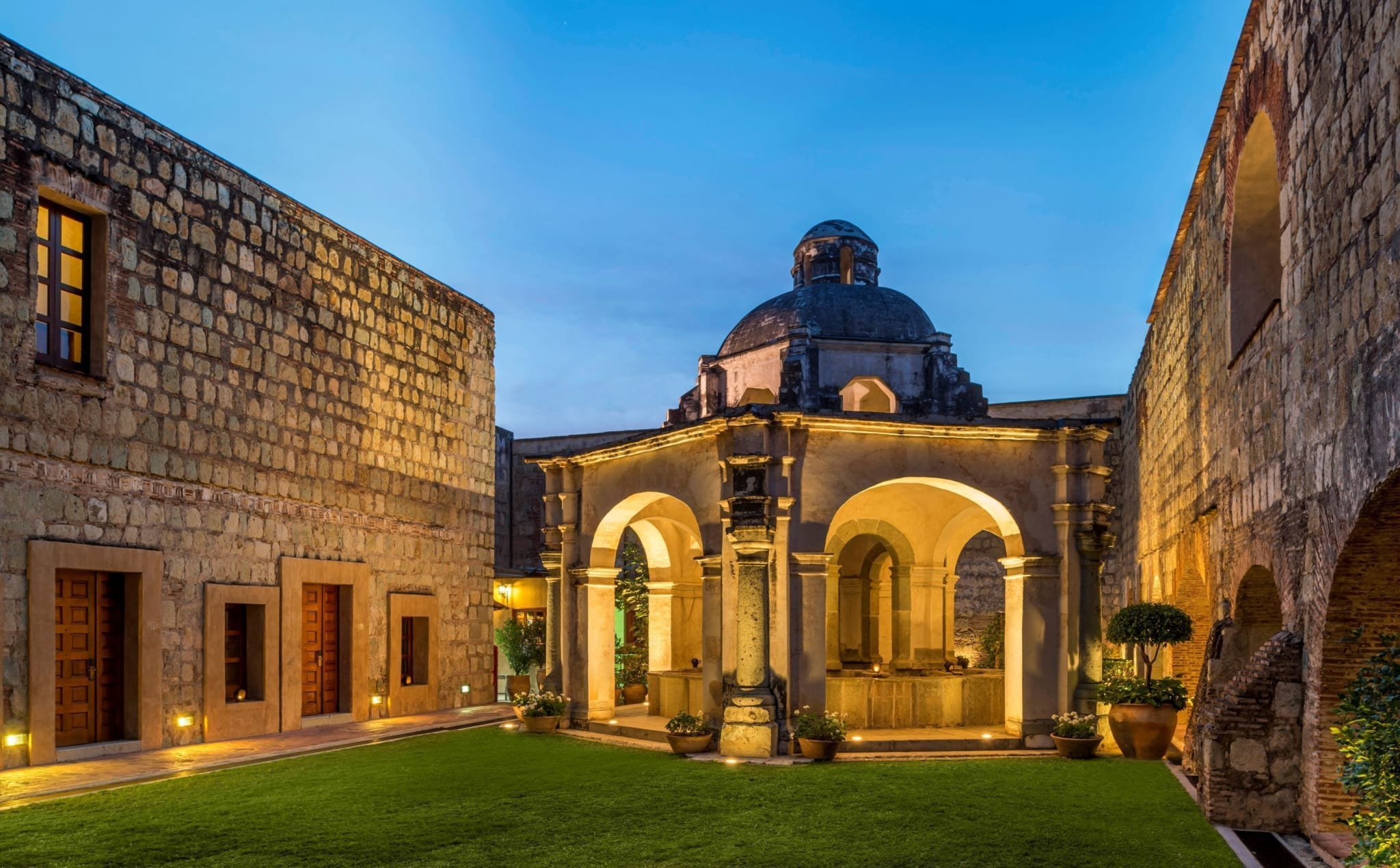
Quinta Real Oaxaca: in an old convent
An elegant hotel in a former 16th-century convent, with a pool in the cloister and a short walk to the centre.
Hotel Los Amantes: views over the city
A small design hotel with a rooftop terrace in the heart of Oaxaca.
Mexico City: the great parade
The capital has held a large parade since 2016, with giant puppets, dancers and skeletons of every size. It was inspired by the opening scene of the James Bond film Spectre. On the Zócalo, the main square, huge altars and installations stand all week.
Hotel Carlota: design in Juárez
A modern hotel with a pool in the Juárez neighbourhood, a short walk to Reforma and the centre.
Pátzcuaro: the lights on the lake
In Michoacán, by Lake Pátzcuaro, families keep vigil in the cemeteries, and on the island of Janitzio thousands of candles light up the night between 1 and 2 November. It is one of the most atmospheric, and most peaceful, ways to experience the celebration.
Hotel Mansión Iturbe: on the square in Pátzcuaro
A colonial hotel in an old mansion on the main square.
Good to know
Book early: Hotels in Oaxaca sell out months before the celebration.
Be respectful in the cemeteries: Families are there for their dead. Ask before taking photos.
Arrive a few days early: Towns start decorating in the last week of October.
Frequently asked questions about the Day of the Dead
When is the Day of the Dead in Mexico?
Mainly on 1 and 2 November, though preparations and processions often begin in late October. Families build altars with marigolds, candles, photos and food for those who have died, and cemeteries are decorated and lit through the night. Book hotels early, as Oaxaca and Mexico City fill up months ahead.
Where is the best place to experience the Day of the Dead?
Oaxaca for tradition, Mexico City for the parade and Pátzcuaro for the candlelit cemeteries. Oaxaca has the most traditional celebrations, with comparsas through the streets and decorated graves, while the large parade in Mexico City is held on the weekend before 1 November. Pátzcuaro is quieter and more spiritual.
Is the Day of the Dead the same as Halloween?
No. It is a family celebration that honours and remembers the dead, rooted in both Maya and Aztec belief and Catholic tradition. It is a joyful occasion rather than a scary one. Visitors are welcome, but show respect in the cemeteries and ask before photographing families at the graves.
Enjoy Día de Muertos
Picolo Editorial