
Experiences
Plovdiv Old Town: 8,000 years of history on three hills
The old town of Plovdiv climbs three hills above Bulgaria’s second city, with Revival houses, Roman ruins and a theatre that still holds concerts. We walked it from Nebet Tepe to the Roman stadium. Here is the route, and where to stay inside the old town.
7 November 20265 min read

Gita Simonsen
The first thing we noticed in Plovdiv’s old town was the cobbles. Large, polished, uneven stones, and steep streets that climb between houses painted red, blue and ochre. Wear good shoes. Then you stand on Nebet Tepe at sunset, with the whole city below, and you understand why people have lived on these hills for thousands of years.
How old is Plovdiv?
Plovdiv is often called one of the oldest cities in Europe. The municipality dates the first settlement on Nebet Tepe to the sixth millennium BC, around 8,000 years ago, and says Plovdiv grew into a town around the 12th century BC. Excavations since 2017 have suggested the earliest traces may be somewhat younger. Philip II of Macedon took the city in 342 BC and gave it the name Philippopolis.
In short: Plovdiv Old Town
Start: Nebet Tepe, the highest hill, ideally early in the morning or at sunset.
Do not miss: the Roman theatre, the Revival houses and Hisar Kapia.
Time needed: half a day, or a full day with museums.
Where to stay: inside the old town, at Family Hotel at Renaissance Square or Hotel Evmolpia.
Our first choice: Check availability and prices at DoubleTree by Hilton Plovdiv Center, where we stayed.
A walk through the old town
1. Nebet Tepe
Start at the top. Nebet Tepe is the oldest part of Plovdiv, with ruins of the Thracian and later fortress walls. The view over the city and the Rhodope mountains is the best in Plovdiv.

2. Hisar Kapia
Walk down to Hisar Kapia, the old stone gate that once led into the fortress. The narrow street through it is one of the most photographed corners of the old town, and the houses on either side lean over the cobbles.
3. The Revival houses
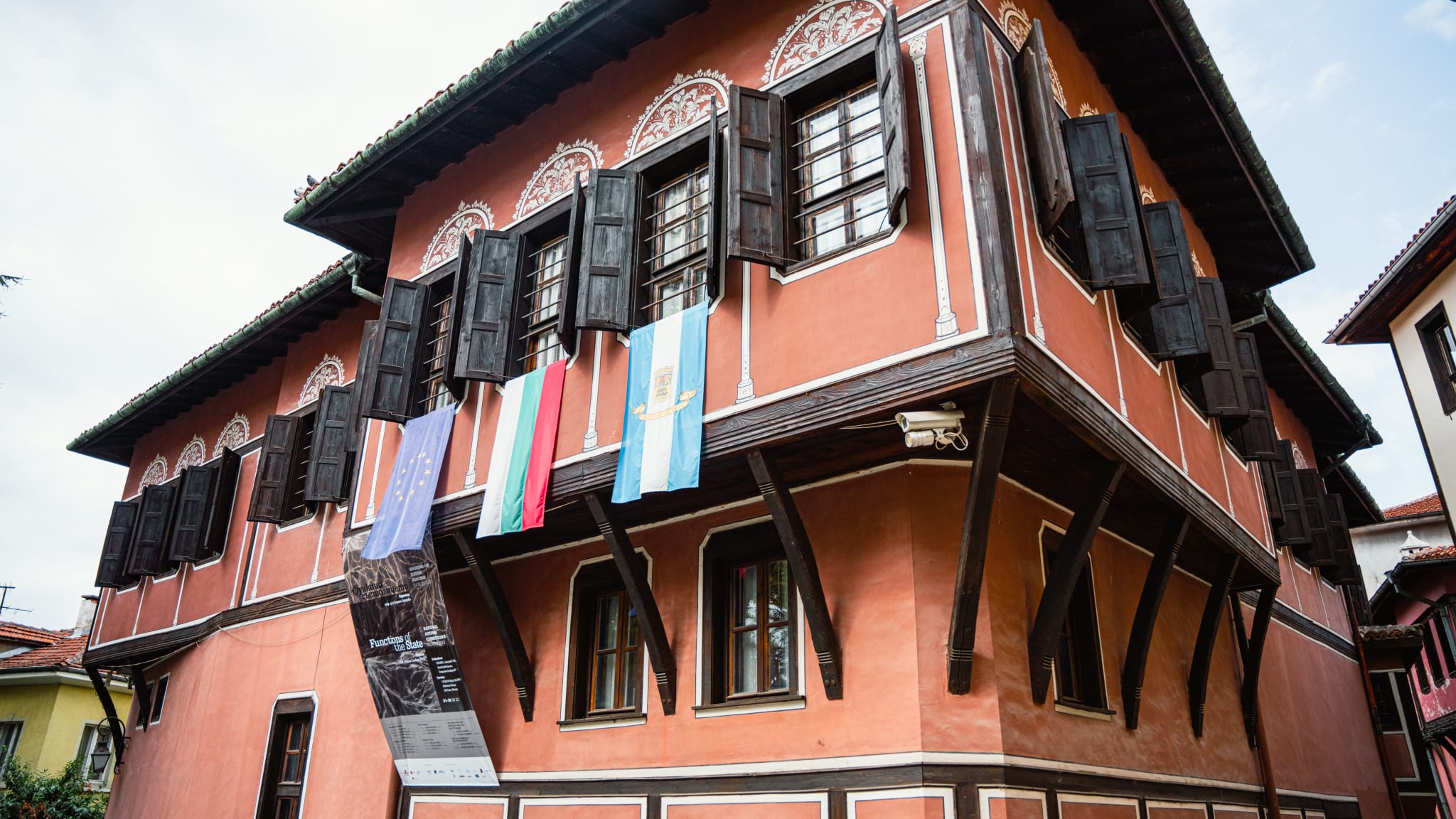
The old town is full of houses from the Bulgarian National Revival in the 19th century, with painted façades and upper floors that jut out over the street. The Kuyumdzhiev House holds the Ethnographic Museum, and the Balabanov and Hindliyan houses are open to visitors.

4. The Roman theatre
The Roman theatre of Philippopolis was hidden under the old town until a landslide in the 1970s revealed it. It was built in the 2nd century AD and seats several thousand people. In summer it is used for opera and concerts, which is the best way to see it.

5. The Roman stadium
Finish below the old town at the Roman stadium, from the 2nd century AD. It held around 30,000 spectators, according to the municipality, but most of it lies under the shops on the main pedestrian street. Only the northern end is open. From here, Kapana, the creative district, is a few minutes away.

Where to stay in the old town
Staying inside the old town means quiet evenings and the streets to yourself early in the morning.
Family Hotel at Renaissance Square: a small hotel in the old town, about 300 metres from the Roman theatre. Guests rate it 9.8 out of 10. Check availability and prices at Family Hotel at Renaissance Square
Hotel Evmolpia: a small hotel below Nebet Tepe, rated 9.8 out of 10. Check availability and prices at Hotel Evmolpia
DoubleTree by Hilton Plovdiv Center: where we stayed, about 400 metres from the theatre at the foot of the old town. Check availability and prices at DoubleTree by Hilton Plovdiv Center
See the full list of the best hotels in Plovdiv, and our Plovdiv travel guide for the rest of the city.
Picolo would choose
Picolo would choose: Nebet Tepe at sunset, dinner in Kapana and a night at a hotel inside the old town.
Why: the old town is at its best when the day visitors have left. The trade-off: the old town hotels are small and fill early in summer.
Picolo’s choice in Plovdiv
DoubleTree by Hilton: where we stayed
We stayed at the DoubleTree by Hilton Plovdiv Center, about 400 metres from the Roman theatre. The rooms are modern and quiet, and the restaurant and bar are good enough for an evening in. You walk to the old town and Kapana in a few minutes. Guests rate it 9.6 out of 10.


Frequently asked questions about Plovdiv Old Town
How old is Plovdiv?
The municipality of Plovdiv dates the first settlement on Nebet Tepe to the sixth millennium BC, which is where the figure of around 8,000 years comes from. Plovdiv grew into a real town around the 12th century BC. Excavations since 2017 suggest the earliest traces may be younger, from the 5th to the 4th millennium BC.
How long do you need for Plovdiv Old Town?
Half a day is enough to walk the old town from Nebet Tepe to the Roman theatre and see one or two of the Revival houses inside. Give it a full day if you want to visit several museums, have lunch in the old town and finish in Kapana in the evening. The streets are steep and cobbled.
Do you need tickets for the old town?
The streets of the old town are free to walk. The Roman theatre, the Ethnographic Museum and the Revival houses such as Balabanov and Hindliyan charge a small entry fee. There has also been a combined ticket for several of the houses. Prices are in euro since 2026. Many museums close on Mondays, so check before you go.
Is Plovdiv Old Town suitable for prams and wheelchairs?
Only partly. The old town is built on three hills, and most streets are steep and paved with large, uneven cobbles. A pram with big wheels will manage the main route with some effort. The Roman stadium and the main pedestrian street in the centre below are flat and easy for everyone.
Sources
The dates for the first settlement, the town and the Roman stadium come from the Municipality of Plovdiv. The newer excavations on Nebet Tepe are described by Archaeology in Bulgaria. Hotel ratings come from Hotels.com, last checked on 7 November 2026. The route and the advice come from Picolo’s own visit to Plovdiv.
This page contains affiliate links. If you book through them, Picolo earns a commission at no extra cost to you. Our picks are made independently by our editors.
Have a nice trip
Gita Simonsen