
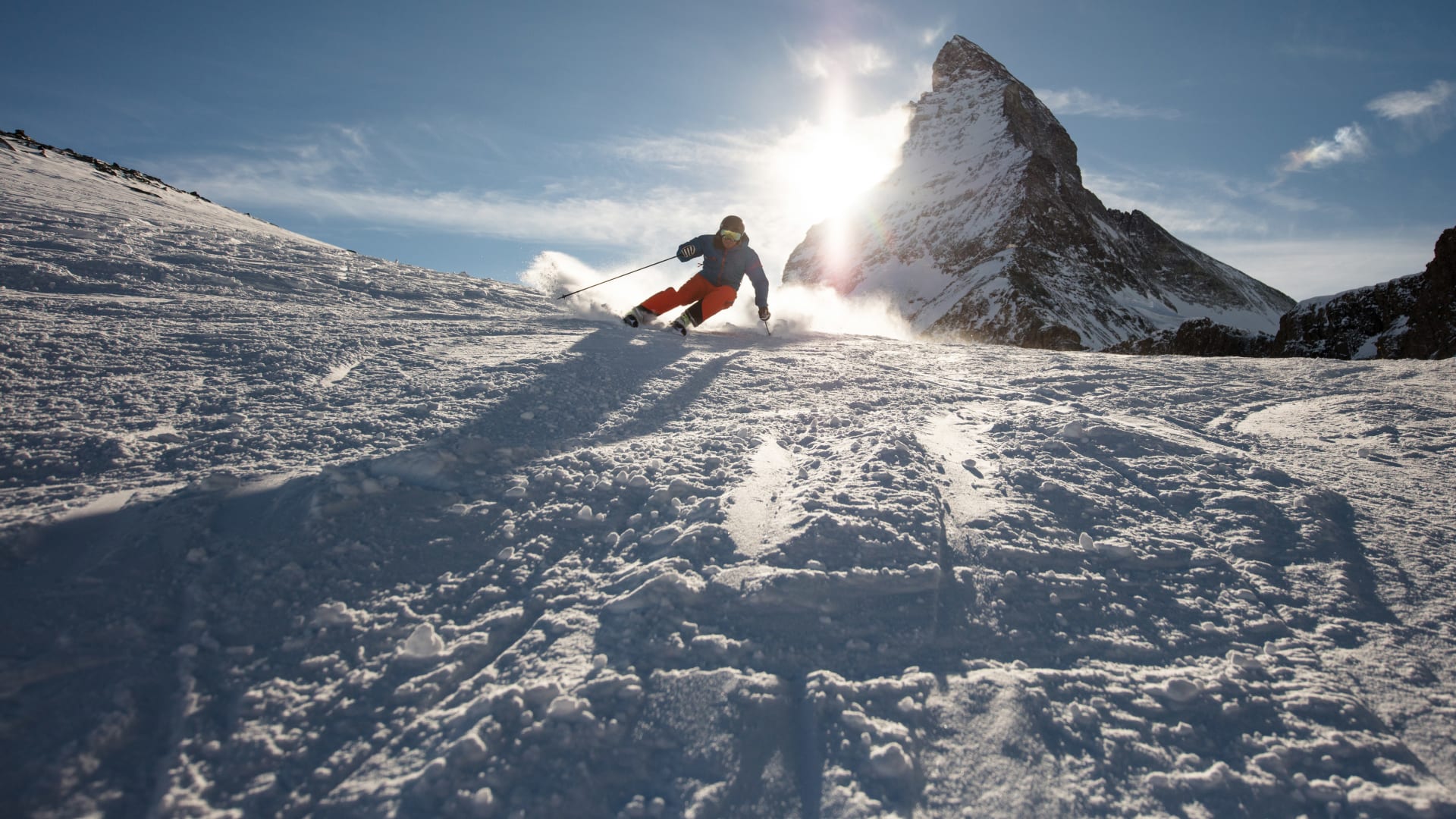
Travel guide · Europe
Zermatt travel guide: summers below the Matterhorn
A car-free village of wooden chalets at the foot of the Matterhorn, with some of the highest slopes in the Alps and some of the best mountain food anywhere.
December-April
Ski season, best snow January-March
Late June-September
Hiking on snow-free high trails
Car-free village
Arrive by train, walk or take e-taxis
From Geneva or Zurich
Around 3.5-4 hours by train
Zermatt, Switzerland: the village beneath the Matterhorn
Zermatt is one of the most famous mountain villages in the world, and one look at the Matterhorn explains why. The peak rises straight above the rooftops, and on clear evenings its summit glows long after the village has fallen into shade.
The village lies at the head of a valley in the canton of Valais, in southern Switzerland, close to the Italian border. It is car-free, so you arrive by train and get around on foot or in small electric taxis. For more ideas across the country, see our guide to Switzerland holidays.
In short: Zermatt
Where: In the canton of Valais in Switzerland, at the foot of the Matterhorn.
Known for: The Matterhorn, car-free streets, the Glacier Express and some of the highest ski lifts in the Alps.
Skiing: See our guide to a ski holiday in Zermatt.
Hotels: See where to stay in Zermatt.
Our first choice: Riffelalp Resort 2222m, facing the Matterhorn. Check availability and prices at Riffelalp Resort

Zermatt ski resort: skiing into Italy
Zermatt is among the highest ski resorts in the Alps. The top lift station by the Klein Matterhorn sits at close to 3,900 metres, high enough for skiing on the glacier even in summer. The ski area is linked with Cervinia and Valtournenche on the Italian side, so you can ski from Switzerland into Italy and back in a day.
Keep an eye on the time: if you miss the last lift back, or the lifts close in strong wind, you will be spending the night on the other side of the border. Read our full review of Zermatt, maybe the world's most spectacular ski destination, including the famous long run down to Cervinia.

Things to do in Zermatt
Ride the Gornergrat railway, a cog railway that climbs to a viewpoint facing the Matterhorn and a sweep of glaciers.
Go up to Matterhorn Glacier Paradise, the highest cable car station in Europe, for views across the Alps into Italy and France.
Hike in summer on trails such as the Five Lakes Walk, where mountain lakes mirror the Matterhorn on still days.
Book a long lunch on the slopes. Mountain restaurants in Zermatt are famous, and many skiers take off their skis by one o'clock.
Stroll the old village, where dark wooden barns and granaries stand on stone stilts between the hotels.
Eating and après-ski in Zermatt
Zermatt is a food destination as much as a ski resort, with a long list of mountain restaurants and several Michelin-starred tables. Book ahead in high season, especially for lunch on sunny days.
Après-ski here tends to mean fine wine and good company rather than dancing on tables, although there are a few lively bars in the village.

How to get to Zermatt
The closest major airports to Zermatt are Geneva and Zurich, both with direct flights from the UK. From either airport, take the train to Visp, then change to the Matterhorn Gotthard Bahn for the final climb up the valley. The whole journey takes around three and a half to four hours.
If you drive, leave your car in Täsch, the next village down the valley, and take the shuttle train for the last stretch. The scenic Glacier Express also links Zermatt with St. Moritz.
When is the best time to visit Zermatt?
For skiing, visit from December to April, with the best snow conditions usually from January to March. Thanks to the glacier, skiing is possible at the top of the resort for much of the year.
For hiking and mountain views, come from late June to September, when the high trails are free of snow. Spring and late autumn are quiet, and some hotels and lifts close between seasons.
Our pick
The Omnia: design hotel on the cliff above Zermatt
The Omnia sits on a cliff above Zermatt, and you get there by a lift through the mountain from the village. The design hotel has a spa and views of the Matterhorn.


Frequently asked questions about Zermatt
Is Zermatt expensive?
Yes, Zermatt is one of the more expensive ski resorts in the Alps, with high prices for hotels, lift passes and dining. You can save by avoiding the school holidays, staying in an apartment or in Täsch further down the valley, and packing a picnic lunch on some days. Most visitors feel the scenery is worth it.
How do you get from Geneva to Zermatt?
The easiest way from Geneva to Zermatt is by train. Trains run from Geneva Airport and the city along Lake Geneva to Visp, where you change to the Matterhorn Gotthard Bahn for Zermatt. The journey takes around four hours, with beautiful views of the lake and the Rhône valley along the way.
Can you visit Zermatt in summer?
Yes, summer is a wonderful time in Zermatt. From late June to September, hiking trails, mountain bike routes and high-altitude restaurants open up, and the Gornergrat railway and cable cars take you to viewpoints with little effort. You can even ski on the glacier at Matterhorn Glacier Paradise for much of the summer.
Can you ski from Zermatt to Italy?
Yes, the Zermatt ski area is linked with Cervinia and Valtournenche in Italy. You need a lift pass that covers the international area, and you should keep a close eye on the time and the weather, as the connecting lifts close in the afternoon and in strong wind.
Where is the best area to stay in Zermatt?
Stay centrally in the car-free village, near Bahnhofstrasse and the station, and you can walk to the restaurants and take an electric taxi or ski bus to the lifts. For the shortest way to the slopes, stay near the Sunnegga funicular or the lifts at the southern end of the village, or up at Riffelalp with the Matterhorn right in front of you. See the hotel tips in our Zermatt guide.
This page contains affiliate links. If you book through them, Picolo earns a commission at no extra cost to you. Our picks are made independently by our editors.