
Picolo earns a commission from Hotels.com when you book through the links on this page. The price stays the same.
Hotels
Hotels in Venice: nine places to stay without losing your way
At half past six in the morning St Mark's Square is almost empty. A caretaker hoses down the flagstones, the gulls have the place to themselves and the lagoon lies as flat as bathwater. Three hours later there are a thousand people here. Choosing a hotel in Venice comes down to one question: where are you when the city is yours, and where are you when it is not?

Stay around San Marco and the Riva degli Schiavoni if this is your first visit and you want St Mark's Square, the Doge's Palace and waterbuses to everywhere within a few minutes. Dorsoduro suits travellers who want quiet, art and student cafés a couple of bridges from the crowds. Cannaregio and Santa Croce along the Grand Canal are the choice if you arrive by train and want to carry your bag as little as possible, while Giudecca offers views, silence and a boat to everything.
Picolo picks
- Best for romance#5 Ca' Maria Adele
- Best for families#9 Hilton Molino Stucky Venice
- Best for a first visit#3 Hotel Londra Palace
- Best for value#4 Hotel Ai Reali
- Best for design#8 Palazzo Venart

San Marco and the Riva degli Schiavoni
1. The Gritti Palace
Breakfast a metre from the Grand Canal
The Gritti Palace stands on the Grand Canal with Santa Maria della Salute directly across the water, and its canalside terrace is where guests eat breakfast as the gondolas slide past at arm's length. The building was once a doge's residence, and the rooms have silk wall coverings, Murano chandeliers and antiques that really are old.
This is Venice as it appears in old films, and it is priced accordingly. It is ideal for couples marking an occasion who want the classic version, with staff who remember your name. The Giglio vaporetto stop is beside the hotel, and St Mark's Square is five minutes on foot. It is not for anyone after modern design or a relaxed crowd, nor for families with children who want to run about the lobby.

San Marco and the Riva degli Schiavoni
2. Baglioni Hotel Luna
The back door to St Mark's Square
The Baglioni Luna sits in a narrow lane running from St Mark's Square down to the water at San Marco Vallaresso, where waterbuses and water taxis tie up. You can enter from the landing stage on the canal side, and the breakfast room has painted ceilings and windows onto the lagoon.
This is the hotel for travellers who want to sleep twenty paces from St Mark's without paying Gritti rates, and who like classic Venetian style with brocade, mirrors and dark wood. The location makes it easy to drop back to the hotel in the middle of the day when the square is at its most crowded, and to head out again once it has calmed. The lane-facing rooms are dark, so ask for one on the lagoon or the courtyard.

San Marco and the Riva degli Schiavoni
3. Hotel Londra Palace
A hundred windows on the lagoon
The Londra Palace stands directly on the Riva degli Schiavoni, a couple of hundred metres east of the Doge's Palace, and its façade is almost all glass. Water-facing rooms look across to the island of San Giorgio Maggiore, and the San Zaccaria vaporetto stop, with boats to the Lido, Murano and everywhere else, is right outside.
We recommend it for a first visit because it makes everything simple: you step off the waterbus and you are home, St Mark's is three minutes away and the quiet lanes of Castello begin behind the hotel. The mood is hushed and elegant, with a restaurant that serves dinner out on the promenade. The Riva is busy by day with tour groups and hawkers, so courtyard rooms are calmer, but then you lose the view.

San Marco and the Riva degli Schiavoni
4. Hotel Ai Reali
The quiet palazzo between the Rialto and St Mark's
Ai Reali occupies a palazzo on a small canal in Castello, roughly midway between the Rialto Bridge and St Mark's Square, beside a bridge where you can watch gondolas pass beneath your window. The hotel has a small spa of its own, which is rare for a property of this size in the heart of the old centre.
This is the hotel for travellers who want four stars, a good breakfast and a central address without paying for a famous name. The lanes around it are full of bacari, the Venetian wine bars that serve small plates, and the Rialto is five minutes on foot. The lobby is small and the surrounding canals are narrow, so it is not the choice for anyone who wants a grand hotel feeling or a view over the lagoon.

Dorsoduro
5. Ca' Maria Adele
A handful of rooms beside the Salute
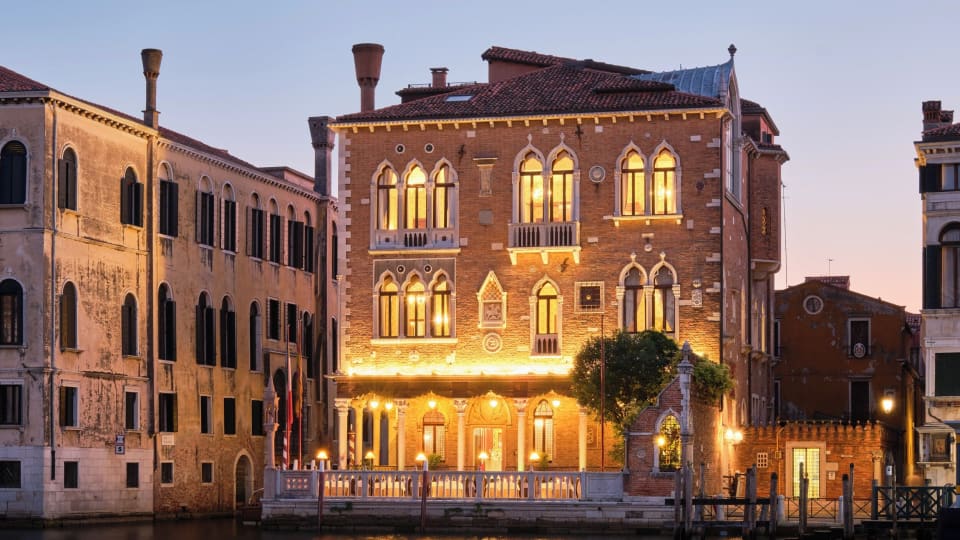
Ca' Maria Adele is a small hotel with only a few rooms at the very tip of Dorsoduro, beside Santa Maria della Salute, the domed church you see from St Mark's Square. From the little first-floor terrace you look at the church's marble façade at an angle, and the Grand Canal opens into the lagoon a hundred metres away.
This is our pick for romance: each room is decorated differently, with dark damask, Murano glass and low lamps, and it stays quiet even in high season because few tourists walk all the way out to the point. The Salute vaporetto stop is beside the hotel, and St Mark's is two minutes away by traghetto, the gondola ferry that crosses the canal. It is not the place for families or for anyone who wants a restaurant and bar in the hotel.
Dorsoduro
6. Hotel Palazzo Stern
The landing stage beside Ca' Rezzonico
Palazzo Stern sits on the Grand Canal next to Ca' Rezzonico, the museum of eighteenth-century Venice, and has its own garden terrace running down to the water where breakfast is served. The Ca' Rezzonico vaporetto stop faces the Accademia across the canal, and the hotel has a private landing for water taxis.
It is right for travellers who want the Grand Canal in view without San Marco rates, and who like a neighbourhood with grocery shops and bars for locals. Inside it is Gothic and mosaic-clad, with a staircase and details that look like a museum, and rooms vary a great deal in size. Ask for a canal view, since that is the reason to stay here, and expect a small lobby that gets crowded at check-in.

Cannaregio and Santa Croce
7. Ca' Sagredo Hotel
The frescoes on the staircase
Ca' Sagredo is a palazzo that belonged to the noble Sagredo family, right on the Grand Canal in Cannaregio, with the Ca' d'Oro vaporetto stop a few steps away and the Rialto ten minutes on foot. The great staircase and the ballroom have original frescoes and stucco filling the walls from floor to ceiling.
This is the palazzo hotel for travellers who want the lavish version without staying in the middle of San Marco, and who like that Cannaregio's evening life along the Strada Nova and the Misericordia canal begins outside the door. Rooms on the Grand Canal look across to the Rialto fish market. The hotel is large and formal, and the Strada Nova is the city's busiest shopping street by day, so it is not for anyone seeking the small and intimate.

Cannaregio and Santa Croce
8. Palazzo Venart
The garden on the canal in Santa Croce
Palazzo Venart stands on the Grand Canal in Santa Croce, a couple of canals from the station, and is one of very few hotels in Venice with a proper garden running all the way down to the water. The restaurant, Glam, is counted among the best in the city, and in summer the garden tables look straight onto the canal traffic.
We recommend it to travellers who want design, food and quiet, and who arrive by train and want to carry the suitcase as short a distance as possible. Rooms are individually furnished with old timber floors, frescoes and modern bathrooms, and the feel is more private villa than hotel. Santa Croce is silent in the evening, and you should allow twenty minutes on foot or a waterbus to St Mark's, so it does not suit anyone who wants the sights right outside.
Giudecca
9. Hilton Molino Stucky Venice
The flour mill with the rooftop pool
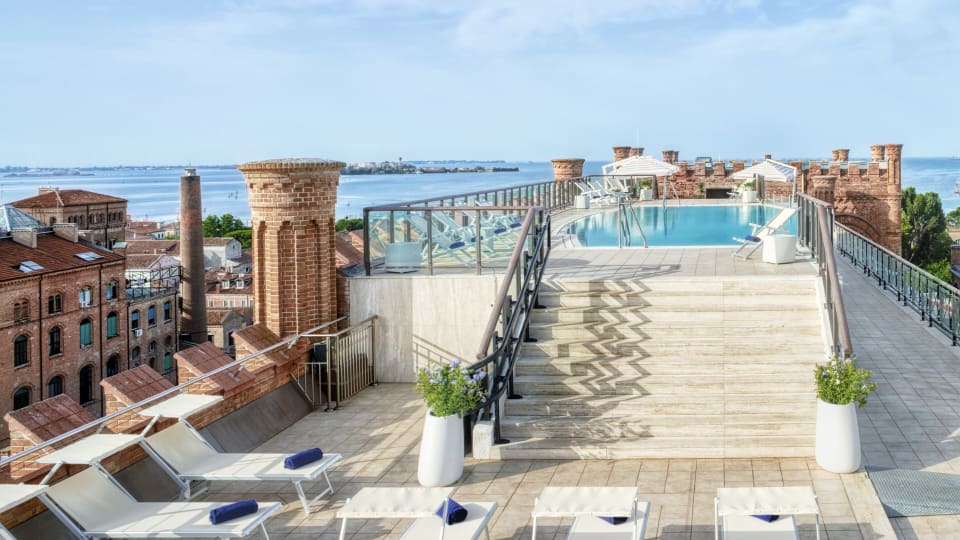
The Hilton Molino Stucky occupies a vast red-brick flour mill on the western tip of Giudecca, with its own shuttle boat running to St Mark's and the Zattere. The rooftop pool is one of very few in Venice, with a view over the whole city, and the Skyline Bar beside it has the same outlook as the sun drops behind Dorsoduro.
This is the hotel for families and for anyone who wants space, a pool and a quiet evening after a day in the crowds. Rooms are large and modern, breakfast is generous, and you never carry a suitcase over a single bridge because the hotel boat leaves from the landing stage. The drawback is distance: every trip into town needs a boat, and it feels more like visiting Venice than living in it. If you want to step out of the door straight into the lanes, stay elsewhere.
How Picolo chooses
Our editors pick every hotel and experience themselves, and most of them we have tried. Nobody can pay to be included or ranked higher. When you book through our links, Picolo earns a small commission. It never changes the price you pay, and it never decides what we write.
Topics