
Picolo earns a commission from Hotels.com when you book through the links on this page. The price stays the same.
Hotels
Hotels in Florence: ten places to stay on both banks of the Arno
At seven o'clock Giotto's bell tower strikes the hour, and Piazza del Duomo still belongs to the street sweepers and a handful of runners. An hour later it is full. Florence is a small city with an enormous number of visitors, and your hotel decides whether you get the first hour or only the second.

Stay around the Duomo and Piazza della Repubblica if this is your first visit and you want to walk to everything without thinking about a map. The Oltrarno, south of the river, suits travellers who want quiet evenings, artisan workshops and trattorias full of locals, and who do not mind five minutes across a bridge. Santa Maria Novella is practical for the train and a short walk in, while Santa Croce and Borgo Pinti offer gardens and silence a quarter of an hour from the crowds.
Picolo picks
- Best for romance#6 Villa Cora
- Best for families#9 Four Seasons Hotel Firenze
- Best for a first visit#1 Hotel Brunelleschi
- Best for value#8 25hours Hotel Piazza San Paolino
- Best for design#4 Portrait Firenze

Around the Duomo and Piazza della Repubblica
1. Hotel Brunelleschi
The round tower two minutes from the dome
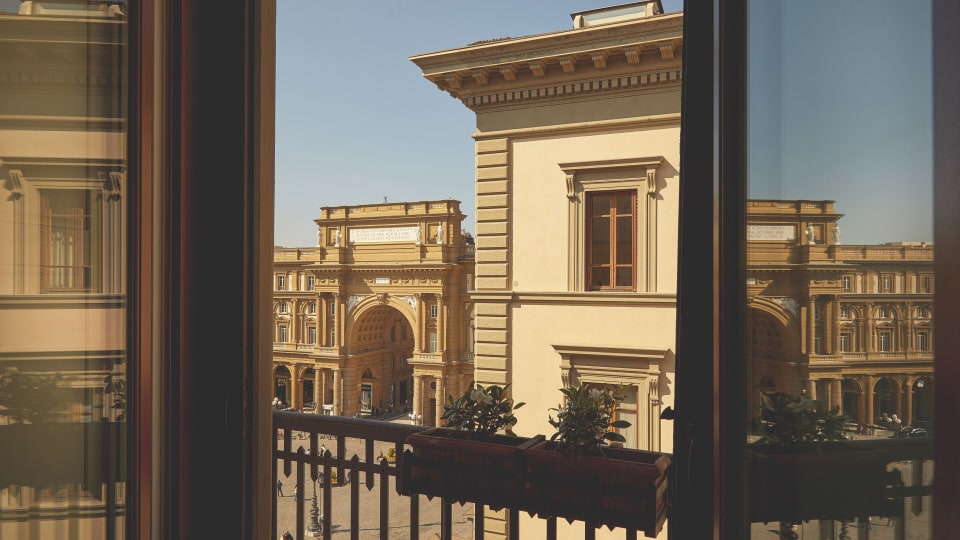
Hotel Brunelleschi is built around a round medieval stone tower and a deconsecrated church, in a small lane two minutes from the Duomo. From certain rooms, and from the suite at the top of the tower, you look straight at the dome, so close you can count the roof tiles.
We recommend it for a first visit: you sleep exactly in the middle of the centre, yet in a cul-de-sac that is surprisingly quiet. The style is classic and warm, with wooden floors and deep colours, and the restaurant inside the tower is one of the better places to eat in the city. It is expensive, and the surrounding lanes are packed by day, so it is the wrong pick if you want a garden and air around you.
Around the Duomo and Piazza della Repubblica
2. Hotel Savoy
The corner of Piazza della Repubblica
Hotel Savoy stands directly on Piazza della Repubblica, the city's great open square with its cafés, carousel and buskers, and the terrace facing the square is where to sit with an aperitivo as the lights come on. Rooms on the upper floors have the dome in the window.
This is the hotel for travellers who want the classic grand city hotel, with attentive service, an elegant bar and guests who have packed carefully. The interiors are lighter and more contemporary than the old façade suggests, with Florentine touches in the fabrics and art. The square outside is lively until midnight, and rooms facing it hear the music, so ask for the back if you sleep lightly.

Around the Duomo and Piazza della Repubblica
3. Hotel Calimala
The roof terrace between the Duomo and the Ponte Vecchio
Hotel Calimala occupies an old building on Via Calimala, the street running from Piazza della Repubblica down to the Mercato Nuovo and the Ponte Vecchio. Its roof terrace, with a bar and restaurant, looks across to the dome on one side and the tower of the Palazzo Vecchio on the other.
It works best for travellers who want to sleep in the centre with contemporary design and a terrace to end the evening on, without the rates of the big names. Rooms combine old marble floors with newer furniture, and the staircase alone deserves a look. The street is one of the city's busiest for pedestrians, and the hotel has no large lobby, so it is the wrong choice if you want peace on the ground floor.
The Ponte Vecchio and the Oltrarno
4. Portrait Firenze
Suites with the Ponte Vecchio in the window
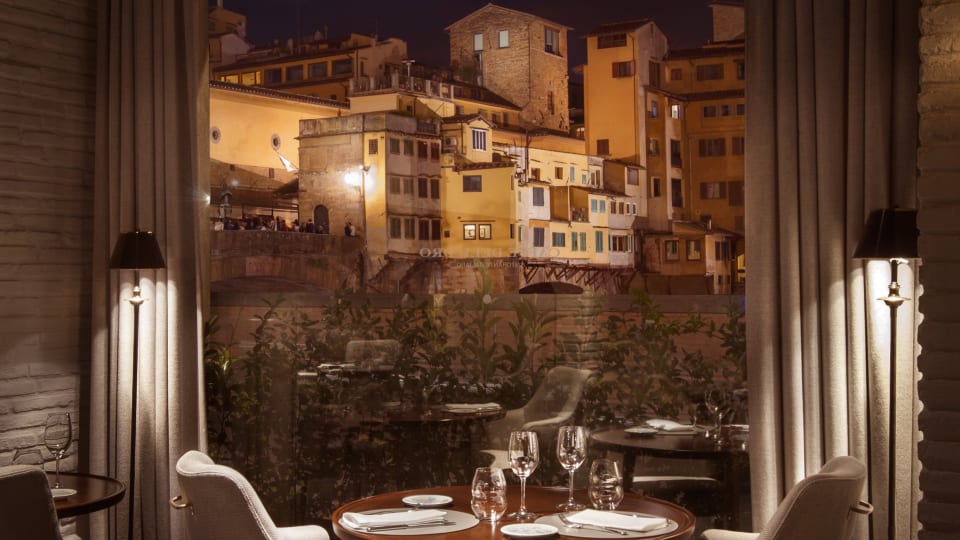
Portrait Firenze stands on Lungarno Acciaiuoli, the riverside promenade on the north bank, so close to the Ponte Vecchio that you see the goldsmiths' shops from the river-facing rooms. The hotel belongs to the Ferragamo family's hotel group, and every room is a suite with a small kitchen and tall windows.
This is our pick for design: muted greys, brass, leather and a lobby that feels more like a private flat than a hotel. It is made for couples who want a high standard and an address they never need to explain, and the Uffizi is three minutes on foot. Rates are among the highest in the city and the hotel is small, so it is not for anyone wanting a pool, a spa or a big breakfast room.

The Ponte Vecchio and the Oltrarno
5. Hotel Lungarno
The riverbank on the quiet side
Hotel Lungarno sits on the south bank of the Arno, the Oltrarno side, with the Ponte Vecchio a hundred metres to your left when you stand on the terrace. The walls carry a large art collection, and the riverside restaurant serves dinner with the bridge as a backdrop.
It is ideal for travellers who want a river view and quiet at the same time: in the evening this bank goes still, while the Uffizi and the centre are five minutes across the bridge. The style is nautical and classic, in white and navy, and river-facing rooms have small balconies. Street-facing rooms are considerably less appealing, so here you should pay for the view or choose another hotel.

The Ponte Vecchio and the Oltrarno
6. Villa Cora
The villa in the hills behind the Boboli
Villa Cora is a grand villa on Viale Machiavelli, the broad avenue that winds up the hill south of the Boboli Gardens towards Piazzale Michelangelo. The garden has a heated pool with a view, and the hotel offers a shuttle down to the centre for guests.
This is our pick for romance: frescoed ceilings, mirrored salons, a bar in the old library and a garden quiet enough to hear birdsong. It is right for couples who want somewhere to retreat to after a day in the city, and families who want a pool. The drawback is that you are a quarter of an hour's walk downhill from Porta Romana and the Pitti Palace, and uphill again at night, so it is not the hotel for anyone who likes to pop back to the room at lunchtime.

Santa Maria Novella
7. The St. Regis Florence
The palazzo on Piazza Ognissanti
The St. Regis stands on Piazza Ognissanti right down by the Arno, in a Renaissance palazzo with windows onto the river and across to the Oltrarno. The lobby and breakfast room sit under a glass roof with frescoes, and the river-facing rooms have the grandest outlook in this guide.
This is the hotel for travellers who want the large, formal luxury hotel with butlers, a bar and everything that goes with it, and who want the river directly outside. The location is central but calm: Tornabuoni is three minutes away, the Duomo ten. It is big and impersonal compared with the small hotels in this guide, so skip it if you want to know the owner and the dog at reception.
Santa Maria Novella
8. 25hours Hotel Piazza San Paolino
The playful hotel in the old convent
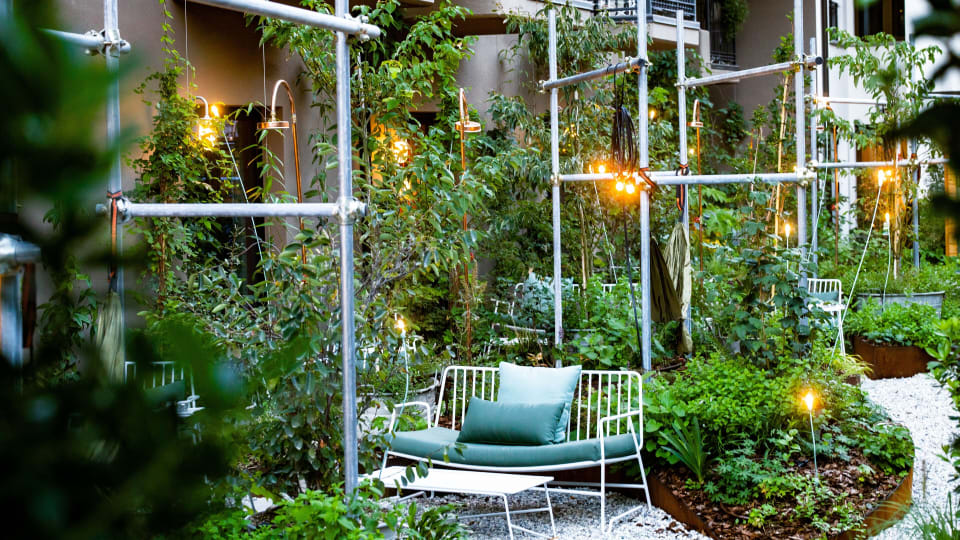
25hours occupies a former convent on Piazza San Paolino, a small square a couple of blocks from Santa Maria Novella, and the rooms surround an inner courtyard under a glass roof filled with greenery. The interiors are split into two themes inspired by Dante's Divine Comedy, bright rooms on one side and dark ones on the other.
This is our pick for value: design, a good breakfast and a lively bar at a rate far below the neighbours on Tornabuoni. It is a strong pick for travellers who are under forty in spirit and like a hotel that does not take itself too seriously. The square outside is quiet, but the neighbourhood between the station and the river is less pretty than the rest of the centre, so pass on it if you want the Duomo from the window.
Santa Croce and Borgo Pinti
9. Four Seasons Hotel Firenze
The largest private garden in the city
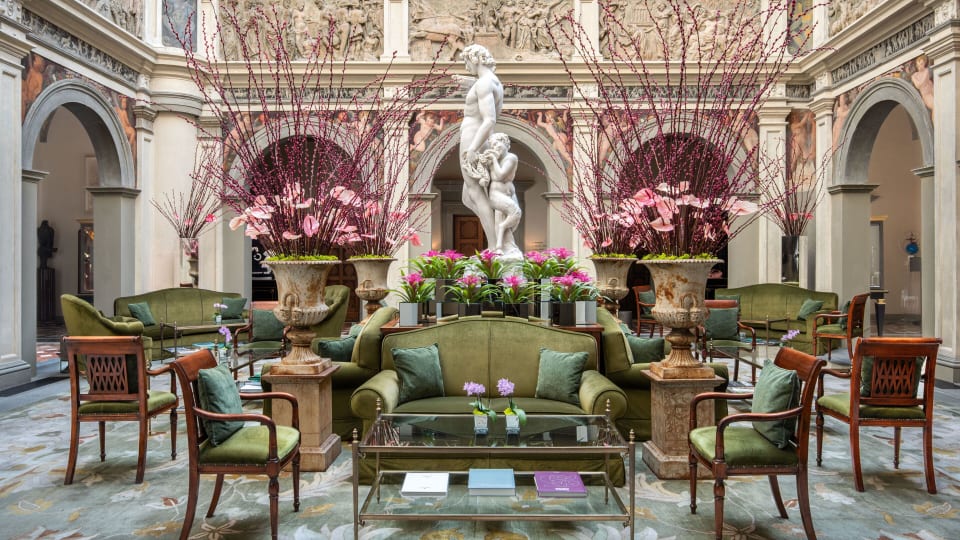
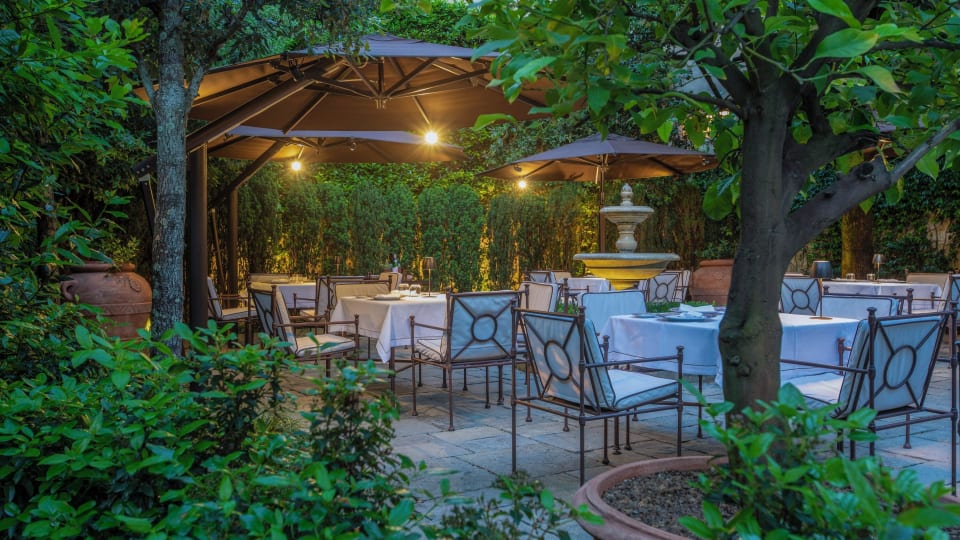
The Four Seasons occupies the Palazzo della Gherardesca on Borgo Pinti, and behind the palazzo lies the Giardino della Gherardesca, a park of several acres with old trees, a pool and paths, walled so that you cannot hear the city. The palazzo's frescoes and stucco were restored over many years.
We recommend it to families who want space and a pool in the middle of the city, and to couples who want the very best and can afford it. The spa and the garden mean you can take a whole afternoon off from the museums. Rates are the highest in this guide, and the Duomo is a quarter of an hour on foot through streets of little charm, so it does not suit anyone who wants the city right outside the door.
Santa Croce and Borgo Pinti
10. Hotel Regency
The villa on Piazza d'Azeglio
Hotel Regency occupies an old town villa on Piazza d'Azeglio, a green square with a playground and benches that looks more like London than Florence, a quarter of an hour east of the Duomo. The hotel has a small garden between two wings where breakfast and dinner are served when it is warm enough.
It appeals to travellers who want a classic, smaller hotel with personal service and quiet nights, and who treat Florence as a city to walk. The decoration is traditional, with wallpaper, heavy curtains and carpets, and may feel old-fashioned if you are used to Scandinavian design. The neighbourhood is calm and handsome but has no restaurants to speak of, so you walk to Santa Croce for dinner.
How Picolo chooses
Our editors pick every hotel and experience themselves, and most of them we have tried. Nobody can pay to be included or ranked higher. When you book through our links, Picolo earns a small commission. It never changes the price you pay, and it never decides what we write.
Topics