
Nepal
Travel to Nepal: trekking in the Himalayas for everyone
You need neither climbing gear nor record-breaking ambitions to stand beneath the world’s highest mountains. These are Nepal’s most popular treks, how long they take, when to go, and the hotels in Kathmandu and Pokhara before and after.
It is early morning in a small mountain village, and mist still fills the valley. A cup of tea steams on the table, the porters lace up their boots, and above the rooftops, higher than you thought mountains could be, a snowy summit glows pink in the first light. This is how most days on a trek in Nepal begin.
You do not need to be Kristin Harila to experience the Himalayas. The most popular routes follow paths that Sherpas and farmers have used for generations, and you sleep in simple mountain lodges along the way. It takes good fitness and patience, but no climbing experience.
The links to the hotels are partner links. If you book through them, Picolo may earn a small commission at no extra cost to you.
Short answer: which trek suits you?
With a week, Poon Hill near Pokhara is a lovely first taste of the Himalayas. With two weeks and good fitness, you can walk to Everest Base Camp or Annapurna Base Camp. Whatever the route, October and November are the most stable season, with clear skies after the monsoon.
How trekking in Nepal works
Trekking means walking from village to village over several days, with a light pack. Along the way you sleep in teahouses, small family-run mountain lodges with simple rooms, a shared dining room with a stove and a menu that runs from noodle soup to dal bhat, the Nepali dish of rice and lentils that fuels you for the rest of the day. Many hire a porter to carry the heavy bags, so you only carry what you need for the day.
The most popular treks
Everest Base Camp: to the foot of the world’s highest mountain
The trek begins with a short flight from Kathmandu to Lukla, a village with one of the world’s most talked-about runways, short and steep on the edge of the mountain. From there you walk through the Sherpa town of Namche Bazaar, past the monastery at Tengboche and up to the base camp where Everest expeditions begin, at over 5,300 metres. Allow around two weeks there and back, with rest days to let your body adjust to the altitude.
Annapurna Base Camp: into an amphitheatre of peaks
From the Pokhara area the route climbs through rice terraces, bamboo forest and small villages, until the valley opens into an amphitheatre of snowy summits around the base camp at just over 4,100 metres. It usually takes one to two weeks, a little lower and shorter than the Everest trek.
Poon Hill: a Himalayan sunrise in a few days
The short trek to the Poon Hill viewpoint, at just over 3,200 metres, takes only a few days from Pokhara. You rise before dawn and watch the sun hit the Annapurna and Dhaulagiri ranges. A great first trek, and a good choice when time is short.
The Annapurna Circuit and Langtang
The Annapurna Circuit is a longer classic of two to three weeks, with the Thorong La pass at over 5,400 metres as its high point. The Langtang valley lies closer to Kathmandu and offers mountains, glaciers and Tibetan culture in about a week.

The Dwarika’s in Kathmandu.
When to visit Nepal
October and November: The most popular season, with clear air and great views after the monsoon.
March to May: Warmer days and rhododendrons in bloom, but more afternoon cloud over the peaks.
December to February: Cold at altitude, but quiet trails and fine days on the lower routes.
June to September: Monsoon rain, cloud and slippery trails. Most treks are poorly suited.
Guides, permits and altitude
Since 2023, Nepal has in principle required foreign trekkers in national parks and conservation areas to hire a licensed guide. The Everest region has so far been an exception. The rules have changed several times, so check what applies before you travel. All routes also require permits and registration, which a trekking agency or your guide can arrange.
Altitude sickness is the biggest risk on any trek, and it can affect anyone regardless of fitness. Go slowly, add rest days once you pass 3,000 metres, drink plenty and descend if symptoms do not ease. See your doctor before you travel, and make sure your travel insurance covers high-altitude trekking and helicopter rescue.
Kathmandu: before and after the mountains
Almost every trip to Nepal begins and ends in Kathmandu. The city is chaotic, dusty and utterly irresistible: medieval temple squares, prayer flags over narrow streets and the huge white stupa at Boudhanath, where pilgrims circle with prayer wheels in hand. Allow at least two nights before the trek, and ideally one after.
The Dwarika’s: a living museum
A luxury hotel built with antique woodcarvings from the Kathmandu Valley, with a spa and leafy courtyards. A calm place to come home to after the mountains.
Book your stay: See rooms at The Dwarika’s
Hotel Yak & Yeti: the classic in the centre
A traditional luxury hotel with a spa, in the heart of the city and close to the old temple squares.
Book your stay: See rooms at Hotel Yak & Yeti
Hyatt Regency Kathmandu: by Boudhanath
A large hotel with two restaurants and spacious grounds, close to the famous stupa.
Book your stay: See rooms at Hyatt Regency Kathmandu
Kathmandu Guest House: in the heart of Thamel
A classic hotel with a garden and spa in the Thamel district, where trekking shops and agencies line the streets.
Book your stay: See rooms at Kathmandu Guest House
Pokhara: the lake at the foot of Annapurna
Pokhara is Nepal’s calm counterpart to the capital. The town sits on Phewa Lake, and on clear days the mountains are mirrored in the water. This is where treks to Annapurna and Poon Hill begin, and the perfect place to rest your legs afterwards.
Temple Tree Resort & Spa: by the lake
A hotel with a spa near Phewa Lake, a short walk from the lakeside cafés.
Book your stay: See rooms at Temple Tree Resort & Spa
Fish Tail Lodge: on the shore of Phewa
A classic lakeside hotel with an outdoor pool and mountain views.
Book your stay: See rooms at Fish Tail Lodge
The Pavilions Himalayas: villas in the countryside
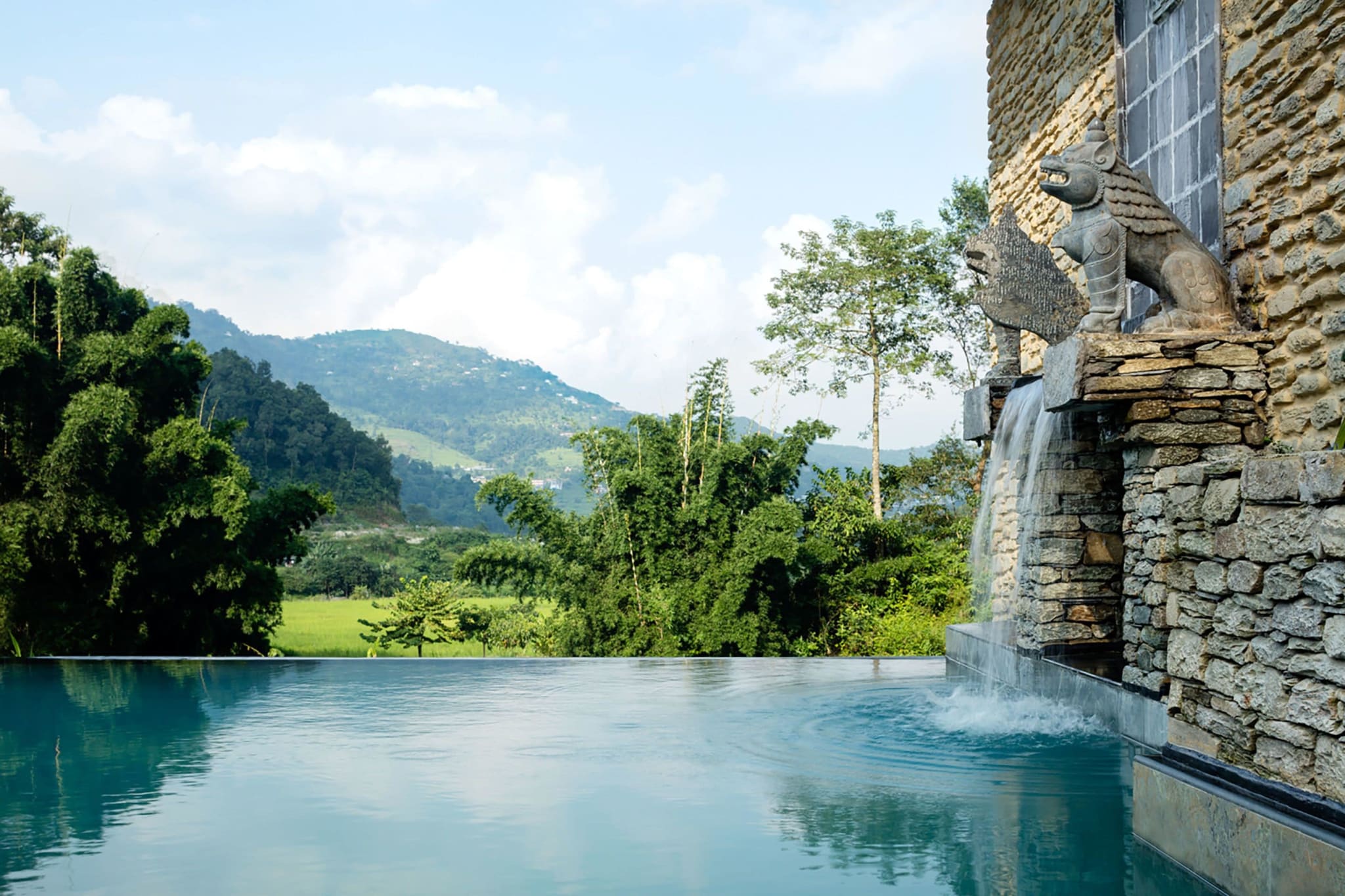
A peaceful riverside hotel outside Pokhara, with an outdoor pool and green hills all around, for those who want to rest in silence.
Book your stay: See rooms at The Pavilions Himalayas
Getting to Nepal
There are no direct flights from the UK to Kathmandu, but you can get there with one change, for example in the Middle East or Turkey. From Kathmandu, domestic flights and buses run to Pokhara and Lukla. Always check the latest entry requirements before you book.
Frequently asked questions about trekking in Nepal
How fit do you need to be for Everest Base Camp?
You need good basic fitness and experience of long days on foot, but no climbing experience. Most important of all is to walk slowly and let your body adjust to the altitude.
What is the easiest trek in Nepal?
Poon Hill near Pokhara is short, lower than the big routes and still offers views of some of the world’s highest mountains.
Do you need a guide in Nepal?
A licensed guide is required in most national parks and conservation areas. The Everest region has so far been exempt, but check the current rules before you travel.
When is the best time to trek in Nepal?
October and November have the most stable weather and clearest views. Spring, from March to May, is also popular.