
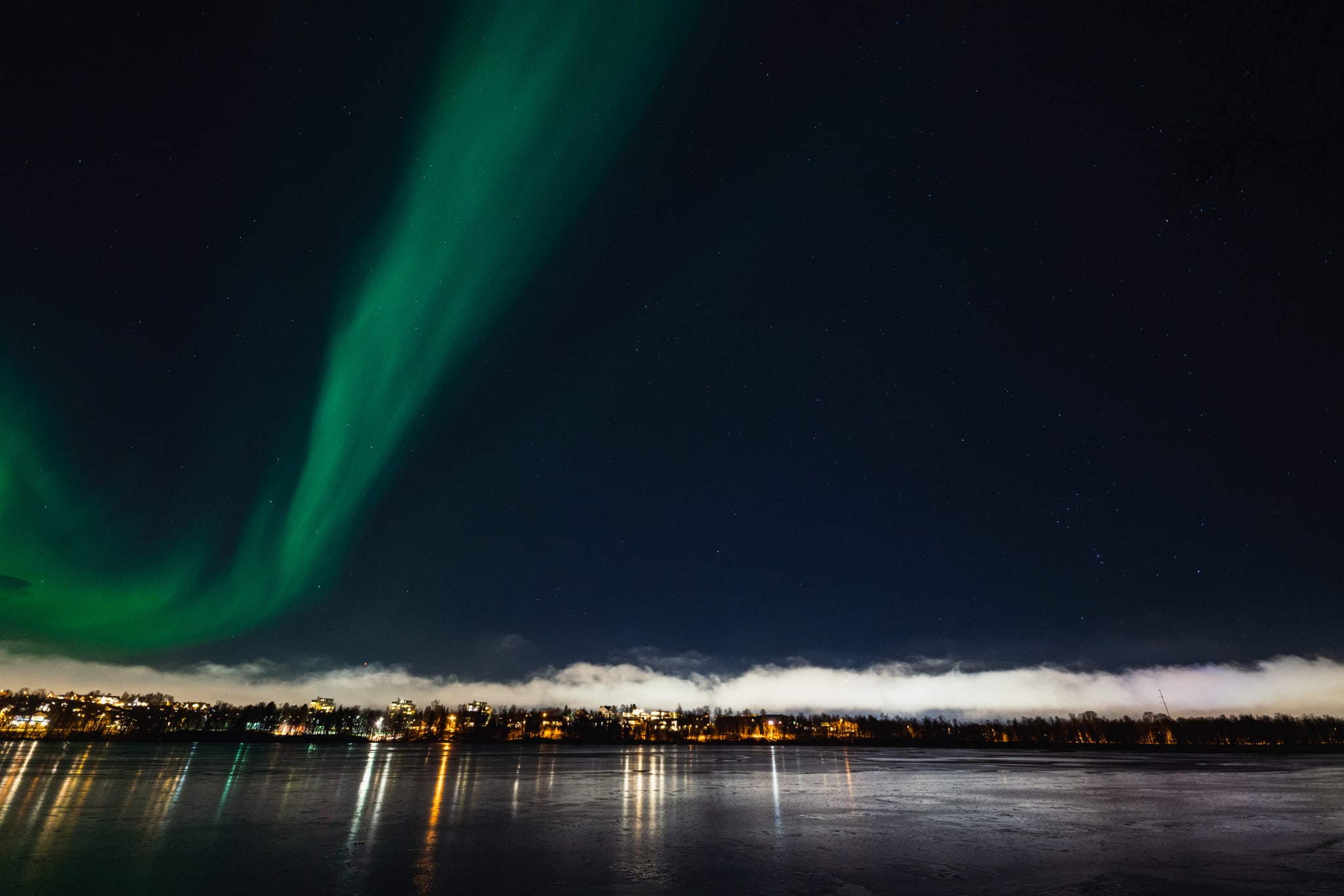
Northern lights
Northern lights in Norway: the complete guide to seeing the aurora
When, where and how to see the northern lights. This is Picolo’s complete guide to the aurora in Norway, from Tromsø and Lyngen to Lofoten and Svalbard, with tips on forecasts, photography and hotels where you can watch the lights from bed.
It often begins as a faint, grey veil across the sky. Then it takes on colour, turns green, and suddenly dances across the whole sky in waves and ribbons, faster than you can raise your camera. Seeing the northern lights for the first time is one of those experiences people remember for the rest of their lives, and Northern Norway is one of the best places in the world to see them.
This is Picolo’s complete guide to the northern lights in Norway: what they are, when and where to see them, how to read the forecast, and the hotels that give you the best chance.
The links to the hotels are partner links. If you book through them, Picolo may earn a small commission at no extra cost to you.
What are the northern lights?
The northern lights, or aurora borealis, form when electrically charged particles from the sun, the solar wind, meet the Earth’s magnetic field and are channelled towards the polar regions. When the particles collide with gases high in the atmosphere, the gases emit light. Oxygen produces the familiar green glow, and higher up it can turn red. Nitrogen can add blue and violet tones at the edges.
The aurora appears most often in a belt around the magnetic poles, and Northern Norway lies right in the middle of this auroral zone. That is why your chances are so good here, even when solar activity is moderate.
When is the northern lights season in Norway?
In Northern Norway you can see the northern lights from around September to late March or April. In summer the aurora is still there, but the midnight sun makes the sky too bright to see it. The darkest months give the most hours of darkness, while autumn and late winter often bring milder weather and lovely daylight.
Time of night: The aurora can appear whenever it is dark, but many people see it between early evening and around midnight.
Darkness: Get away from city lights. The darker it is, the stronger the lights appear.
Clear skies: Cloud cover often matters more than solar activity.
Patience: The aurora comes and goes. Plan several nights to improve your chances.

The northern lights from bed in a glass cabin.
The best places to see the northern lights in Norway
Tromsø
Tromsø is the capital of the northern lights, with flights from across Europe, good hotels and aurora tours every night in season. The city sits in the middle of the auroral zone, and a short drive takes you to dark skies. Read about Tromsø, one of the best cities for the northern lights and see the best hotels in Tromsø.
Lyngen and Malangen
East and south of Tromsø lie the Lyngen Alps and Malangen, with dark fjords and little light pollution. This is where you find some of the most spectacular places to stay if the aurora is your main goal.
Senja
Norway’s second-largest island has dramatic mountains plunging into the sea and dark nights far from any city. Read our guide to Senja.
Lofoten
The aurora over the red fishing cabins of Reine is one of Norway’s most iconic sights, and Lofoten often has milder weather than the rest of the north. Read our guide to the Lofoten Islands.
Alta
Alta is often called the city of the northern lights, with a long history of aurora research. Its inland climate often gives clearer skies than the coast.
Svalbard
During the polar night it is dark almost around the clock in Svalbard, and the aurora can appear even at midday. Read about things to do in Svalbard.
See all the places together in our guide to the best places to see the northern lights.
Northern lights forecast: how to improve your chances
Two things decide whether you see the aurora: solar activity and the cloud cover where you are. The aurora forecast shows activity, often as a Kp index from 0 to 9. In Northern Norway you can see the lights even at low values, because you are in the middle of the auroral zone. The weather forecast matters just as much: check the cloud cover and be ready to drive to where the sky is clear.
Read our full guide to the northern lights forecast and the Kp index.
Aurora tour or on your own?
A guided northern lights tour takes you to wherever the sky is clearest that night, and the guides know both the weather and the best spots. Many tours include warm food, a campfire and photo help. With a hire car you can also chase the lights yourself, but make sure you are comfortable with winter driving and road conditions first.
How to photograph the northern lights
Use a tripod: Long exposures need a steady camera.
Focus manually to infinity: Autofocus struggles in the dark.
High ISO and long exposures: Start around ISO 1600 to 3200 and 5 to 15 seconds.
Wide angle: Capture both the sky and the landscape.
Spare batteries: The cold drains batteries fast.
Hurtigruten and the northern lights
A winter voyage with Hurtigruten along the coast gives you many nights in the auroral zone, far from city lights. It is a popular way to combine fjords, coastal towns and aurora hunting.

The fishing cabins of Reine. Photo: Picolo
Hotels where you can see the northern lights
Where you stay can decide whether you see the aurora. Stay outside the city and you can step straight out of the door when the sky lights up, and in some places you can watch it from bed.
AERA Aurora Glass Cabins: the aurora from bed
Glass cabins outside Tromsø, with huge glass walls facing the sky and the fjords.
Book your stay: See rooms at AERA Aurora Glass Cabins
Malangen Resort: fjords and dark skies
A resort by Malangen south of Tromsø, with a restaurant and bar, and dark nights far from city lights.
Book your stay: See rooms at Malangen Resort
Yggdrasil Farmhotel: a farm hotel in fjord country
A peaceful farm hotel with a spa outside Tromsø, with the sky right above the farmyard.
Book your stay: See rooms at Yggdrasil Farmhotel
Sorrisniva Igloo Hotel: an ice hotel in Alta
A hotel built of ice and snow by the Alta river, rebuilt every winter.
Book your stay: See rooms at Sorrisniva Igloo Hotel
Clarion Hotel The Edge: central Tromsø
A modern harbourside hotel in Tromsø, a great base for aurora tours.
Book your stay: See rooms at Clarion Hotel The Edge
Funken Lodge: the polar night in Svalbard
A hotel in Longyearbyen with a restaurant and fireside lounge, a cosy base for Arctic adventures.
Book your stay: See rooms at Funken Lodge
Reine Rorbuer: fishing cabins in Lofoten
Classic fishing cabins by the sea in Reine, with peaks and aurora over the water.
Book your stay: See rooms at Reine Rorbuer
See more in our guide to the best hotels in Tromsø, and read about planning northern lights holidays.
See all the aurora hotels in our guide to aurora hotels and glass igloos, and find a place to stay in Svalbard in our guide to Svalbard hotels.
Frequently asked questions about the northern lights in Norway
When is the best time to see the northern lights in Norway?
In Northern Norway the season runs from around September to late March or April, when it is dark enough. Clear skies are essential.
Where is the best place to see the northern lights in Norway?
Tromsø, Lyngen, Senja, Lofoten, Alta and Svalbard are among the best places, as they lie in the middle of the auroral zone.
What time of night is best?
The aurora can appear whenever it is dark, but many people see it between early evening and around midnight.
Can you see the northern lights in southern Norway?
Yes, during strong activity the aurora can be seen in southern Norway, but your chances are far better in the north.
What does the Kp index mean?
The Kp index measures activity in the Earth’s magnetic field on a scale from 0 to 9. In Northern Norway you can see the aurora at low values.