
Beaches
The best beaches in Mallorca, from Es Trenc to Formentor
Mallorca has long sandy beaches in the north and south, small turquoise coves in the east and pebble beaches below the mountains in the west. These are the beaches worth your time, and the hotels we would book.
This page contains affiliate links. If you book through them, Picolo earns a commission at no extra cost to you. Our picks are made independently by our editors.
At Es Trenc you walk through dunes and low pine forest before you see the sea. The beach is long and white, with no hotels or tower blocks, and the water is so clear and shallow that it shifts between turquoise and pale blue far out. It is hard to believe you are half an hour from Palma.
Mallorca is bigger than many people expect, and its beaches change completely from coast to coast. The long sandy beaches are in the south and north, the small coves between the cliffs are in the east, and in the west the Tramuntana mountains drop straight into the sea. We have split the island into five areas, with the beaches that stand out and who they suit.
Short answer: which beaches in Mallorca are best?
Es Trenc in the south is the best long sandy beach, with clear, shallow water. Caló des Moro and Cala Llombards near Santanyí are the prettiest coves, and Platja de Formentor in the north has pine forest right down to the water. Platja de Muro on the Bay of Alcúdia is best for families with young children.
Best sandy beach: Es Trenc, south coast
Prettiest cove: Caló des Moro, Santanyí
Best for families: Platja de Muro, Bay of Alcúdia
Best for nature: Platja de Formentor, north
Most dramatic: Sa Calobra, Tramuntana

Fontsanta
The hotel building at Fontsanta near Colònia de Sant Jordi.
The south coast: Es Trenc and Colònia de Sant Jordi
Es Trenc is a long, undeveloped sandy beach in a protected area between Sa Ràpita and Colònia de Sant Jordi. Facilities are few, so bring water and a parasol. Walk a little way from the car park and you will have more space.
From the lighthouse at Cap de ses Salines a path follows the coast to Platja des Caragol, a quiet beach you can only reach on foot. Boats leave the harbour in Colònia de Sant Jordi for the Cabrera national park, an island with no development, clear water and an old castle above the harbour.
Fontsanta: hot springs near Es Trenc
Fontsanta sits in flat countryside close to Colònia de Sant Jordi and is built around hot springs. It is adults only, with a large spa fed by thermal water. It is not on the beach, but Es Trenc is a few minutes away by car, and it suits couples who want to combine the beach with peace and quiet.
Book your stay: Check availability and prices at Fontsanta
The south east: the coves near Santanyí
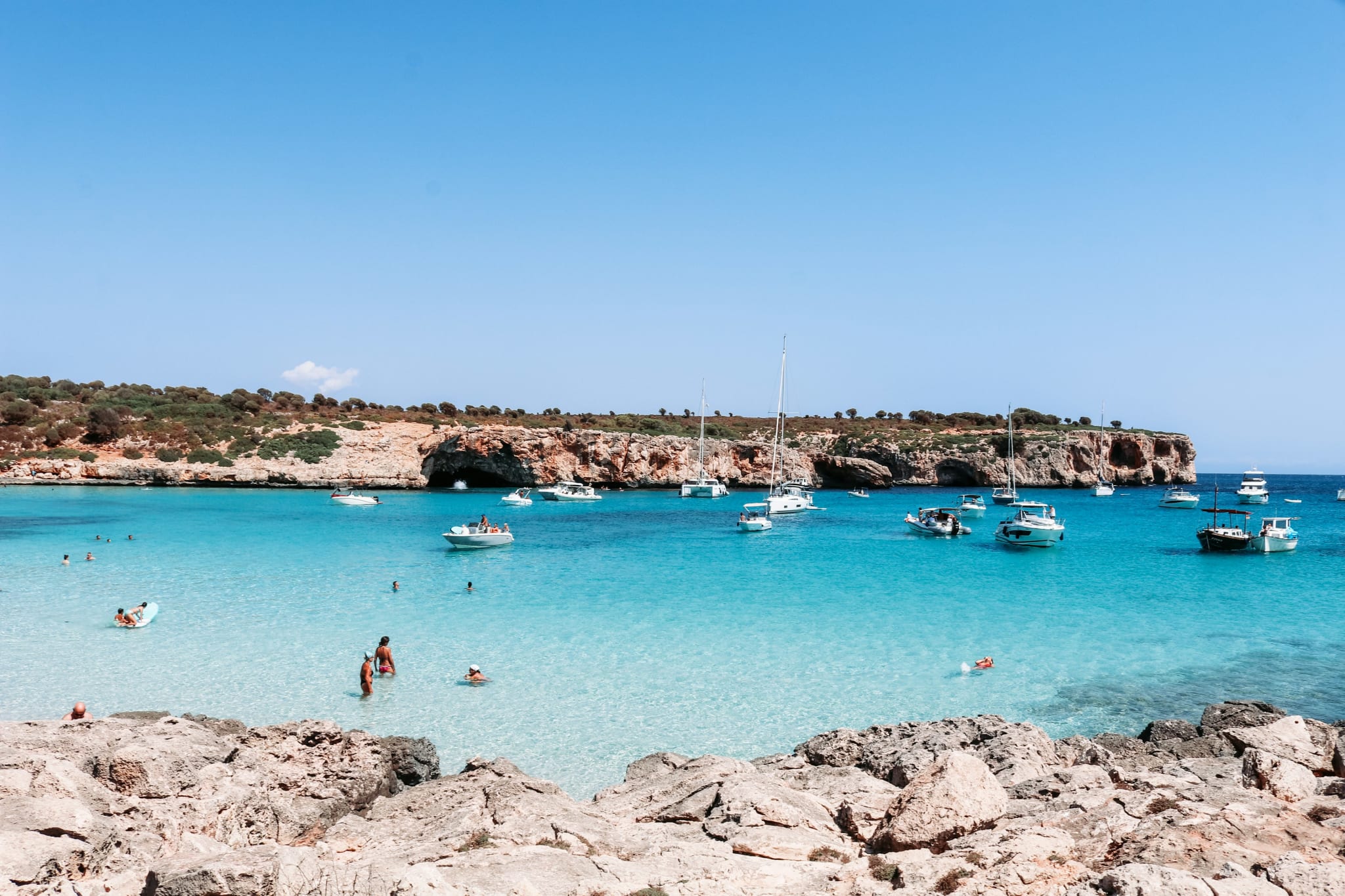
Around Santanyí lie the small turquoise coves that made Mallorca famous. Caló des Moro is only a few dozen metres wide, with cliffs on both sides and pines above the sand. It has become very popular, so arrive early in the morning or come outside July and August.
Cala Llombards is a slightly larger cove with sand, boathouses and a small beach bar. Further north, Cala Mondragó lies in a natural park, with two beaches linked by a path. The water is shallow and calm here, and it suits children better than the narrow coves.
The catch: parking at the coves is limited and fills quickly in summer. Expect to walk the last stretch, and wear shoes that can handle rocks.

Son Brull Hotel & Spa
The pool and the landscape at Son Brull outside Pollença.
The north: Formentor and the Bay of Alcúdia
Platja de Formentor lies on the peninsula north of Pollença, a narrow beach with pine trees right down to the water and views across the bay. In summer the road out to the peninsula is closed to private cars for much of the day, so take the bus or the boat from Port de Pollença.
Platja de Muro and the beach at Alcúdia together form the longest sandy beach on the island. The water stays shallow a long way out, and there are lifeguards, water sports and restaurants all along it. It is the safest choice for families with young children.
Son Brull: the monastery near Pollença
Son Brull is an old stone monastery in the countryside outside Pollença, surrounded by vineyards and mountains. The rooms are modern inside the thick walls, and there is a spa and a pool in the garden. The beaches at Port de Pollença and Formentor are a drive away, so this is for travellers who want a rural base.
Book your stay: Check availability and prices at Son Brull

Jumeirah Mallorca
The infinity pool at Jumeirah Mallorca above Port de Sóller at sunset.
Tramuntana: Sóller, Deià and Sa Calobra
On the west coast the Tramuntana mountains drop into the sea, and the beaches are small and often pebbly. Port de Sóller has a calm town beach in an almost enclosed bay, with the tram from Sóller running all the way down to the harbour.
Cala Deià is a rocky cove below the village of Deià, with clear water and two simple restaurants on the rocks. At Sa Calobra the Torrent de Pareis gorge meets the sea, with a small pebble beach between high rock walls. Come by boat from Port de Sóller, or drive the winding mountain road early in the day.
Jumeirah Mallorca: high above Port de Sóller
Jumeirah sits high on the cliffs above Port de Sóller, with an infinity pool looking straight out over the bay and the sea. There is a spa and several restaurants, and the sunset from here is the reason to stay. The slope down to the harbour is steep, so plan on a taxi or a car to reach the beach.
Book your stay: Check availability and prices at Jumeirah Mallorca

La Residencia
The pool at La Residencia with the village of Deià around it, seen from above.
La Residencia: the manor houses of Deià
La Residencia is made up of two old manor houses on the hillside above Deià, with terraces, olive groves and views of the mountains. The hotel has a long history with artists and has a pool and spa in the garden. Cala Deià is some way below and is a rocky cove, so this suits travellers who want mountains and village life more than sand.
Book your stay: Check availability and prices at La Residencia

Cap Rocat
The clifftop pool at Cap Rocat with the sea behind.
The Bay of Palma: city beaches and a fortress
From Palma a long seafront promenade runs east around the bay, past Can Pere Antoni and on to Platja de Palma. The beaches are wide and easy to reach by bus from the centre, but busy in summer. They work best when you want to combine a city break with a swim before dinner.
Cap Rocat: the fortress at Cala Blava
Cap Rocat is a former military fortress on the south side of the Bay of Palma, where the rooms are set into the rock. There is no sandy beach, but a saltwater pool right by the sea and ladders down into the water. It is around a quarter of an hour from the airport, and suits couples who want quiet close to Palma.
Book your stay: Check availability and prices at Cap Rocat
When to go
June and September: warm water and fewer people in the coves than in July and August.
July and August: hottest and busiest. Arrive early at the small coves, and expect full car parks.
May and October: good for long coastal walks, but the sea is cooler.
Formentor: check the traffic rules before you go, as the road is closed to private cars for much of the day in summer.
Frequently asked questions about Mallorca's beaches
Where is the best beach in Mallorca?
Es Trenc in the south is the best long sandy beach. Caló des Moro and Cala Llombards are the prettiest coves.
Which beach in Mallorca is best for children?
Platja de Muro and the beach at Alcúdia in the north have shallow water far out, lifeguards and restaurants. Cala Mondragó in the south east is also calm and shallow.
How do you get to Formentor beach?
By bus or boat from Port de Pollença. In summer the road is closed to private cars for much of the day.
Are there sandy beaches on Mallorca's west coast?
Few. The beaches below the Tramuntana mountains are mostly small and pebbly. Port de Sóller has the most conventional town beach.
Is Caló des Moro worth it?
Yes, if you arrive early or come outside the peak season. In the middle of the day in July and August the cove is very crowded.