
Experiences
Things to do in Málaga: from the Alcazaba to the Caminito del Rey
For years Málaga was the city you flew into and drove straight past. Now it has a Moorish fortress in the middle of town, a Picasso museum in the city where he was born and a glass cube on the harbour. This is how we would spend three days.
In short
With one day in Málaga, start at the Alcazaba before the heat arrives, move on to the Picasso Museum and have lunch at the Atarazanas market. Spend the evening by the water on Muelle Uno. To stay in the thick of it, our first choice is Palacio Solecio, an 18th-century noble palace a few minutes from the Picasso Museum.
Our first choice: See rooms at Palacio Solecio
The links to the hotels are partner links. If you book through them, Picolo may earn a small commission at no extra cost to you.
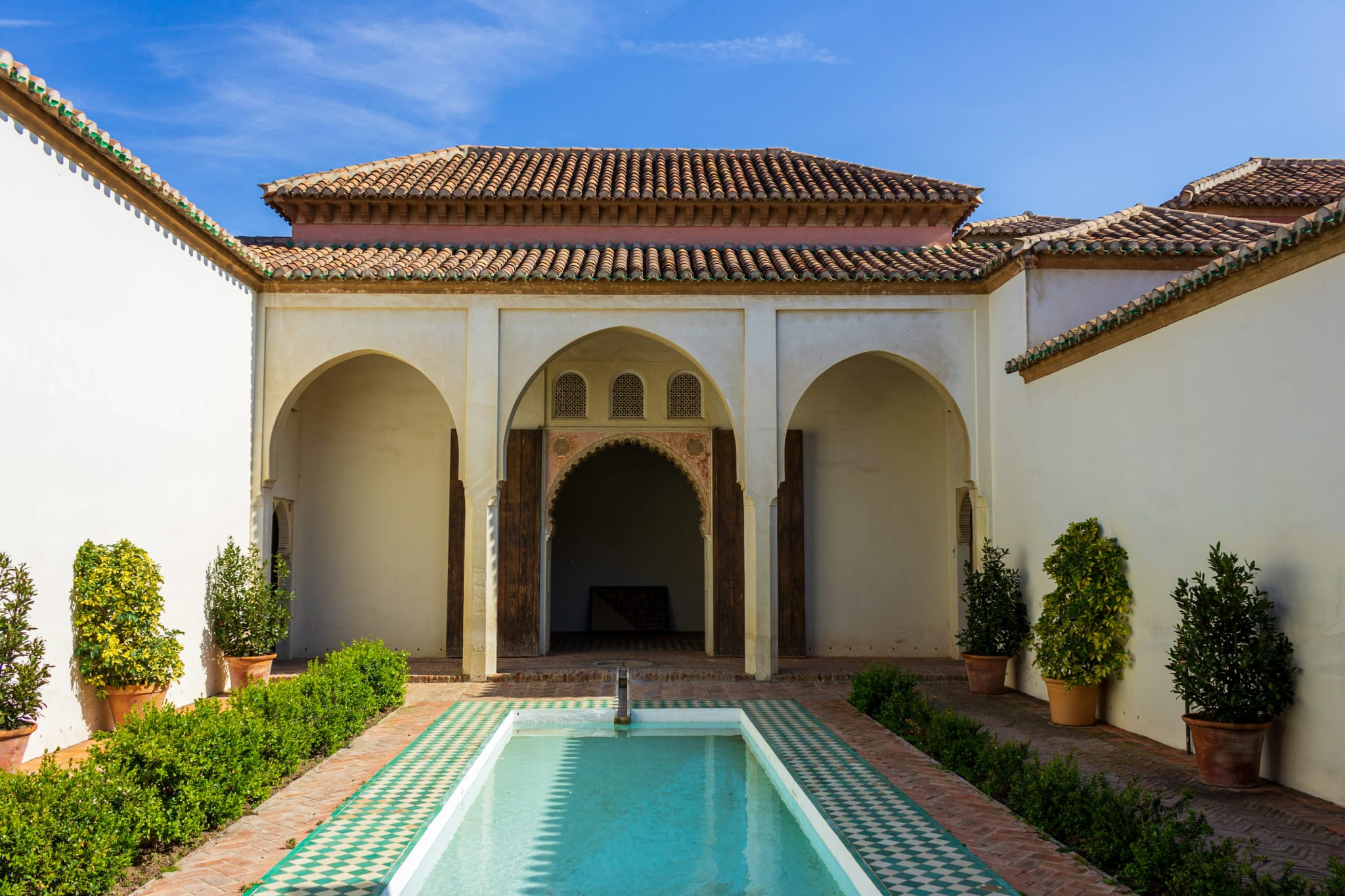
It is nine o'clock and the gates of the Alcazaba have just opened. Inside the palace courtyard it is still cool, and the water in the long pool lies perfectly still between the hedges. In three hours the paths will be crowded and the stones warm. For now there is only birdsong and a broom somewhere further up.
1. The Alcazaba and Gibralfaro
Work on the fortress began in the 11th century and carried on for hundreds of years, with walls stacked up the hillside and small courtyards of water and shade at its heart. Take your time in the upper palace courtyards, where the architecture was designed to keep the heat out.
Above the Alcazaba stands Gibralfaro, the castle King Yusuf I built in 1340. The path up is steep, but from the walls you look out over the harbour and the coast to the east, with the bullring directly below. A bus also runs to the top, and plenty of visitors ride up and walk down.
2. The Roman theatre
At the foot of the Alcazaba is a Roman theatre that lay forgotten underground for centuries. It was rediscovered in 1951, long after the Moors had taken columns and stones from it to build the fortress above. You can look straight down into it from the street, before you have even bought a ticket.
3. The Picasso Museum and his birthplace
Pablo Picasso was born in Málaga in 1881, in a house on Plaza de la Merced that is now a small museum. A few blocks away, the Museo Picasso Málaga fills a Renaissance palace with work from across his life. Go early or late, as there are queues in the middle of the day.

The cube on the quay
The glass cube on Muelle Uno is the only Centre Pompidou outside France.
4. Centre Pompidou and Muelle Uno
The coloured glass cube on the harbour is the only Centre Pompidou outside France. It opened in 2015, and the agreement with Paris now runs until 2035. The collection covers modern art from the 20th century onwards and changes regularly.
Around the cube, Muelle Uno runs along the water with palm trees and restaurants. This is where the city goes for a stroll as the sun goes down.

Ships in coloured glass
Above the entrance to Atarazanas, ships sail across the coloured glass.
5. Mercado de Atarazanas
The iron and glass market hall stands on the site of the old Moorish shipyard, and its horseshoe gateway survives from that time. Stalls sell fish, ham and fruit, and the small bars along the walls serve fried fish and a glass of wine for lunch. Look up as you go in: the stained glass window above the gate is the size of a house front.

The Soho chameleon
The artist ROA painted the chameleon, and it has become the emblem of Soho.
6. Street art in Soho
Soho, between the centre and the port, was a run-down quarter until artists started painting its walls. The Belgian artist ROA made the huge chameleon, and there are more works in the surrounding streets. Leave the map in your pocket and look up.
7. The beach and sardines on skewers
La Malagueta is the city beach, a ten-minute walk from the old town. To eat the way locals do, take the bus east to Pedregalejo and El Palo, where sardines are grilled on skewers over embers in old boats filled with sand. In summer, crews from the fishing districts race jábegas, the traditional rowing boats.

The bridge over the gorge
The footbridge across the gorge is the high point of the Caminito del Rey, quite literally.
8. Day trip to the Caminito del Rey
Around 37 miles north of the city, the Caminito del Rey clings to the walls of the Desfiladero de los Gaitanes gorge. It was built for workers at the hydroelectric plant in the early 1900s and is now a 7.7-kilometre walkway, with a footbridge high above the river. Tickets are sold on the official website and often sell out. Trains run from Málaga María Zambrano to El Chorro.
9. Day trip to Marbella
A drive of just under an hour west along the coast brings you to Marbella, with whitewashed lanes in the old town and yachts in Puerto Banús. To stay the night, see our pick of the best hotels in Marbella.
Where to stay in Málaga
Palacio Solecio
Stay at Palacio Solecio and you step out of the gate straight into the old town. The palace dates from the 18th century, the rooms are arranged around a colonnaded courtyard, and the Picasso Museum is a few minutes' walk away.
Book your stay: See rooms at Palacio Solecio
Catalonia Molina Lario
Molina Lario is the practical choice if you want everything close by. From the rooftop pool you look at the cathedral, and Muelle Uno and the Pompidou cube are a couple of minutes' walk away.
Book your stay: See rooms at Catalonia Molina Lario
Gran Hotel Miramar
If you want the beach on your doorstep, Gran Hotel Miramar on La Malagueta is a palace hotel from the 1920s. You can walk to the Alcazaba along Paseo del Parque. Read more about Gran Hotel Miramar.
Book your stay: See rooms at Gran Hotel Miramar
Good to know
Start early. The Alcazaba and Gibralfaro are at their best before eleven, ahead of the heat and the tour groups.
Free entry. The Alcazaba, the Picasso Museum and the Pompidou are free for part of Sunday. Check the times before you go.
Book the Caminito del Rey well ahead. Tickets are released one season at a time and go quickly. The walkway is closed on Mondays.
The Pompidou is closed on Tuesdays.
Things to do in Málaga: frequently asked questions
How many days do you need in Málaga?
Two to three days cover the fortress and the museums, with an evening on the beach to finish. Add a day trip to the Caminito del Rey or Marbella and it becomes four. Málaga also works well as the first or last stop on a tour of Andalusia.
What is the best thing to do in Málaga?
The Alcazaba and Gibralfaro are what most people remember, together with the Picasso Museum. Add lunch at Atarazanas and an evening on Muelle Uno and you have seen the essentials. If you love the outdoors, the Caminito del Rey deserves a day of its own.
What can you do in Málaga with children?
La Malagueta beach is right in the city, and the fortress, with its walls and stairways, gives children plenty to climb. The Pompidou runs activities for children and young people. Sardines on skewers on the beach at Pedregalejo tend to go down well with most families.
What can you do in Málaga when it rains?
Málaga has more museums than most cities its size. The Picasso Museum and the Pompidou can fill a whole day, with the Museo de Málaga in the old customs house on top. The Atarazanas market has a roof.
How far is the Caminito del Rey from Málaga?
The trip is about 37 miles. Trains run from María Zambrano to El Chorro, and from there a bus takes you to the northern entrance. By car the journey takes around an hour.