
Spain
The Costa Brava: coves, fishing villages and hotels on the wild coast
Small coves with crystal-clear water, whitewashed fishing villages and a coastal path from beach to beach. The Costa Brava north of Barcelona is one of the most beautiful coasts in the Mediterranean. Here are the places we recommend, when to go and where to stay.
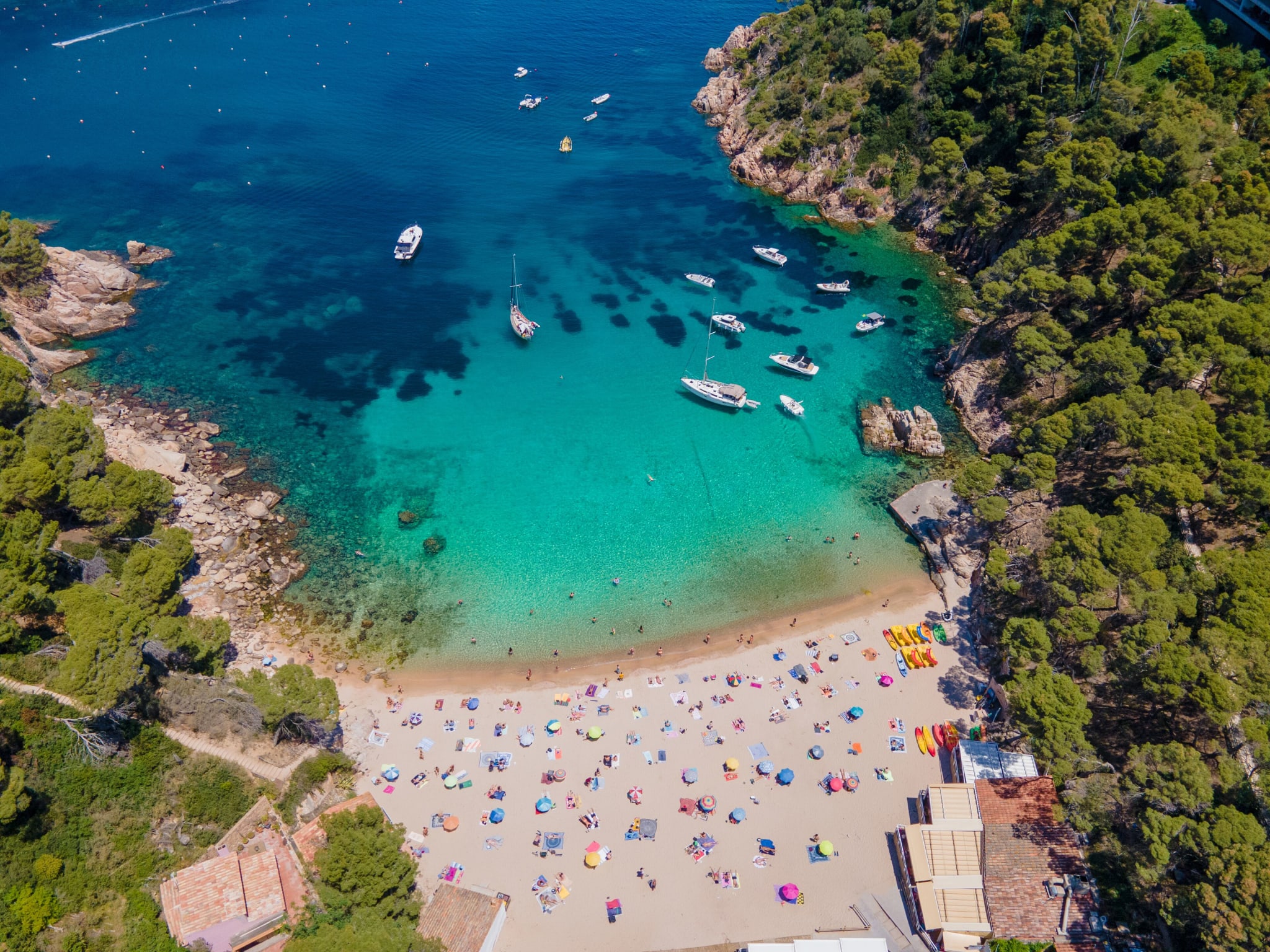
The path climbs over a cliff, rounds a pine tree and suddenly opens onto a cove with water so clear you can see the bottom twenty metres down. A handful of boats lie at anchor, and a simple beach bar has its tables out. Costa Brava means “the wild coast”, and the name still fits, even if the best-known spots are packed in August.
The links to the hotels are partner links. If you book through them, Picolo may earn a small commission at no extra cost to you.
Short answer: what is the Costa Brava?
The Costa Brava is the coast north of Barcelona, from Blanes to the French border. It is known for small coves, fishing villages and medieval towns, and a coastal path that runs along much of it. Travel in June or September, and hire a car.
Food on the coast
The Costa Brava is a fishermen’s coast, and the food follows. Try suquet de peix, a traditional fish stew, and the red prawns of Palamós, considered among the best in Spain. In many villages you eat best at the simple restaurants by the harbour, where the day’s catch is chalked on the board. In summer, havaneres, old sailors’ songs from Cuba, are sung on the beach at Calella de Palafrugell.
Where to stay
Above a cove near Begur: Hotel Aiguablava, with sea views. See rooms at Hotel Aiguablava
Near the beach at Pals: Hotel Sa Punta, with a pool and garden. See rooms at Hotel Sa Punta
Places to see
Tossa de Mar: the town behind the walls
The old quarter, Vila Vella, lies within medieval walls and towers, right above the beach. Tossa is closest to Barcelona and easy to reach by bus.
Begur and its coves
Around the village of Begur lie some of the coast’s most beautiful coves, such as Aiguablava, Sa Tuna and Platja Fonda. Many are small, so arrive early in high season.
Calella de Palafrugell: the fishing village
Whitewashed houses, fishing boats pulled up on the beach and restaurants under the arches by the water. One of the most atmospheric places on the coast.
Cadaqués: Dalí’s village
In the far north lies Cadaqués, a white village on a bay, and nearby is Portlligat, where Salvador Dalí lived and worked. His house is a museum and must be booked in advance.

The coast near Begur.
Camí de Ronda: the coastal path
This old path was used by customs officers and fishermen, and now runs along much of the coast, from cove to cove. The stretch around Calella de Palafrugell and Llafranc is among the finest, and easy to walk in an afternoon.
Where to stay
Hotel Aiguablava: above the cove
A family-run hotel on the hillside above Aiguablava cove, with a pool and sea views.
Book your stay: See rooms at Hotel Aiguablava
Hotel Sa Punta: near Pals
A quiet hotel with a garden and pool, a short drive to the long sandy beach at Pals.
Book your stay: See rooms at Hotel Sa Punta
Getting there
The Costa Brava is one to two and a half hours by car from Barcelona. Girona has its own airport, closer to the northern part of the coast. See also our guide to day trips from Barcelona.
When to go
June and September bring warm water and fewer people. July and August are busiest, and many coves fill up by mid-morning.
Frequently asked questions about the Costa Brava
Where is the Costa Brava?
North of Barcelona, along the coast from Blanes to the French border.
Do you need a car on the Costa Brava?
It is not essential, but a car makes it much easier to reach the small coves.
What are the best places on the Costa Brava?
Tossa de Mar, Begur and its coves, Calella de Palafrugell and Cadaqués.
Read more
Girona: the old town and hotels