
Beaches
The best beaches in Gran Canaria, from Maspalomas to Las Canteras
Gran Canaria has sand dunes, sheltered coves and a city beach with its own reef. These are the beaches worth your days, what to know about wind and waves, and where to stay.
This page contains affiliate links. If you book through them, Picolo earns a commission at no extra cost to you. Our picks are made independently by our editors.
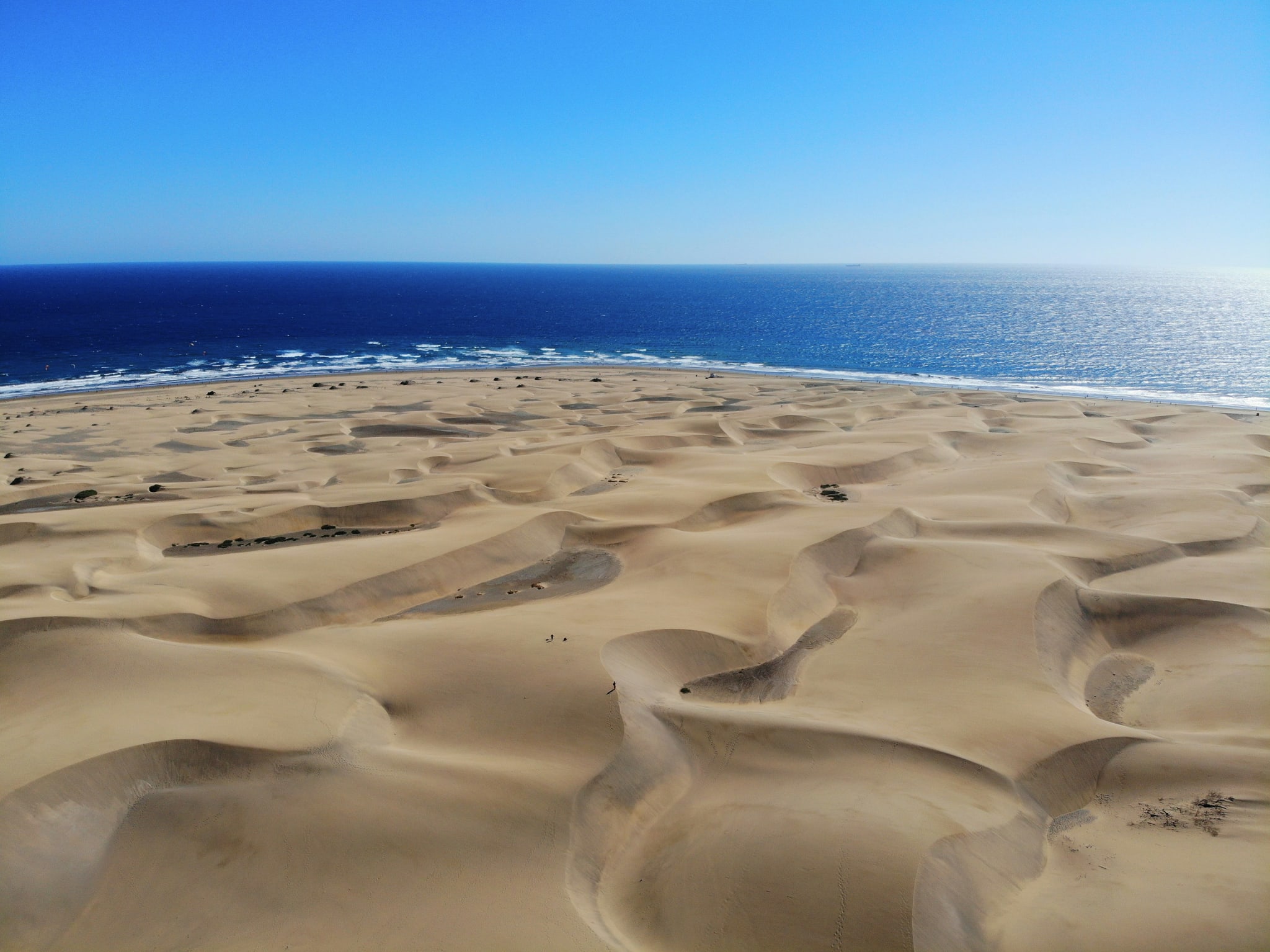
You walk into the Maspalomas dunes early in the morning, and after five minutes the hotels have vanished behind you. There is only sand, wind and the footprints of someone who passed earlier. Crest the last dune and the sea and beach lie ahead.
Gran Canaria is one of Europe's favourite winter-sun islands, yet its beaches are more varied than its reputation. The south has sun and calm water, the north has waves and a city beach with a reef, and the west coast has coves you need hours of walking to reach. These are the beaches worth the day.
Short answer: which beaches in Gran Canaria are best?
Maspalomas is the most remarkable, with sand dunes behind it. Amadores is best for calm swimming and children, and Las Canteras in Las Palmas is the best city beach. For wild nature without crowds, Güigüí is worth the long trek.
Best for nature: Maspalomas and the dunes
Best for families: Amadores
Best city beach: Las Canteras, Las Palmas
Best for snorkelling: Sardina del Norte
Best adventure: Güigüí

Seaside Grand Hotel Residencia
The pool and garden at Seaside Grand Hotel Residencia.
Maspalomas and Playa del Inglés: the dunes of the south
Behind the beach at Maspalomas lie the sand dunes, a nature reserve covering several square kilometres. Walk along the water from the Maspalomas lighthouse towards Playa del Inglés, or cross the dunes on the marked paths.
Playa del Inglés is the long, busy stretch of the same beach, with loungers, bars and water sports. The catch: it can be windy, and the sand blows about. Go early or late to have the dunes to yourself.
Seaside Grand Hotel Residencia: a garden by the dunes
The hotel is in Maspalomas, a short walk from the dunes, with colonial-style villas spread through a large garden of palms and pools. It is small and quiet by Gran Canaria standards. A good pick for couples who want calm but still walk to the beach.
Book your stay: Check availability and prices at Seaside Grand Hotel Residencia

Lopesan Costa Meloneras
The pools at Lopesan Costa Meloneras.
Meloneras and Amadores: calm water in the south-west
Meloneras, west of the lighthouse, has a seafront promenade with restaurants and a smaller beach than Maspalomas. It is a quieter area with many large hotels.
Amadores further west is a man-made beach in a bay protected by breakwaters, with shallow, calm water. It suits children and anyone who wants to swim without waves. From Amadores you can walk or take a boat to Puerto de Mogán, a small harbour town with canals.
Lopesan Costa Meloneras: pools by the promenade
Lopesan Costa Meloneras is a large resort on the Meloneras promenade, with a landscape of pools and gardens running towards the sea. The lighthouse and the Maspalomas dunes are within walking distance. It suits families who want everything in one place.
Book your stay: Check availability and prices at Lopesan Costa Meloneras

Santa Catalina
The facade of Santa Catalina in Las Palmas.
Las Palmas: Las Canteras, a city beach with a reef
Las Canteras in Las Palmas runs for more than two kilometres, with a natural reef, La Barra, that breaks the waves and keeps much of the beach calm. The promenade behind is lined with cafes and restaurants.
Las Palmas is a real city with a life of its own all year. Stay here to combine the beach with the old Vegueta quarter and good food. The northern end of the beach is popular with surfers.
Santa Catalina: Canarian style in Las Palmas
Santa Catalina, a Royal Hideaway Hotel, stands in Doramas Park in the Ciudad Jardín district, in a historic building of Canarian architecture. Las Canteras is a short taxi ride away. A choice for anyone who wants to stay in the city in style and treat the beach as part of the day.
Book your stay: Check availability and prices at Santa Catalina
North and west: Sardina del Norte and Güigüí
In the north-west, Sardina del Norte is a small beach beside a fishing harbour, with clear water and good snorkelling along the rocks. Eat fish at the harbour restaurants afterwards.
Güigüí on the west coast is one of the island's most remote beaches, with no road. You reach it after a long, steep hike or by boat. Carry plenty of water, start early and make sure you have daylight for the return.
When to go
All year: the south of the island has sun and mild weather in every month.
Winter: warm enough to sunbathe, though the sea is fresh. This is peak season for northern Europeans.
Wind: the trade winds blow often, especially in summer. The south side is the most sheltered.
The north coast: cloudier and wavier than the south, but often less crowded.
Frequently asked questions about Gran Canaria's beaches
What is the best beach in Gran Canaria?
Maspalomas is the most remarkable, with the dunes right behind it. Amadores is best for calm water and Las Canteras is the best city beach.
Which beach is best for children?
Amadores and Puerto de Mogán have calm, shallow water in sheltered bays, ideal for small children.
Can you walk in the Maspalomas dunes?
Yes, but stay on the marked paths. The dunes are a nature reserve and parts are closed to protect them.
Does Gran Canaria have waves?
The north and west coasts have more waves. The south coast and the bays with breakwaters are calmer.