
Beaches
The best beaches in Spain, from Formentera to Galicia
Spain has island coves, dune-backed Atlantic sand and city beaches you can walk to after breakfast. These are the ones worth planning a trip around, and where to stay nearby.
This page contains affiliate links. If you book through them, Picolo earns a commission at no extra cost to you. Our picks are made independently by our editors.
In short: the best beaches in Spain
For clear water, go to Ses Illetes on Formentera or Cala Macarella on Menorca. For space and nature, Bolonia in Andalusia is hard to beat, and La Concha in San Sebastián is one of Europe's great city beaches. Playa de las Catedrales in Galicia is the most dramatic, but only at low tide.
Best for clear water: Ses Illetes, Formentera
Best for wild nature: Bolonia, Andalusia
Best city beach: La Concha, San Sebastián
Best for families: Postiguet and San Juan, Alicante
Best for drama: Playa de las Catedrales, Galicia
Our first choice in Spain: Check availability and prices at Nobu Ibiza Bay
At Formentera's Ses Illetes, the sand narrows to a strip with sea on both sides, and the water is so shallow and clear that anchored boats seem to hang in the air. Most people arrive on the morning ferry from Ibiza and leave on the last one, sunburnt and a little reluctant.
Spain's coastline runs to almost 8,000 kilometres, and its beaches change character as you travel. The Balearics have small, clear coves. The Mediterranean mainland has long city beaches with promenades. The Atlantic north is cool, green and wild. We have picked the beaches that stand out and grouped them by region, with a hotel where it makes sense to stay close.

Nobu Ibiza Bay
The pools at Nobu Ibiza Bay sit between the hotel and the sand at Talamanca.
Formentera and Ibiza: the clearest water in Spain
Ses Illetes lies inside the Ses Salines natural park, a thin spit of white sand pointing north towards Ibiza. There is little shade, so bring an umbrella or rent one, and stay for the late afternoon light.
On Ibiza, Cala Comte on the west coast is where people gather for sunset, with low rocks and shallow reefs facing a scatter of islets. Cala Salada is a small cove backed by pines and fishermen's huts. In July and August it is full well before lunch.
Nobu Ibiza Bay: a calm bay close to town
The hotel sits on the sand at Talamanca, the bay just east of Ibiza Town, so you can swim before breakfast and be in the old town by taxi for dinner. Boats to Formentera leave from the harbour nearby. Rooms are bright with sea-facing balconies. A good fit for couples who want a beach and a proper restaurant without staying in the middle of the party.
Book your stay: Check availability and prices at Nobu Ibiza Bay
Menorca and Mallorca: pine forest to the waterline
Menorca has the finest coves in the Balearics. Cala Macarella and its smaller sister Macarelleta sit on the south coast between limestone cliffs and pine woods. In summer the easiest way in is the bus from Ciutadella and a short walk. Cala Turqueta, a little further east, has the same pale water and slightly fewer people.
On Mallorca, Es Trenc in the south is a long natural beach with dunes and no hotels behind it, a rarity on the island. Platja de Formentor in the north has pines growing almost to the sea, with the mountains of the peninsula around you.

Ikos Andalusia
At Ikos Andalusia the pool leads down to the beach between Marbella and Estepona.
Andalusia: dunes, wind and the Atlantic
Bolonia on the Costa de la Luz is one of Spain's wildest beaches. A huge dune is slowly burying the pine forest behind it, and the Roman ruins of Baelo Claudia stand a few minutes from the sand. Being near the Strait of Gibraltar, it is often windy, and the water is cooler than the Mediterranean.
Further east, in the Cabo de Gata natural park near Almería, Playa de los Muertos is a long sweep of pebbles and clear water beneath steep volcanic hills. It is a walk down from the car park, so bring water and sensible shoes.
Ikos Andalusia: everything in one place near Estepona
If you want Andalusian sun without driving anywhere, this is the resort. Ikos Andalusia has the beach right below, between Marbella and Estepona, and the resort follows the Ikos all-inclusive concept. It suits families who want an easy holiday. You will need a car to reach the wilder beaches further west.
Book your stay: Check availability and prices at Ikos Andalusia

Meliá Alicante
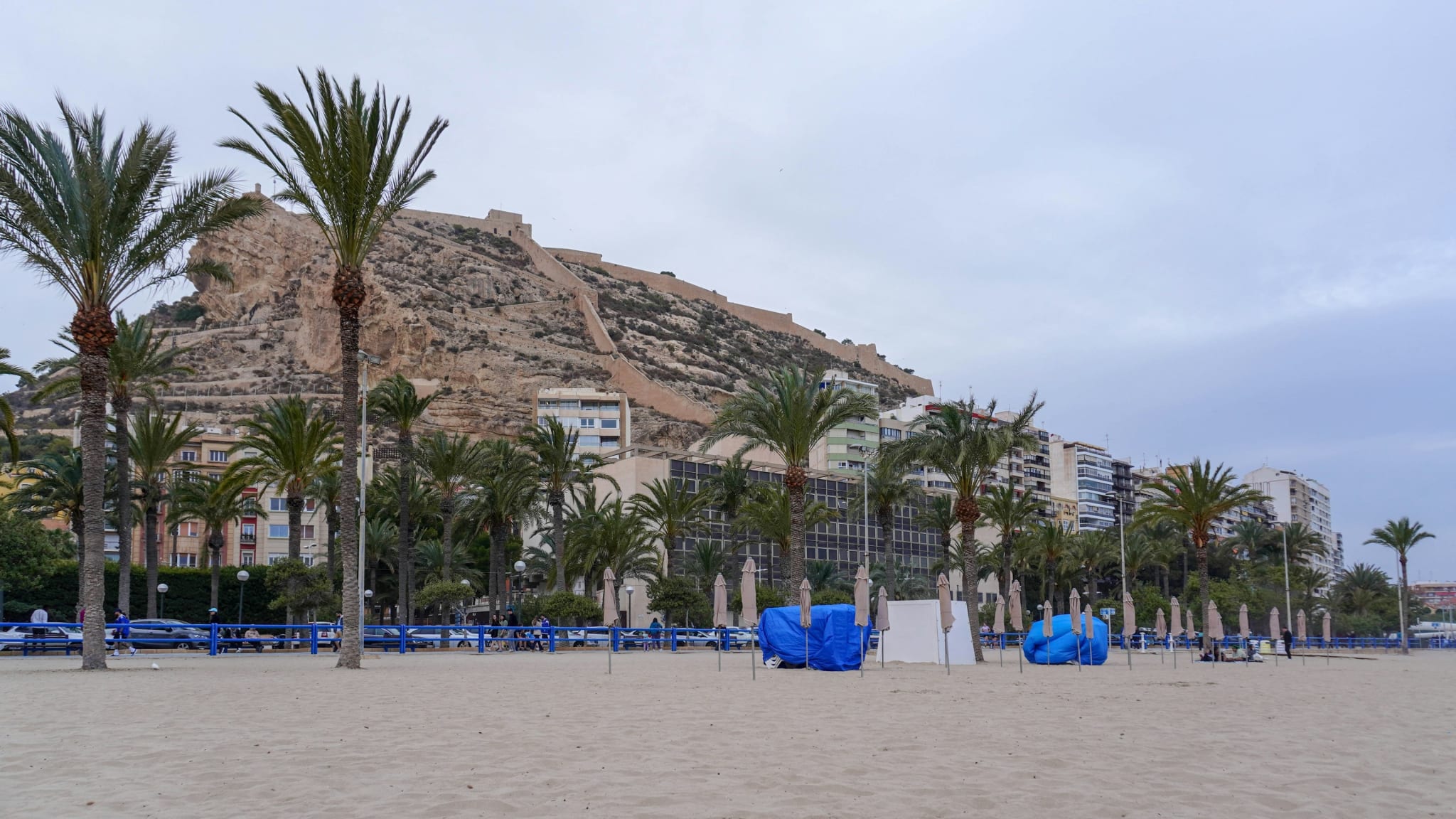
From Meliá Alicante you step straight onto Postiguet, with Santa Bárbara castle above the city.
Costa Blanca and Valencia: beaches on the city's doorstep
In Alicante you walk from the old town straight on to Postiguet, with Santa Bárbara castle on the rock above. For more space, take the tram north to Playa de San Juan, several kilometres of sand. Near Xàbia, Cala Granadella is a small pebble cove with clear water and good snorkelling.
Valencia has Malvarrosa and Las Arenas, long city beaches lined with paella restaurants. This is where locals eat a long Sunday lunch, and you should too.
Meliá Alicante: between the beach and the marina
This is as close as you can stay to Postiguet. The hotel stands on a breakwater between the beach and the yacht harbour, and many rooms look straight out to sea. The building is big and not much to look at, but for a family that wants sand by day and the old town by night, the position is hard to fault.
Book your stay: Check availability and prices at Meliá Alicante

Las Arenas
The pool at Las Arenas sits in the garden, with the beach just across the road.
Las Arenas: Valencia's bathing hotel
Las Arenas is built around an old bathhouse from the days when city dwellers took the tram to the sea. Today there are gardens, several pools and a spa, with the sand just across the road. A grand hotel for anyone who wants a beach holiday with Valencia's food and museums close by. Summer rates are high.
Book your stay: Check availability and prices at Las Arenas
Northern Spain: La Concha and the Cathedrals
La Concha in San Sebastián curves in an almost unbroken shell shape, with the city on one side and Santa Clara island in the bay. Swim in the morning, then head into the old town for pintxos, the Basque take on tapas.
In Galicia, Playa de las Catedrales near Ribadeo is famous for rock arches that look like Gothic naves. You can only walk among them at low tide, and in summer and at Easter you need a free access permit booked in advance. Check the tide tables before you go.
Off Vigo, Playa de Rodas on the Cíes Islands is a white crescent between two islands in a national park. Visitor numbers are capped, so you need authorisation before boarding the boat.
Costa Brava: small coves and clifftop paths
North of Barcelona, the Costa Brava is a coast of small rocky coves between pine trees. Aiguablava and Tamariu have clear water and fish restaurants by the beach. The Camí de Ronda coastal path links many of the coves, and walking it is the best way to see them.
When to go
June and September are best in the Balearics: warm water and fewer boats in the coves than in July and August.
The north is cool: in Galicia and the Basque Country the sea is pleasant only in high summer, and rain can arrive any day.
Book permits early: Playa de las Catedrales and the Cíes Islands need advance registration in high season.
Arrive early at small coves: parking at Macarella, Cala Salada and Granadella fills quickly in summer.
Editor’s pick
Nobu Hotel Ibiza Bay
Nobu Hotel Ibiza Bay is the hotel we choose for a beach holiday in Spain. It sits right on the sand at Talamanca, a calm bay just east of Ibiza Town, so you can swim in the morning and reach the old town of Dalt Vila by a short taxi ride in the evening. The hotel has a Nobu restaurant, a spa and several pools facing the bay. Boats to Ses Illetes on Formentera leave from the harbour. It suits couples who want a beach, good food and nightlife within reach.


Frequently asked questions about Spain's beaches
Where is the clearest water in Spain?
Formentera and Menorca have the clearest water in Spain. Ses Illetes on Formentera is a narrow spit of sand in the Ses Salines nature park, and Cala Macarella on Menorca sits in a cove ringed by pine forest and limestone cliffs. In summer, arrive early, before the boats and day-trippers fill the coves.
Which Spanish beach is best for children?
Postiguet and San Juan in Alicante and Las Arenas in Valencia are the best beaches for children, with sand, shallow water and lifeguards in summer. The city is close by, so food and shade are within walking distance. The small coves on the Balearics are beautiful but often rocky and cramped for young children.
Do you have to pay to visit beaches in Spain?
No, almost all beaches in Spain are free and open to everyone. A few protected areas require a free permit in high season, including Playa de las Catedrales in Galicia and the Cíes Islands off Vigo. Sunloungers and parasols can be hired on most city beaches, with prices varying by place and season.
Is the sea warm enough to swim in Spain in October?
Yes, in early October the sea is still pleasant in Andalusia and the Balearics, and in the Canary Islands you can swim all year. Towards the end of the month the Mediterranean cools. The north coast in Galicia and the Basque Country is too cold for most people by October. See also our guide to where is hot in October.
Where are the most unspoilt beaches in mainland Spain?
Costa de la Luz around Bolonia and the Cabo de Gata nature park near Almería have the most unspoilt beaches on the mainland. Bolonia has towering dunes and Roman ruins, while Playa de los Muertos lies beneath steep volcanic hills. On Mallorca, Es Trenc is an undeveloped alternative with no hotels behind the sand.