
Beaches
The best beaches in France, from the Riviera to the Atlantic
France has beach clubs near Saint-Tropez, Europe's tallest dune near Arcachon and Corsican coves that look borrowed from the Caribbean. These are the beaches worth the trip, and where to stay.
This page contains affiliate links. If you book through them, Picolo earns a commission at no extra cost to you. Our picks are made independently by our editors.
At seven in the morning on the Plage de Gigaro, the only sounds are the waves and a beach bar attendant shaking out the parasols. In three hours the sand will be full, but right now one of the Riviera's best beaches is almost yours.
France has two very different coasts. The Mediterranean in the south brings warm, calm water, beach clubs and small towns. The Atlantic in the west brings waves, dunes and a longer, cooler season. Corsica is a third world of clear water and granite mountains. These are the beaches we would plan a trip around.
Short answer: which beaches in France are best?
Palombaggia in Corsica has the clearest water, and Pampelonne near Saint-Tropez is the Riviera's most famous beach. Biarritz is best for surf, and near Arcachon you can climb the Dune du Pilat, the tallest sand dune in Europe.
Best for beach clubs: Pampelonne, Saint-Tropez
Best quiet Riviera beach: Gigaro, La Croix-Valmer
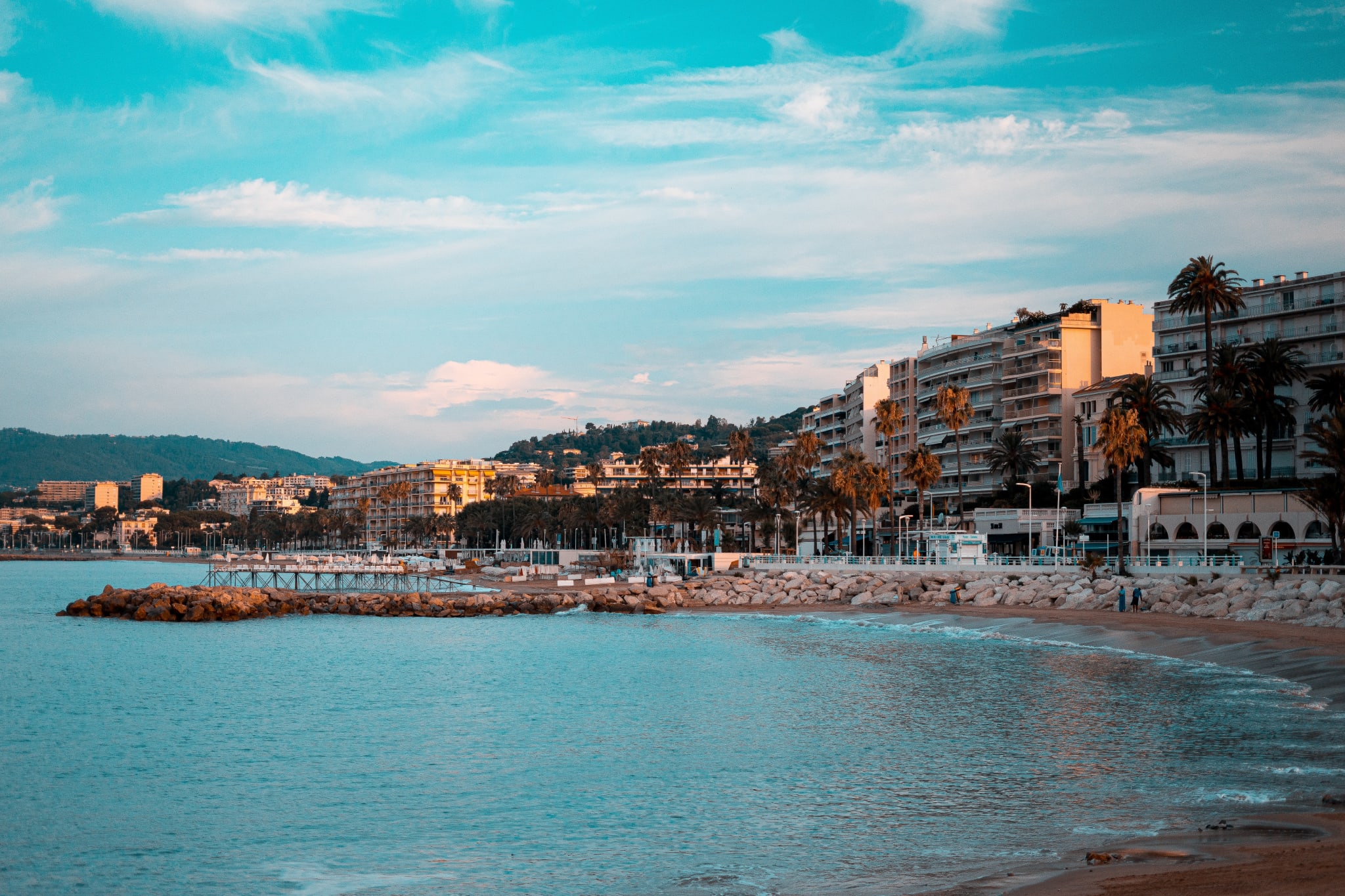
Best city beach: Nice and Cannes
Best for surf: Biarritz
Best for clear water: Palombaggia, Corsica

Lily of the Valley
Sun loungers on the beach at Lily of the Valley.
The Saint-Tropez peninsula: Pampelonne and Gigaro
Plage de Pampelonne in Ramatuelle is roughly five kilometres of sand lined with beach clubs, where you rent a lounger and lunch in the shade. It is a short drive from Saint-Tropez, and public stretches between the clubs let you lay a towel down for free.
Plage de Gigaro at La Croix-Valmer is calmer, backed by pine woods, with a coastal path towards Cap Lardier, one of the least developed parts of the Riviera. Bring water and proper shoes if you plan to walk. See our Saint-Tropez hotel guide.
Lily of the Valley: above the sand at Gigaro
The hotel sits on the hillside above Plage de Gigaro, with white buildings, a spa and its own beach club down by the water. Rooms face the sea and the Îles d'Hyères. A good pick for couples who want the Riviera without the summer traffic into Saint-Tropez.
Book your stay: Check availability and prices at Lily of the Valley

Hyatt Regency Nice Palais de la Méditerranée
The facade of the Palais de la Méditerranée on the promenade in Nice.
Nice, Antibes and Cannes: city beaches and sandy coves
The beach in Nice, along the Promenade des Anglais, is round pebbles rather than sand. Bring water shoes and a thin mat, or rent a lounger at one of the private beaches. The water is clear and the city is right behind you.
For sand, head to Plage de la Garoupe on Cap d'Antibes or the beach at Villefranche-sur-Mer, a short train ride from Nice. In Cannes the sandy beach lies just below La Croisette, with public sections between the hotel beaches. See where to stay in Nice.
Hyatt Regency Nice Palais de la Méditerranée: art deco on the promenade
Behind its white art deco facade, this hotel stands midway along the Promenade des Anglais, with the beach across the road and the old town a ten-minute walk away. The rooftop pool looks out over the Baie des Anges. A practical choice if you want city and sea in one stay.
Book your stay: Check availability and prices at Hyatt Regency Nice Palais de la Méditerranée
The Atlantic: Biarritz and the Dune du Pilat
Biarritz in the French Basque Country has waves all year and was one of Europe's first surf towns. The Grande Plage is in the middle of town, and the Côte des Basques below the cliffs is the place for surf lessons and sunsets.
Further north near Arcachon rises the Dune du Pilat, Europe's tallest sand dune at more than a hundred metres. Climb early or late, then swim from the beaches below. The ocean here is cooler than the Mediterranean and currents can be strong, so swim where there are lifeguards and flags.
Corsica: turquoise water and granite
In the south of Corsica, Palombaggia and Santa Giulia near Porto-Vecchio have white sand, umbrella pines and water that shifts from turquoise to deep blue. Both fill up in July and August, so arrive early.
In the north, Saleccia in the Désert des Agriates is a long beach reached by boat from Saint-Florent or after a long hike. There are no kiosks, so bring everything you need.
Normandy and Brittany: cliffs and pink granite
The northern coast is less about long swims and more about walks and drama. At Étretat in Normandy, white chalk cliffs form arches over a pebble beach. The D-Day landing beaches of 1944 lie further west.
In Brittany, the Pink Granite Coast around Ploumanac'h has rose-coloured rocks with small sandy coves between them. Tides are huge here, so check the times before you settle on the sand. Read our France travel guide.
When to go
Mediterranean: June and September bring warm water and fewer people than July and August.
Atlantic: July and August are best for swimming, while surfers come all year.
Corsica: June and September are the sweet spot, with a warm sea and space on the sand.
Beach clubs: book loungers at the famous Pampelonne clubs ahead in high season.
Frequently asked questions about France's beaches
What is the best beach in France?
Palombaggia in Corsica has the clearest water, Pampelonne is best for beach clubs and Biarritz is best for surfing.
Does Nice have a sandy beach?
No, the beach in Nice is pebbles. The nearest sandy beaches are at Villefranche-sur-Mer and on Cap d'Antibes.
How high is the Dune du Pilat?
The Dune du Pilat near Arcachon is more than a hundred metres high and is considered the tallest sand dune in Europe.
Are beaches in France free?
Most have public stretches where swimming is free. Beach clubs charge for loungers and parasols.