
Croatia
Best time to visit Croatia: the coast, islands and cities month by month
July and August are hottest, but also busiest and most expensive. June and September give you a warm sea without the queues at the city walls. Here is the year in Croatia, and what each month suits.
In short: when is the best time to visit Croatia?
June and September are best for most people. The sea is above 22°C, the days are warm and there is room on the beaches and in the old towns. July and August are hottest, but Dubrovnik and Hvar are very busy and prices peak. May and October suit the cities and national parks, but the sea is cool.
Where to go in the country is covered in our Croatia travel guide.
The year in Croatia
The coast has a Mediterranean climate, with hot, dry summers and mild, wet winters. Inland and Zagreb have colder winters and can see snow.
April and May: 18 to 23°C on the coast, green and quiet. The sea is around 16 to 19°C, too cold for most.
June: 26 to 28°C with the sea around 22°C. Long evenings, and the season is under way without the crowds.
July and August: 29 to 31°C, with the sea around 25°C. Peak season with full ferries, queues at the walls and the highest prices.
September: still summery, and the sea is at its warmest of the year. Crowds and prices fall once European schools go back.
October: around 20°C and more rain. Many island hotels close during the month.
November to March: mild on the coast, but much is closed. Good for city breaks in Split, Dubrovnik and Zagreb.

Plitvice
Photo: Mike Swigunski / Unsplash
When to go where
Dubrovnik
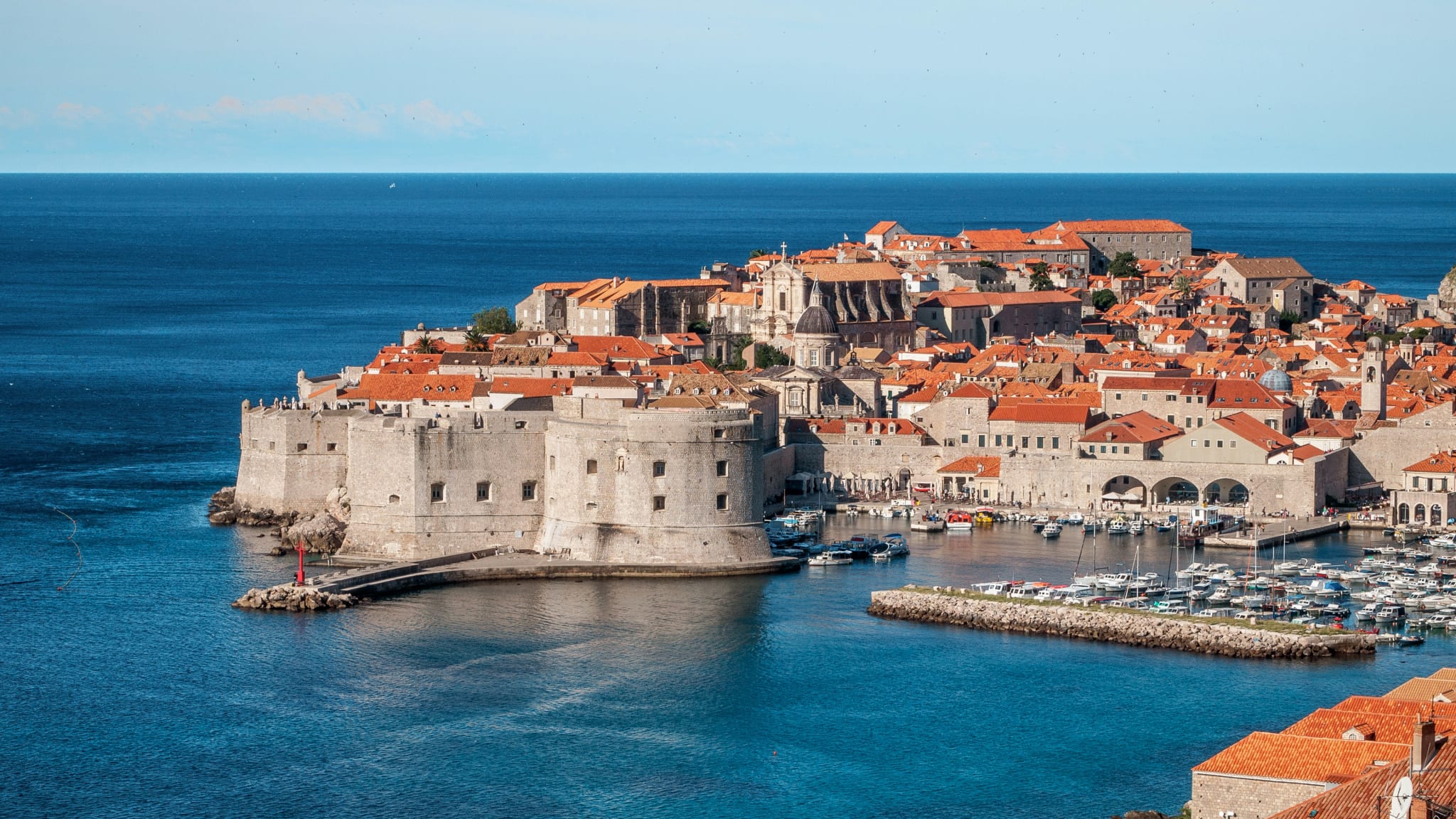
Walk the city walls in May, June or September, and go early in the morning. In summer several cruise ships dock at once, and the old town gets crowded at midday. Read more in our guide to Dubrovnik.
Split and the islands
Island hopping works best from June to September, when all the boat routes run. Hvar Town is busiest in July and August, while Vis and Korčula are calmer. See Split and Hvar.
Plitvice and Krka
The national parks are greenest in May and June, and the waterfalls are fullest after the spring snowmelt. October brings autumn colours and fewer people. In summer, be at the entrance when it opens. Read more about Plitvice Lakes and Dubrovnik.
Istria
Spring and autumn are best for food, wine and truffles. White truffle season is in autumn.
Beach holidays: when is the sea warmest?
The sea is warmest in August and early September, around 24 to 26°C. In June and late September it is around 21 to 23°C. Most beaches are pebbles with very clear water. See the best beaches in Croatia.
Frequently asked questions about the best time to visit Croatia
What is the best month to visit Croatia?
September is often best, with summer warmth, the warmest sea of the year and fewer visitors than in July and August. June is just as good, though the sea is a little cooler.
Is Croatia too busy in summer?
Dubrovnik and Hvar Town can be very busy in July and August, especially at midday when the cruise ships are in. Go early in the morning, or choose quieter islands such as Vis and Korčula.
Can you swim in Croatia in October?
In early October the sea is often around 21°C, so many people still swim. Towards the end of the month it gets cooler and many beach bars close.
Is Croatia worth visiting in winter?
Yes, for a city break. Split, Dubrovnik and Zagreb are open all year, with mild days on the coast and a Christmas market in Zagreb. The islands are mostly closed.