
Hotels
Best hotels in Tokyo: where to stay, from Ginza to Asakusa
At five in the morning the Shibuya Crossing is empty. Three hours later thousands of people will cross it at once without a single collision. Tokyo is the largest city on earth and one of the most orderly, and the hotel you choose decides which of its many cities you wake up in.
This page contains affiliate links. If you book through them, Picolo earns a commission at no extra cost to you. Our picks are made independently by our editors.
Tokyo has no single centre but many. Marunouchi and Ginza are the polished ones, Shibuya and Shinjuku the crowded, neon-lit ones, Asakusa the oldest and most traditional. Linking them is one of the most punctual rail networks in the world, which makes choosing a hotel simpler than it looks. Stay near a good station and the rest of the city is within easy reach.
We have picked nine hotels across six neighbourhoods. They range from a ryokan, a traditional Japanese inn, in the middle of the financial district to a budget hotel with a Godzilla on its roof. Rooms in Tokyo tend to be small, even at expensive hotels, so we say where you get space and where you should pack light. Our links go to Hotels.com, and we always choose the hotel first.
In short: where to stay in Tokyo
For a first visit, stay in Shinjuku, Shibuya or around Tokyo Station in Marunouchi, where rail connections are best. Ginza suits travellers who want calm and great food, and Asakusa is for those who want temples and old Tokyo on the doorstep.
Our first choice: Hotel Gracery Shinjuku. Check availability and prices
Best for romance: Palace Hotel Tokyo
Best for families: The Peninsula Tokyo
Best for first-timers: Hotel Gracery Shinjuku
Best for value: The Gate Hotel Kaminarimon
Best for design: TRUNK(HOTEL) Cat Street
How to choose a hotel in Tokyo
Near a station: pick a hotel a few minutes' walk from a station on the Yamanote line, the loop that links the main districts.
Room size: many Tokyo rooms are compact. Check the square metres, especially if you are sharing or travelling with large suitcases.
Luggage forwarding: many travellers send their bags ahead between hotels in Japan, so they do not have to carry them on trains. Ask at reception.
Views: the best luxury hotels occupy the top floors of towers. On clear days, most often in winter, you can see Mount Fuji.
Check-in times: check-in is often from three o'clock or later and check-out early, but hotels happily store bags so you can use your first and last day.

The terrace
The terrace at Palace Hotel Tokyo.
Marunouchi and Otemachi: the Imperial Palace and Tokyo Station
Around Tokyo Station lies the financial district, with wide avenues, glass towers and the gardens of the Imperial Palace just to the west. The bullet trains leave from here, and evenings are calm.
Palace Hotel Tokyo: moats and gardens across the road
Palace Hotel Tokyo stands in Marunouchi, directly across from the moats and walls of the Imperial Palace East Gardens, a few minutes' walk from Tokyo Station. Many rooms have balconies facing the gardens, and the hotel has its own spa and several restaurants, among them the French ESTERRE.
It is our romantic pick, because you wake to green gardens and still water below your window in the middle of one of the world's biggest cities. It suits couples and anyone after a calm, classic luxury hotel close to the trains. Marunouchi is an office district that goes quiet at night, so for nightlife you will take a taxi or the metro to Ginza or Shibuya. A morning walk along the moat before the city wakes is a fine way to start the day.
Book your stay: Check availability and prices at Palace Hotel Tokyo

The neighbourhood
The streets around Hoshinoya Tokyo.
Hoshinoya Tokyo: a ryokan in a skyscraper
Hoshinoya is a ryokan built into a tall building in the financial district. You remove your shoes at the entrance, the floors are tatami, woven rice-straw mats. On the roof is an onsen, a hot-spring bath fed by water drawn from deep beneath the city.
It appeals to travellers who want to experience Japanese hospitality without leaving Tokyo. The rooms are serene and beautiful, but furnished in Japanese style with low beds and few chairs. The rooftop bath is separated by gender and, as in every onsen, bathing is nude.
Book your stay: Check availability and prices at Hoshinoya Tokyo

The pool
The pool at The Peninsula Tokyo.
The Peninsula Tokyo: across the road from the palace
The Peninsula faces the Imperial Palace gardens and Hibiya Park, between Marunouchi and Ginza. Rooms are generous by Tokyo standards, with excellent bathrooms and windows over the park, and the hotel's tradition of service shows in small details.
It takes our family pick: spacious, central and with direct access to the subway beneath the building. Ginza is five minutes away on foot. It is a classic grand hotel, priced accordingly.
Book your stay: Check availability and prices at The Peninsula Tokyo

The view
The view from Hyatt Centric Ginza Tokyo.
Ginza: department stores and quiet evenings
Ginza is Tokyo's elegant shopping district, with department stores, tiny restaurants in basements and back lanes, and a main street closed to traffic at weekends. In the evening it is calmer than Shibuya or Shinjuku.
Hyatt Centric Ginza Tokyo: a modern base on Namiki-dori
Hyatt Centric Ginza Tokyo is on Namiki-dori, one of the calmer side streets of Ginza, with Ginza Six and the department stores a few minutes away. Rooms are modern and bright, with details that borrow the colours of the neighbourhood, and the NAMIKI667 restaurant serves breakfast and dinner.
It suits travellers who want a central Ginza address close to the metro, the back-lane restaurants and Tokyo Station. It works well for couples and business travellers. It is not a cheap hotel, but rates are often lower than at the big luxury houses in Marunouchi, and the rooms are generous by Tokyo standards.
Book your stay: Check availability and prices at Hyatt Centric Ginza Tokyo

The building
TRUNK(HOTEL) Cat Street from the outside.
Shibuya and Shinjuku: neon, trains and people
Shibuya and Shinjuku are Tokyo's busiest districts, home to the world's most crowded railway stations, neon, bars and shops. This is where you stay to feel the city's energy.
TRUNK(HOTEL) Cat Street: design in Harajuku
TRUNK sits on Cat Street, a pedestrian lane of small shops between Harajuku and Shibuya. Is a small design hotel built with local materials, a popular lobby bar and terraces in some rooms. The mood is relaxed and young, and plenty of locals drop in for coffee and drinks.
It is our design pick and suits couples and friends who want to stay in Tokyo's fashion quarter. Rooms are few and rates high, and the lobby is lively late into the evening. Shibuya Crossing is ten minutes away on foot.
Book your stay: Check availability and prices at TRUNK(HOTEL) Cat Street

The building
Hotel Gracery Shinjuku from the outside.
Hotel Gracery Shinjuku: Godzilla on the roof
Gracery stands in Kabukicho, Shinjuku's entertainment district, and is easy to spot: a giant Godzilla head peers over the edge of the roof. Rooms are small but practical, and Shinjuku Station, one of the busiest in the world, is five minutes away.
It is our pick for a first visit: affordable, fun and with the best rail links in the city. The surrounding streets are lively all night and can look a little rough, but the area is safe. Golden Gai, a warren of tiny bars, is a short walk away. If you want calm, stay elsewhere.
Book your stay: Check availability and prices at Hotel Gracery Shinjuku

The building
The Ritz-Carlton, Tokyo from the outside.
Roppongi and Toranomon: views from the top
Roppongi is known for nightlife and art museums, and neighbouring Toranomon is a new business district of tall towers. The best hotels here sit on the top floors, with the whole city below.
The Ritz-Carlton, Tokyo: the city at your feet
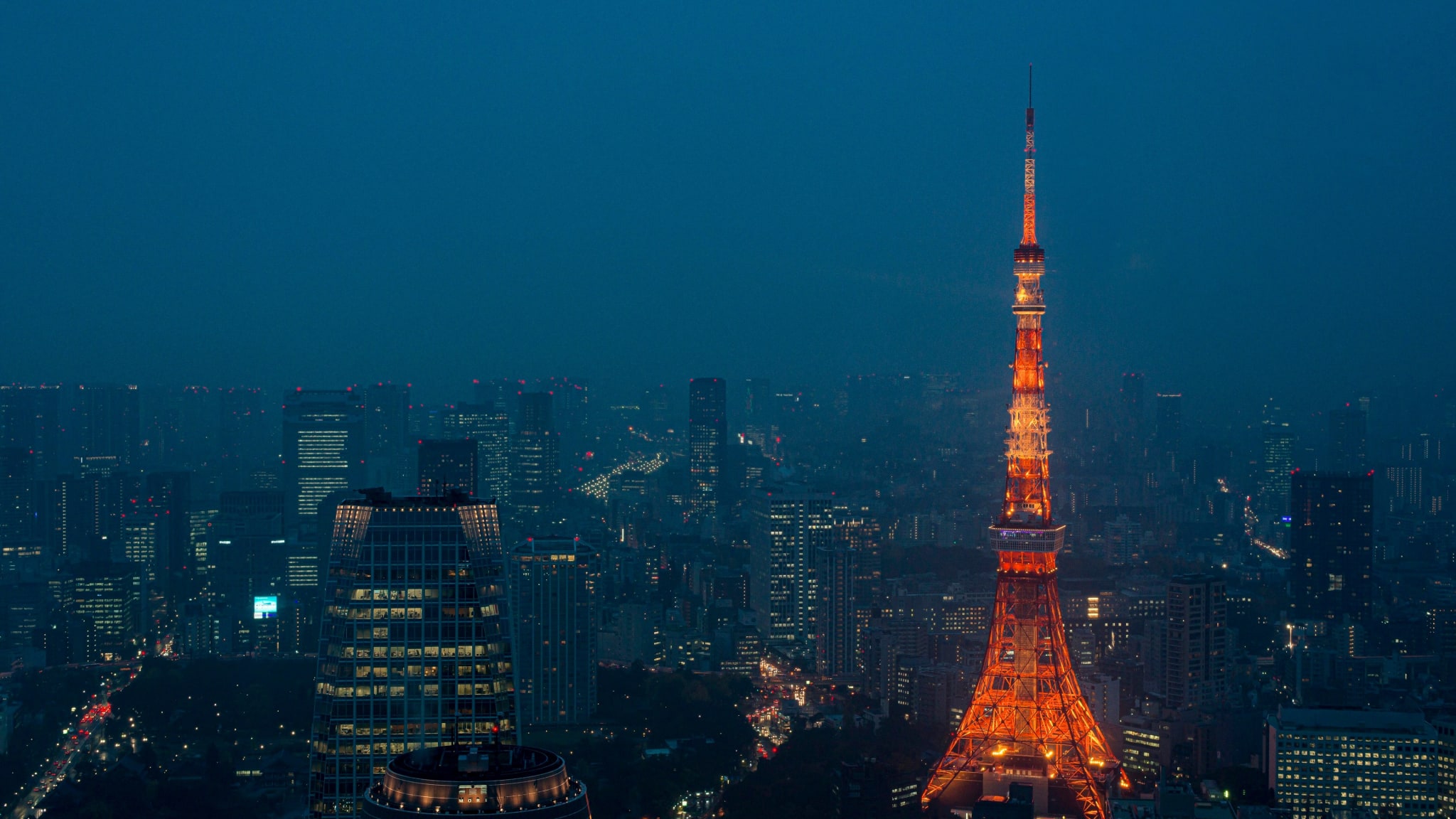
The Ritz-Carlton occupies the upper floors of the Tokyo Midtown tower in Roppongi. From the rooms you see Tokyo Tower and, on clear days, Mount Fuji in the distance. Below the hotel are a shopping centre, a park and one of the city's finest design museums.
It is well suited to travellers who want sweeping views and a classic luxury hotel near Roppongi's museums and restaurants. It is expensive, and Roppongi can be noisy at night, but you will not hear it from this high up.
Book your stay: Check availability and prices at The Ritz-Carlton, Tokyo

The view
The view from Andaz Tokyo.
Andaz Tokyo: a rooftop bar in Toranomon Hills
Andaz sits at the top of the Toranomon Hills tower, and its rooftop bar and restaurant look out over Tokyo Bay and Tokyo Tower. Rooms are modern and light, with Japanese details in wood and paper, and the bathrooms have deep tubs by the window.
It suits couples and business travellers who want a modern hotel with a view and calm nights. The surrounding area is new and a little sterile after dark, but the subway gets you to Ginza in a couple of stops.
Book your stay: Check availability and prices at Andaz Tokyo Toranomon Hills

The balcony
The view from one of the balconies at The Gate Hotel Kaminarimon.
Asakusa: temples and old Tokyo
Asakusa, north-east of the centre, is the oldest part of Tokyo, with Senso-ji temple, the Nakamise shopping street and small restaurants in low wooden buildings. It is quieter in the evening and closer to tradition than the rest of the city.
The Gate Hotel Kaminarimon: the temple gate below you
The Gate Hotel stands beside Kaminarimon, the great red gate leading to Senso-ji. The lobby is on the 13th floor, and from its terrace you look over the temple grounds and across the river to Tokyo Skytree, the city's tallest tower.
It is a good fit for travellers who want old Tokyo outside the door and an early visit to the temple before the crowds. Shibuya and Shinjuku are further away, but the subway is right outside. In the evening Nakamise is quiet and the temple is lit, a sight most day visitors miss.
Book your stay: Check availability and prices at The Gate Hotel Kaminarimon by Hulic
When to book
Cherry blossom season: in late March and early April Tokyo fills with visitors who come to see the blossom. Book several months ahead.
Golden Week: around the turn of April and May, much of Japan is on holiday at the same time, and hotels and trains fill up.
Autumn and winter: October to February brings clearer air, frequent views of Mount Fuji and easier availability outside Christmas and New Year.
Our first choice in Tokyo
Hotel Gracery Shinjuku
We recommend Hotel Gracery Shinjuku because it is affordable, fun and has the best rail links in the city. It sits in the middle of Kabukicho, five minutes on foot from Shinjuku station. Rooms are small but practical, and the streets around are lively all night but safe.

Frequently asked questions about hotels in Tokyo
What is the best area to stay in Tokyo for first-timers?
Shinjuku, Shibuya and the area around Tokyo Station are the best choices for a first visit. They have the best rail connections, so the rest of the city is quick to reach. Ginza and Asakusa are quieter alternatives, and the Yamanote line links most districts in a loop.
Are hotel rooms in Tokyo small?
Yes, many rooms in Tokyo are smaller than in Europe or North America, even at upscale hotels. Check the room size before you book, especially when sharing. Large suitcases can be hard to fit in, so consider sending your luggage between hotels with takkyubin, the Japanese luggage service.
What is a ryokan?
A ryokan is a traditional Japanese inn with tatami floors, futon beds and often a hot-spring bath. There are few in Tokyo, and most are in the countryside. If you want to try a ryokan in the city, Hoshinoya Tokyo is one of the few, but most people spend a night in Hakone instead.
Is Tokyo safe?
Tokyo is considered one of the safest big cities in the world, including at night. Normal care with valuables still applies. Trains and the metro are safe late in the evening, but they do not run all night. If you plan a late night, check when the last train leaves from the station near your hotel.
How many nights do you need in Tokyo?
Four or five nights gives time for the main districts and a day trip to Hakone, Kamakura or Nikko. Add more if you want to explore at a slower pace. Tokyo is huge, so consider changing hotel once if you want to see both the west and the east.